

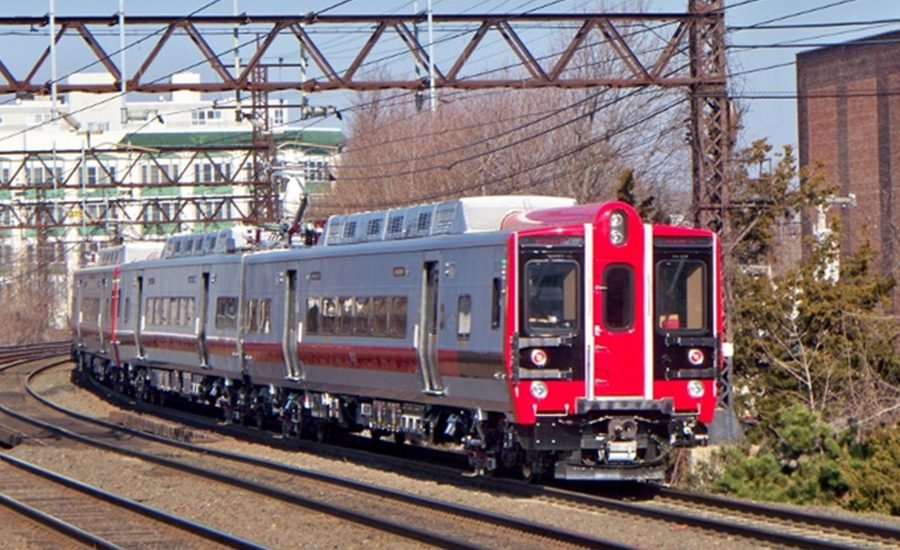
Construction began July 27 on the Connecticut Mobility Improvement Project-1 (TIME-1), a three-phase, $1.6 billion rail modernization effort that will rebuild a restricted section of the New Haven line for faster Amtrak and Metro-North service.
Phase 1 work is concentrated between Bridgeport and Stratford, a segment of Amtrak’s Northeast Corridor where trains currently operate at speeds of up to 70 mph. The project will upgrade the Federal Railroad Administration’s Class 4 section of track to Class 6 track standards, and Amtrak and Metro-North trains are expected to reach 90 mph in parts of the project area by 2035.
The $340.7 million first phase covers roughly three miles and includes replacing 88 catenary structures, adding four new crossings and replacing the Longbrook Avenue road bridge over the railroad, according to the FRA.
The CTDOT also lists track and signal upgrades, new track connections and diversions serving the East Bridgeport Rail Yard among the ongoing work.
Bidding documents show the contract includes modifications to more than 55,000 linear feet of existing catenary systems, approximately 4,000 linear feet of overhead ground cable and about 4,000 linear feet of self-tensioning catenary. The work also includes catenary foundations and anchors, grounding and rail return systems, bridge plates and environmental controls for asbestos and lead related work.
“The New Haven Line connects thousands of people every day to jobs, businesses and destinations in Connecticut and the region,” Lamont said in announcing the project. He added that the completed project is expected to reduce travel times between New Haven and New York City by up to 25 minutes.
CTDOT awarded the construction contract to New York-based Yonkers Contracting Co. for $177.9 million with 1,647 calendar days to completion, state contracting records show. The deal was executed on Feb. 24, according to CTDOT records, about $163 million below the agency’s $340.7 million Phase 1 project cost.
Looking for quick answers on construction and engineering topics?
Try Ask ENR, our new intelligent AI search tool.
Ask ENR →
The agency said Phase 1 is supported by $184 million from the Federal Railroad Administration, $145.5 million from Connecticut and $11.2 million from Amtrak.
Construction around live rail operations
CTDOT documents indicate that construction will be sequenced to keep the four-track railroad in service throughout the project. The New Haven line carried 32 million Metro-North passenger trips by 2024, according to Metropolitan Transportation Authority data, forcing crews to do much of the work maintaining both Metro-North and Amtrak service.

Connecticut’s passenger rail network is anchored by the New Haven Line, where the three-phase TIME-1 project will modernize a heavily used segment between Bridgeport and Stratford while maintaining Metro-North and Amtrak service.
Map courtesy of CTDOT
“Especially on the railway, because unlike the highway, where you can make detours, the railway, there is no detour,” Eucalitto said at the ceremony, according to local media. “There’s no other way to get around the Northeast Corridor, so we have to do the work while the trains are moving.”
Eucalitto said motorists should expect temporary slowdowns in work zones before the higher operating speeds are implemented.
CTDOT’s broader TIME FOR CT materials say rail infrastructure improvements are intended to support speeds ranging from 90 mph to 110 mph when track alignment and operating conditions allow.
Metro-North President Justin Vonashek said TIME-1 was a “generational investment” that will benefit riders for decades. “These infrastructure improvements will deliver shorter journey times, more reliable service and an improved experience for our customers for years to come,” he said in a statement.
The second phase is scheduled to begin in 2030 and includes the replacement of Stratford station, track widening, electrical upgrades and the replacement of four bridges. A third phase, expected to begin in 2031, would add more bridge, road and catenary work. Funding for those later phases will depend in part on the next federal surface transportation authorization, Eucalitto said.
