


The Los Angeles City Council late last month approved an ordinance that could speed up construction of certain temporary projects for the 2028 Olympics and Paralympics by exempting them from planning and zoning requirements. Officials say the move could save thousands of dollars in associated costs.
The ordinance would “establish planning and zoning review relief for certain projects before and during [the Games] … to execute them successfully and deliver them on time.”
Projects classified as “temporary” are considered to be constructed or implemented solely for the Games and located at authorized competition venues. This could include training facilities, ventilation areas and security perimeters, among other projects.
The waiver applies to new construction, additions, alterations or repairs. It also applies to levels, fences and retaining walls, signage permits, swimming pools, changes of use and land permits. Temporary projects must be demolished, dismantled or removed after the conclusion of the Games no later than 27 February 2029.
The 2028 Olympic Games officially begin on July 14, 2028 and will end on July 30, 2028 and are followed by the Paralympic Games from August 15 to 27 of that same year.
The waiver does not apply to hotel development projects, large-scale cable-guided transportation projects and other air mobility projects.
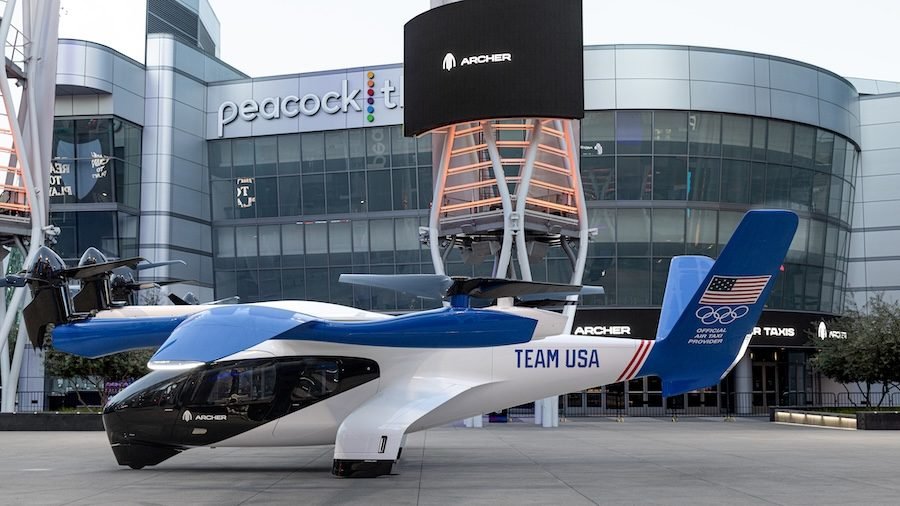
The latter arrangement may disappoint Archer Aviation, the official Olympic manufacturer of vertical take-off and landing electric aircraft and the official air taxi supplier for the LA28.
Looking for quick answers on construction and engineering topics?
Try Ask ENR, our new intelligent AI search tool.
Ask ENR →
Archer and partner AEG recently announced the development of downtown Los Angeles’ first vertiport, a vertical takeoff and landing site for electric taxis, located in AEG LA LIVE’s 4 million square foot sports and entertainment district. The city center will be a central hub for 18 Olympic and Paralympic sports.
It is not clear whether the planned vertiport will be freestanding or built over an existing building within the district. According to the companies, initial feasibility studies for the overall site have been completed, including reviews of land use and airspace, energy availability and community impact.
Opposing views
The council’s plan to speed up construction has its detractors.
A citizens’ group, United Neighborhoods for Los Angeles, says the ordinance only provides broad categories rather than defining temporary projects. Another problem, according to the group, is that the waiver could extend to final construction if the city council makes a temporary-to-permanent designation before or after construction.
The ordinance paves the way for the city council to approve an eligible permanent project that is exempt from planning and zoning rules if it is or was essential to the execution of the Games. Exemptions could be allowed if the project will benefit the community and “have a lasting benefit beyond the Games”.
According to a Los Angeles architect who spoke to ENR on condition of anonymity, the vague rules and the ability to move from temporary to permanent status could raise issues with the building’s integrity and safety. The implications for other Olympic-related construction and future buildings in Los Angeles remain unclear.
