

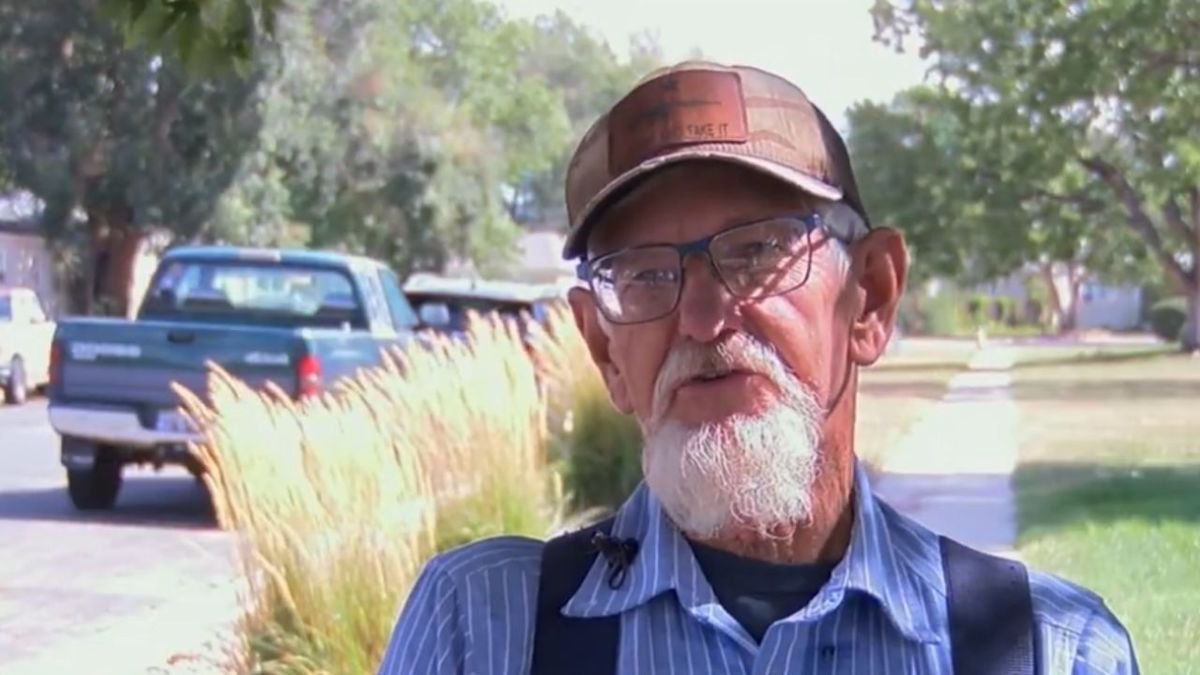
A Colorado man borrowed $20,000 to buy a John Deere backhoe that he found online. The machine never arrived, and when he and his son drove to the address where the salesman said he was operating, they found an empty lot.
Steve Hunt, who lives southeast of Calhan in El Paso County, wanted the backhoe to help build a house on his 37-acre property. His son came across the listing while looking for equipment, and Hunt said the website identifying itself as Platte Machinery Group seemed compelling enough to go ahead with the purchase.
The John Deere 310 backhoe was advertised for $21,000, according to Hunt’s separate interview with Denver7. He negotiated the price down to $20,000, borrowed the money from his bank and was asked to wire it to a Wells Fargo account in San Francisco.
Hunt reported the loss to the El Paso County Sheriff’s Office. FOX21 News reported that the Sheriff’s Office described the case as active and said it had been turned over to Financial Crimes Detectives in the Division of Investigations.
A $21,000 tab turned into a $20,000 cable
Hunt had bought equipment through auctions before without experiencing a similar problem. Hunt said the roughly $20,000 price tag was in the range he expected to spend, so the listing didn’t immediately stand out to him.
He told FOX21 he showed the website to his banker before sending the money and the banker didn’t see any obvious problems. Hunt later told Denver7 that the site appeared to use details that made it appear connected to a real equipment business.
The seller agreed to drop the asking price from $21,000 to $20,000 and offered to hand over the machine, Hunt told Denver7. He then sent the purchase money to the San Francisco account.
Delivery excuses ended up with an empty lot
The backhoe was due to arrive on a Thursday evening in March. When it didn’t show up, Hunt contacted the seller the next morning and was told there had been a mix-up loading the machine. Delivery was brought forward to the weekend.
Monday arrived without the backhoe. Hunt said communication with the seller stopped.
After their son was released from the hospital, the two drove to Denver and visited the address associated with the team’s site. Hunt told both FOX21 and Denver7 they found a vacant lot instead of a machinery business.
Hunt also said they spoke to a worker at a business across the road. According to Hunt’s account, the worker told them that people had been experiencing similar problems with the location for about a year and a half to two years.
Hunt says the cable went from San Francisco overseas
After reporting the loss, Hunt said a deputy traced the payment to the Wells Fargo account in San Francisco. He told Denver7 that investigators said the money was transferred internationally shortly after the original wire arrived.
FOX21 separately reported that the El Paso County Sheriff’s Office confirmed the case was still active and had been assigned to financial crimes detectives. Hunt said the sheriff’s office also got the website he was using taken down.
Hunt said he is still responsible for paying off the bank loan he took out to buy the machine.
He planned to use the backhoe to dig and move material while building a house on his property. Hunt told FOX21 that losing the money could set the project back five to seven years.
The FTC warned about fake farm machinery companies
The Federal Trade Commission issued a consumer alert on Sept. 15 describing scams in which criminals impersonate farm machinery companies online. Buyers see machinery advertised through websites, online searches or social media ads, receive purchase documents, send thousands of dollars and receive a delivery date.
Then the delivery doesn’t arrive. The FTC said scammers may stop responding or offer an excuse involving delivery before disappearing with the payment.
The agency recommends searching for a company’s name along with terms like “scam” or “complaint” before buying. It also warns that scammers can buy paid search results, so shoppers should look beyond sponsored listings when confirming a business’s real website and contact information.
The FTC specifically warns against sending money when a seller insists on paying by wire transfer, gift card, cryptocurrency, or payment app because these methods can make it very difficult to get the money back. People who come across an impersonation scam can report it at ReportFraud.ftc.gov.
