

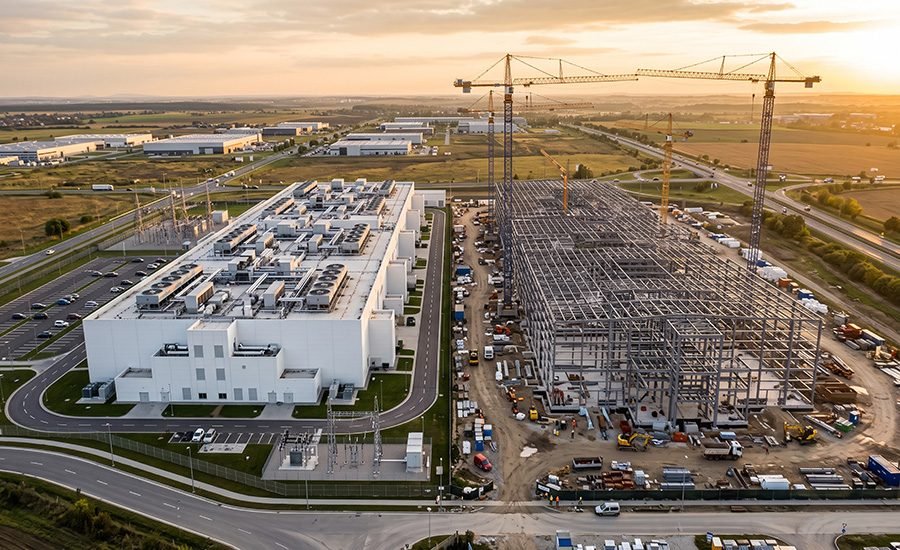
Data center construction spending rose 7.5 percent in August, extending a building surge that continues to outpace much of the U.S. construction market, Associated Builders and Contractors said Oct. 1.
Data center construction spending is now more than 73% above the previous year’s level, ABC said in its analysis of new data from the US Census Bureau. Global nonresidential construction spending rose 0.7% from July to a seasonally adjusted annual rate of $1.309 trillion.

Non-residential construction spending rose 0.7% in August, with energy rising 8.5% year-on-year, while manufacturing remained 19.2% below the level of August 2025. Click to expand.
The acceleration has been particularly pronounced since March. ABC estimates that data center construction spending has increased at an annualized rate of 149% over the past five months. The figure expresses the recent growth rate as if it continued for a full year; it doesn’t mean that spending has increased by 149% since March.
“Frankly, it is becoming difficult to contextualize the size and speed of this boom,” ABC chief economist Anirban Basu said in a statement.
Analysis of July census data by Associated General Contractors showed that spending on data center construction already rose 57.2% year over year, while construction of other private offices fell 10.6%. As of August, ABC analysis puts the year-over-year data center increase at more than 73%. Census spending data measure the value of construction started rather than the value of newly started projects.
An ABC survey published on September 15 found that about one in six member contractors had data center work under contract, the highest share recorded by the group. These contractors reported 9.9 months of backlog in August compared to 8.3 months for contractors without data center work.
Data center construction is also intensifying competition for workers. In an AGC-NCCER workforce survey, 28% of respondents reported having completed data center construction in the past year. Of those companies, 58% said the work had increased competition for skilled workers.
Looking for quick answers on construction and engineering topics?
Try Ask ENR, our new intelligent AI search tool.
Ask ENR →
The boom masks broader weakness
Manufacturing construction spending rose 0.2 percent from July, its first monthly gain since January, but remained 19.2 percent below a year earlier, ABC analysis showed. Electricity construction rose 0.8% for the month and 8.5% since August 2025, while spending on roads and streets rose 0.2% for the month and 4.6% year-on-year.

Nonresidential construction spending hit an annual rate of $1.309 trillion in August, continuing a rebound from previous declines in 2026. Click to expand.
Basu said he expects construction momentum to remain focused primarily on data center and power projects in the coming months.
Construction input prices rose 1.2 percent in August and were 8.9 percent above the year-earlier level, according to an ABC analysis of Bureau of Labor Statistics data.
Higher costs are already affecting projects. In an AGC survey conducted in July and August, 55% of respondents said projects had been canceled, postponed or scaled back in the previous six months, with a third attributing the disruptions to rising costs.
Escalating labor and material costs have re-emerged in the second half of 2026 and rising Treasury yields will continue to put upward pressure on borrowing costs, Basu said. Despite contractors’ optimism about sales, expect those sales to become increasingly concentrated in a narrow set of construction categories.
