


If you’ve ever wanted to buy something a little silly, a little nonsensical, I recommend taking a stroll through the pages of GovDeals. Do you need a helicopter, a backhoe and a police car at the same time? You can find a government entity that sells each on GovDeals. The wonderful auction platform is even where I found my beloved transit bus. Right now, you can get something exponentially more chaotic from GovDeals. The Southern California Regional Rail Authority is selling a 1992 EMD F59PH locomotive, but it will need some work before it can be put back on the rails.
Unfortunately, my railfanning season has, for the most part, come to an end. My favorite train museum, the Illinois Railway Museum, has put away most of its toys in preparation for the upcoming winter. I had a couple of amazing events at the museum before that, which you might be able to read about soon.


For now, I’m waiting until next year to reassemble vintage railway equipment. Luckily some of you are keeping me warm and with trains to watch. Today, 57 swept sent this EMD F59PH and I can’t stop laughing. I mean, what would you even do with a decommissioned locomotive? Maybe a silly little house?
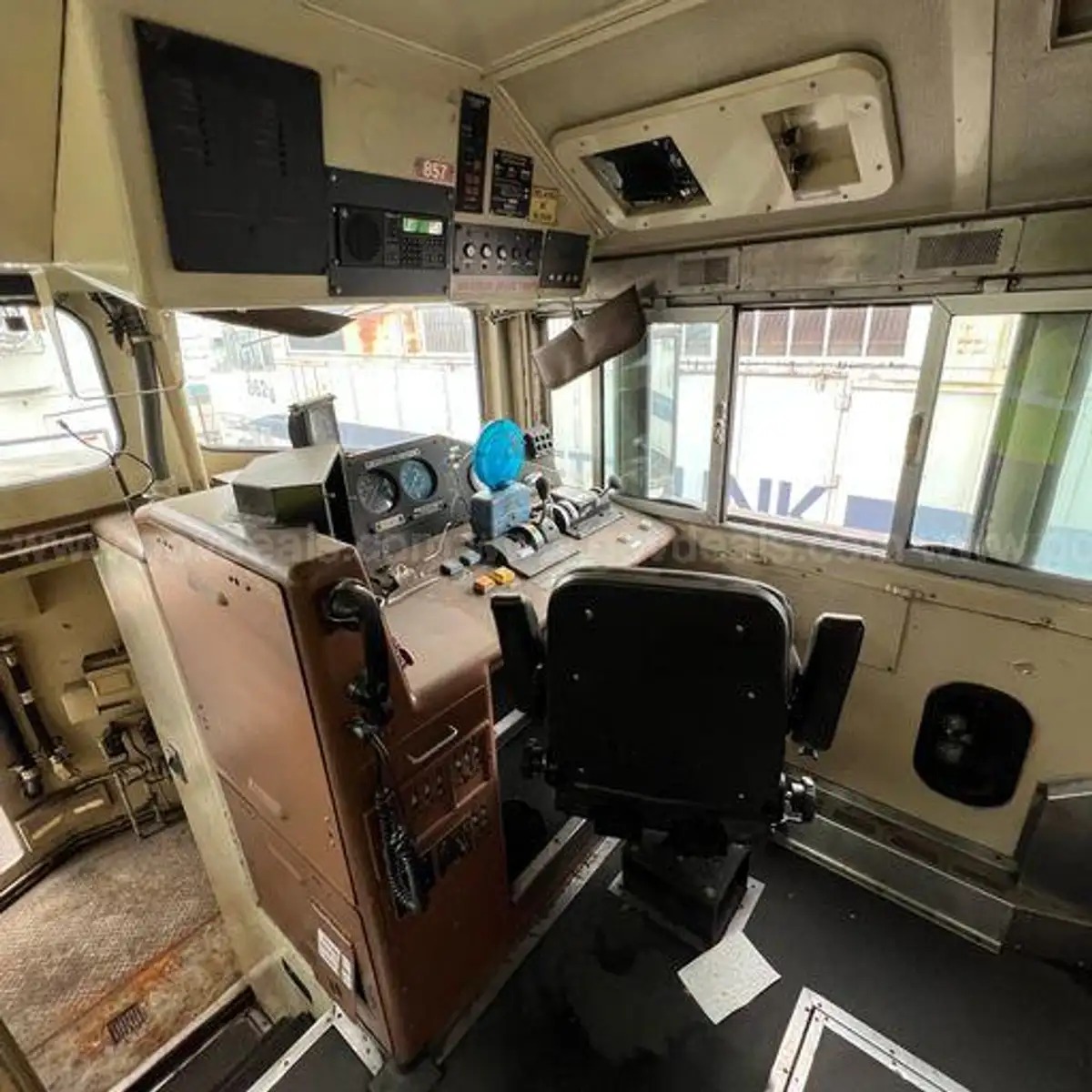
Now, before I go any further, I want to point out that if you have the kind of cash to buy a locomotive, there are places for it. Sterling Rail is full of railroad gear for sale to get you drooling. Still, I can’t help but laugh that California Metrolink is auctioning this thing off at the same place where you can currently buy any of the 204 or so school buses that are for sale. It’s not common, but some governments unload entire locomotives on GovDeals.
From a former division of General Motors

General Motors’ power used to extend far beyond the cars and trucks you see today. In decades past, General Motors held a dominant position in several segments of the bus industry, owned American aviation, and nearly controlled the locomotive market. Seriously, in 1953, General Motors’ Electro-Motive Division (EMD) had an incredible 73 percent of the U.S. locomotive market. Second place was the American Locomotive Company (Alco), which was not even close to 15 percent. By the mid-1960s, General Motors lost some ground and General Electric moved into second place, but GM’s EMD still controlled 70 percent of the market.
EMD traces its roots back to 1922, when Harold L. Hamilton and Paul Turner founded the Electro-Motive Engineering Corporation. The Ohio-based company designed self-propelled passenger cars that used Winton gasoline engines to generate power and General Electric motors for traction. How Magazine of the Assembly He writes, the company name was quickly shortened to the Electro-Motive Company and at the time, the company did not have its own factory.

Instead, their wagons were a Winton and GE power set with construction awarded to St. Louis Car Co., Standard Steel Car Co. and other companies. EMC sold its first wagon in 1924 and featured a six-cylinder engine that produced 175 hp. In 1925, EMC increased production, selling 27 wagons that year. Later Winton gas engines went up to 400 hp. During the 1920s, Winton also had stationary and marine diesel engines before starting an experiment to develop a four-stroke diesel engine for railway applications.
General Motors was also interested in diesel engines. General Motors Research Laboratories vice president Charles Kettering believed in the future of diesel power. In 1928, Kettering joined forces with Winton to develop a two-stroke diesel. But Winton struggled to keep up with demand and development, and eventually found itself up for sale. The National Park Service summarizes how General Motors changed railroad history:

In 1930, General Motors Corporation, primarily an automobile manufacturer, acquired the Electro Motive Corporation and the Winton Engine Company, the latter an established producer of diesel engines, and this merger resulted in a much smaller and much more powerful diesel engine light capable of producing many horsepower. . This advanced diesel engine powered Chevrolet’s exhibit at the Chicago World’s Fair in 1933. Ralph Budd of the Chicago, Burlington & Quincy Railroad saw it there and decided to use this type of engine for his railroad’s Pioneer Zephyr , a lightweight, lightweight stainless steel prototype. , streamlined fast passenger trains.
On May 26, 1934, the sleek silver Pioneer Zephyr departed from a trip to Denver to run 1,015.4 miles to Chicago in 13 hours, 4 minutes, 58 seconds, an average speed of 76.61 miles per hour, although in fact. the three-car articulated train exceeded 100 miles per hour during the trip. Around the same time, the Union Pacific rolled out the similar but bright yellow City of Salina, while in 1935 the Atchison, Topeka & Santa Fe purchased from the Electro-Motive Corporation a pair of diesels to power the Super Chief between Chicago and Los Angeles. Thus, the 1930s ushered in not only the era of streamlined “light” passenger rail, but also the era of diesel-electric motive power for passenger trains.

In March 1935, General Motors Corporation began construction of a large plant for the construction of diesel electric locomotives in La Grange, Illinois, where the company would have the ability to build the locomotive body on a cast frame. The locomotives would use General Electric engines. La Grange’s first product proved to be a 600-horsepower diesel-electric switch with a cabin at one end and exposed implements on each side. It would more or less serve as the model for the most popular switching engines for over a decade. In 1937, an expanded La Grange plant produced the first E-Units, aerodynamic passenger locomotives with a built-in cab and implements on each side of the engines hidden in the body, a design that was called the “covered car”. type, because the cabin and engine were completely enclosed. In 1939, Electro-Motive built the first similarly simplified Model FT freight locomotive, consisting of an “A” unit with cab and a “B” unit without, coupled together. Two of these pairs could be operated together as an “ABBA” combination of four locomotives, all based on a single crew in a single control cabin.
The National Park Service continued that being able to operate multiple diesel-electric locomotives from a single cab only further cemented the future of the type and the EMD. Linking the steam engines together required a crew to operate each locomotive. But diesel electric? A single fireman and engineer could take command of eight to ten locomotives from the controls of a single cab. This saved on labor. Single fuel also saved costs and diesel-electrics didn’t have to drink water like a steamer.
General Motors’ part of the EMD story lasted until 2010, when EMD was sold to Caterpillar’s Progress Rail. By 2010, EMD, now called Electro-Motive Diesel, had fallen to just 30 percent market share in the United States.
This EMD F59PH

Now that we’ve established how great EMD was on locomotives, let’s take a look at what you can get from the Southern California Regional Rail Authority.
Development of the F59PH began around 1985 when GO Transit of Toronto approached EMD with a proposal to help the system upgrade its fleet. GO Transit’s EMD GP40TC and EMD F40PH units were aging and it was time for an upgrade. The transit system’s proposal was for EMD to modify a GP59 freight locomotive (below) to better suit passenger service. The new locomotives would have an independent head-end power (HEP) generator (this provides power to the passenger cars) with a hooded body complete with a comfort cab.

The main engine would also be carried over from the “Geep”. Under the covers is an EMD 12-710 G3A, a V12 with each cylinder displacing 710 cubic inches (11.6 liters) per cylinder. Rated power was 3,000 HP, or the same as an outgoing EMD F40PH, but this was a different platform. For example, since the HEP alternator on some EMD F40PHs is not independent of the main engine, the engine had to run at full speed (893 RPM), even with the throttle at idle, to generate power for the cars of passengers The F59PH models would not have this peculiarity. The HEP generation comes from a 14.6-liter CAT 3406 inline-six diesel engine.
GO Transit’s EMD F59PH locomotives entered service in 1988. California Metrolink would get its first units in 1992. The F59PH would later become the F59PHI, a more aerodynamic locomotive with 3,200 hp plus an insulated cab to reduce vibration and noise.

Metrolink used these locomotives for years before selling some and retiring others. This locomotive was decommissioned in 2020. Apparently a government grant required Metrolink to decommission the locomotive by cutting holes in the main engine and HEP generator. You can see a box cut out of the HEP generator and a fairly large piece taken out of the main engine.


So if you ever want to use this type as a locomotive again, you’ll probably need to buy at least another EMD 12-710 G3A. Apparently you can buy locomotive engines online too!
Metrolink also claims it needed some indicators, lights and safety systems before putting this thing up for sale. Honestly, I’m not entirely sure what you would do with this locomotive. The purchase will cost a pretty penny, very high transport costs, then even more money for what you do with it. Maybe it’s better for a museum or something.
[Sheryl’s Note: with the electric motors and diesely bits removed, I bet this would be a kickass tiny house. I’d totally live in it, anyway.]
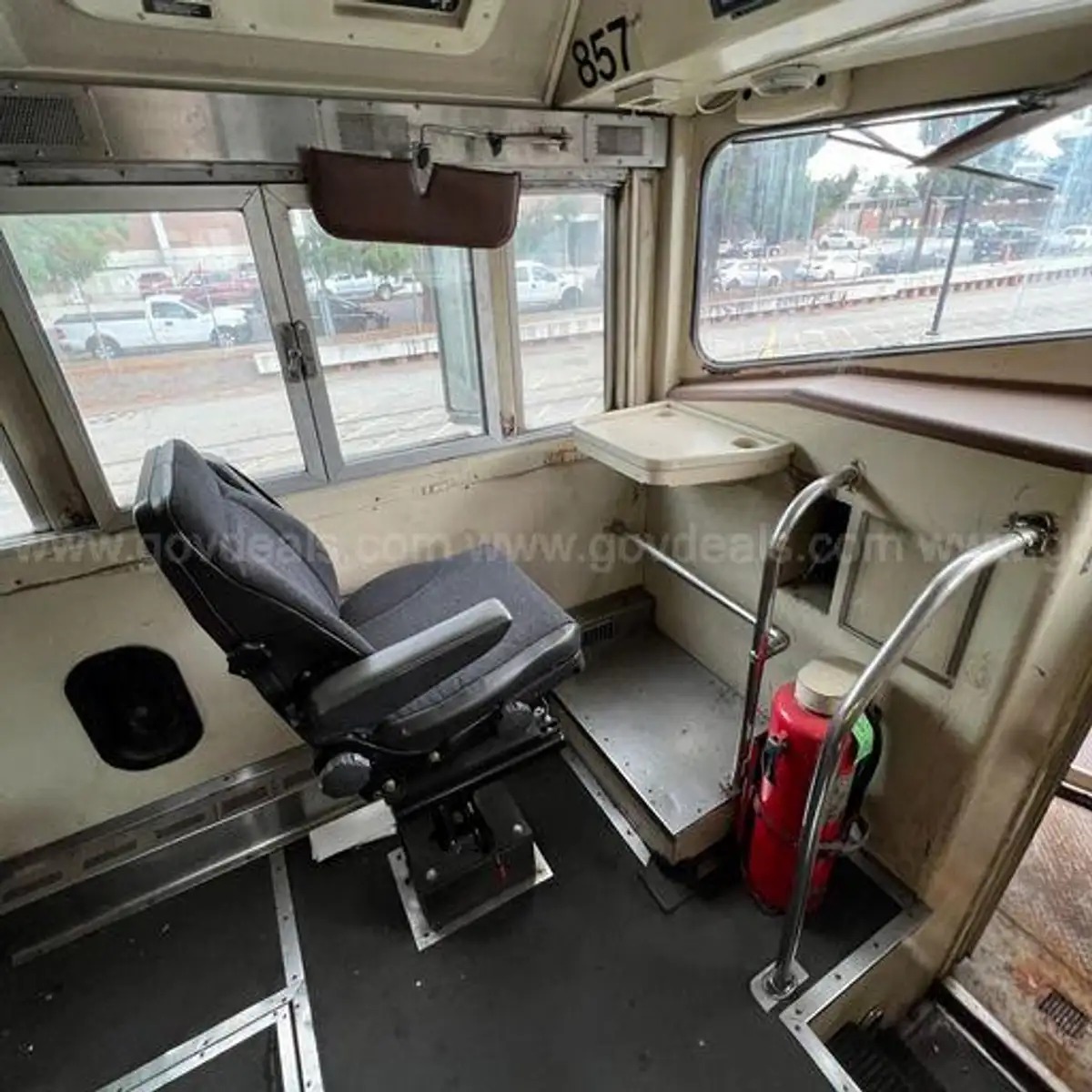

Whichever you choose, deals are currently $50,000 with 9 days to go on GovDeals. Yes, you read that right, someone has placed a bid on this unit! Wherever it ends up, I bet this locomotive will be epic.
Support our mission to champion car culture by becoming an official Autopian member.

