

Infrastructure projects are being delayed by up to a year as a result of hybrid work, according to the government’s chief adviser on major schemes.
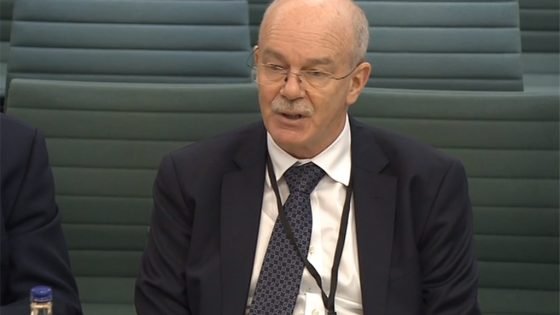
Nick Smallwood, chief executive of the Infrastructure and Projects Authority (IPA), told MPs that projects, including HS2, are being slowed down as a result of designers working at home rather than on site. office
“I have seen a significant extension of the design duration of projects as a result of hybrid work,” he told the Treasury Select Committee, which is conducting an infrastructure inquiry, on Tuesday (14 November).
“When you had designers in an office working together, the durations were pretty normal. What we’ve seen post-pandemic is a nine-to-twelve-month extension of those durations.”
He gave hybrid work as one of the main reasons why HS2 had started “flashing red” in the summer, when the IPA declared it was not possible.
However, he said he believed it was causing delays in infrastructure projects across the board.
“They all get affected in the design phase if those designers don’t work directly in the office,” he said.
Smallwood also said the Construction Manual helped create alliances and integration partners to work together on infrastructure projects, rather than individual contractors working in isolation.
“We want the prime prime contractors to do much more to integrate across the supply chain rather than just subcontract,” he said.
Pockets of excellence in this area were now being seen, Smallwood said, with joint venture partners working on Phase 1 of HS2 delivering “outstanding results” through digitalisation.
“They’re starting to show what’s possible in this country – we need to do more and consistently in every major project,” he said.
Smallwood also said that after the pandemic the construction sector had been “quite unproductive”, with very tight margins and a lack of investment in technology and people.
However, he added that a lot of work has gone into creating the playbook, which aims to reset expectations and focus on better results and more profitable work for contractors.
“We’re on a journey, we’re not there yet, but when the principles of the playbook have been applied, we’re seeing some really big results,” he said.
“We’re moving away from zero-value framework agreements where people don’t really have work committed to really focusing on teaming up and partnering with people to do an amount of work that gives them confidence and certainty over a period of time, which they can invest in people and technology”.
