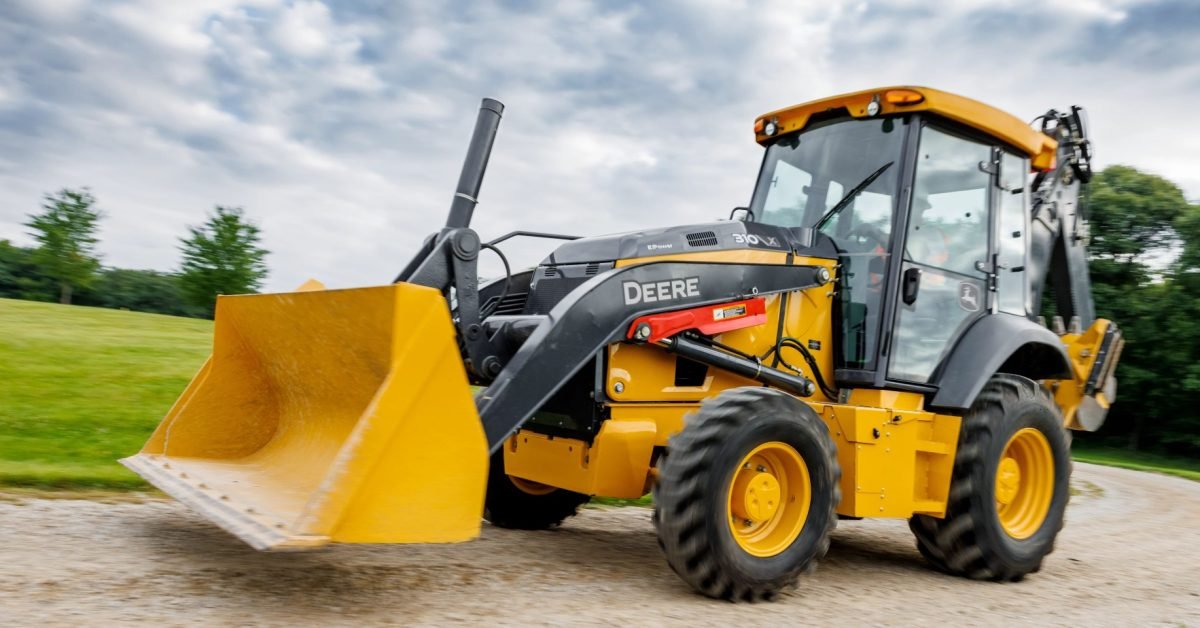
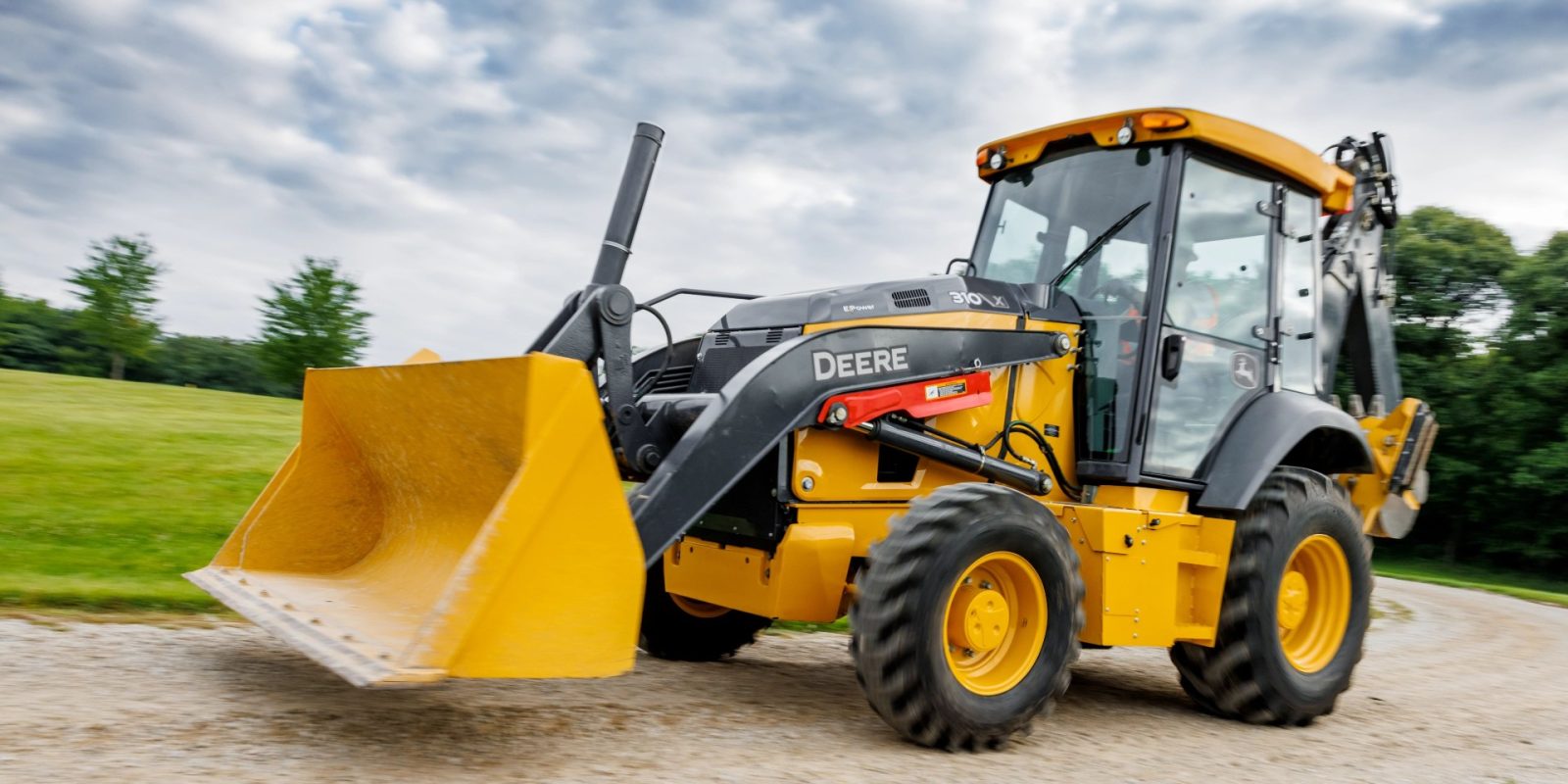
I traveled to Austin to check out John Deere’s second-generation 310 X-Tier E-Power electric backhoe; this is what i learned.
At 186 years old, John Deere is one of the oldest industrial companies in the United States. It plans to deliver more than 20 electric and hybrid-electric construction and forestry models by 2026. It also says it will deliver a fully autonomous, battery-powered electric farm tractor.
Deere’s prototype is one of the first electric backhoes in the US. Case Construction Equipment debuted the first all-electric backhoe, the Case 580 EV, in March 2020 and is now on the market. (Case also unveiled two new electric mini-excavators at ConExpo 2023 last month that are also commercially available.)
In 2021, John Deere began testing and showing the first-generation 310 X-Tier backhoe. And in December 2021, it acquired majority ownership of Kreisel Electric in Austria, which develops high-voltage battery systems with patented immersion cooling technology. The folks at John Deere claim that Kreisel batteries give conventional batteries 20% more life. Kreisel’s website states that its battery’s “unique low-temperature (<1°C) stretching throughout the module ensures that all cells are within the same temperature range, resulting in extended battery life battery life and superior performance."
Jon Gilbeck, John Deere’s global marketing, strategy and electrification leader, told me there are “about three prototypes” of the second-generation 310 X-Tier E-Power electric backhoe being field tested; National Grid has been working with John Deere to test them since 2021.
Gilbeck said the backhoe will be one of the company’s first EV machines to go on sale before 2026.
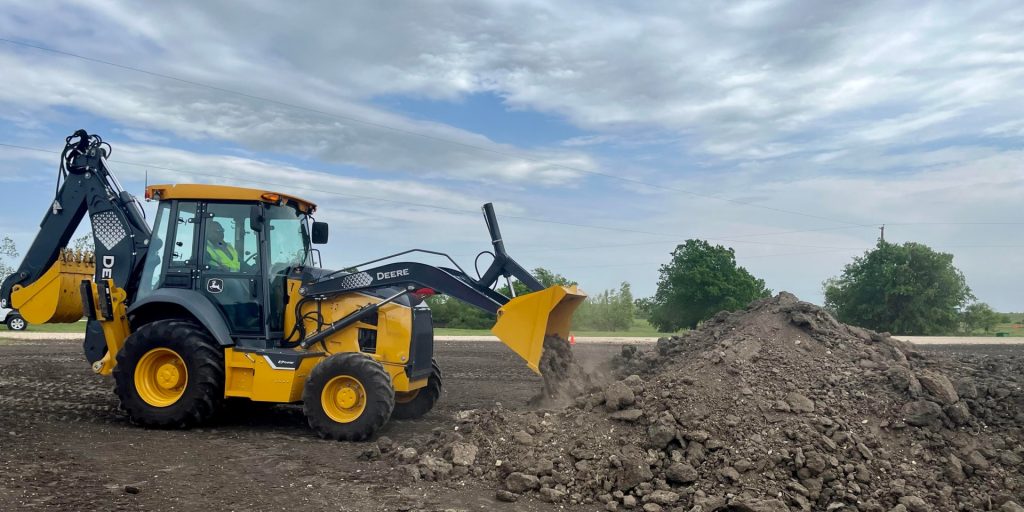
I got to check out a prototype backhoe at John Deere’s test farm near Austin last week. We saw the hydraulic arm and loader in action alongside a diesel backhoe performing the same actions.
The 310 X-Tier E-Power electric backhoe can do everything the diesel backhoe can do, but better: John Deere says it has 10-15% more performance. It’s quiet – it has a decibel level of 75 or less. Construction sites are dangerous, so reducing noise will reduce accidents as it will be easier for workers to communicate. It will reduce noise pollution in urban areas and also, most importantly, reduce emissions in general.
John Deere will not yet provide specifications for its backhoe prototype, but says it is considering a 120 kW engine, equivalent to a 100 hp diesel. The machine is in the 14-foot digging depth category, like the 310 diesel series the company sells.
John Deere says the “run time” of its 310 X-Tier is an “8-12 hour day” without having to recharge.
The 310 X-Tier has two circuits and three motors for HVAC, propulsion and hydraulics. It is able to separate its transmission torque from the hydraulics and still has no torque ratings.
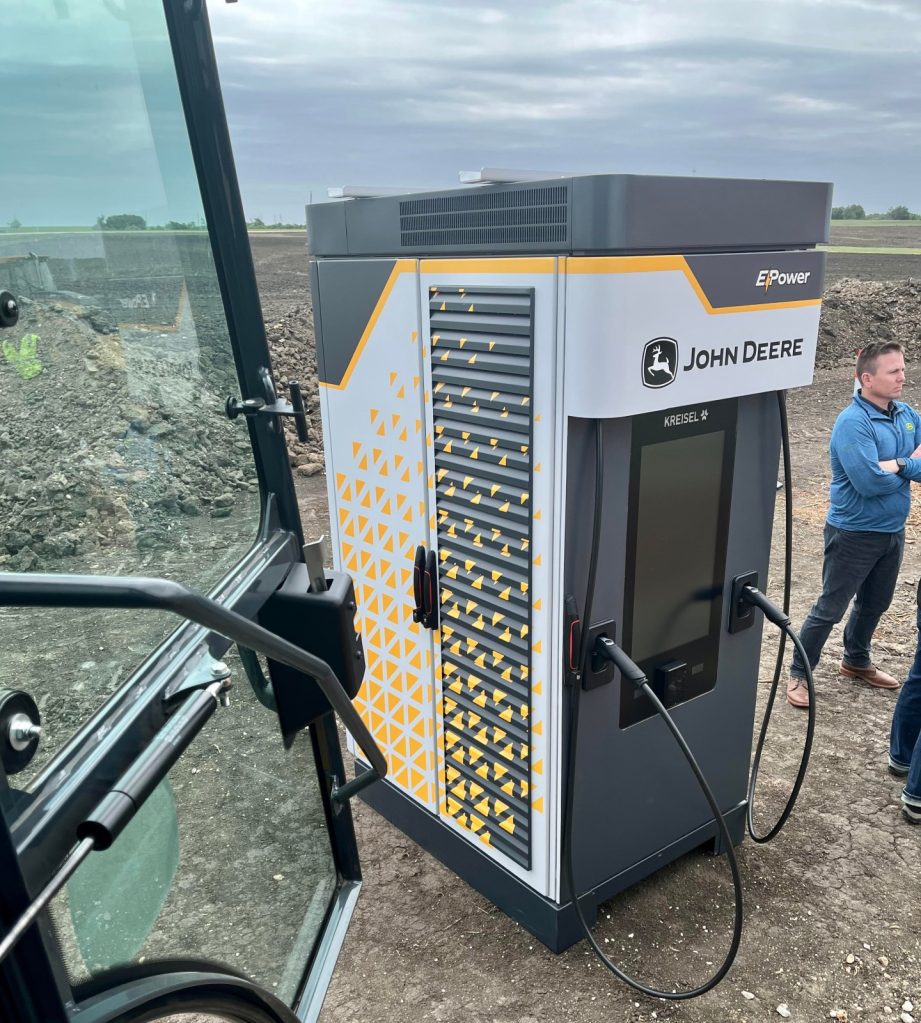
On the charging side, John Deere says it will offer mobile and installed charging stations for construction sites. (We saw an example of its charger installed, but it wasn’t live.) The backhoe is also compatible with any EV charging station. We all laughed at the thought of a backhoe pulling up to, say, an Electrify America charging station next to a Chevy Bolt, but hey, cool.
I look forward to seeing what John Deere debuts in the next three years and to see how the company makes the transition to electrification as quickly as possible.
Read more: This is how John Deere’s electric robots can plant 6,600 seeds in 3 seconds
Main photo: John Deere; Embedded photos: Michelle Lewis
UnderstandSolar is a free service that connects you with the best solar installers in your region for personalized solar estimates. Tesla now offers price matching, so it’s important to shop around for the best deals. Click here for more information and to get your quotes. — *ad.
FTC: We use automatic affiliate links to earn income. Month.