

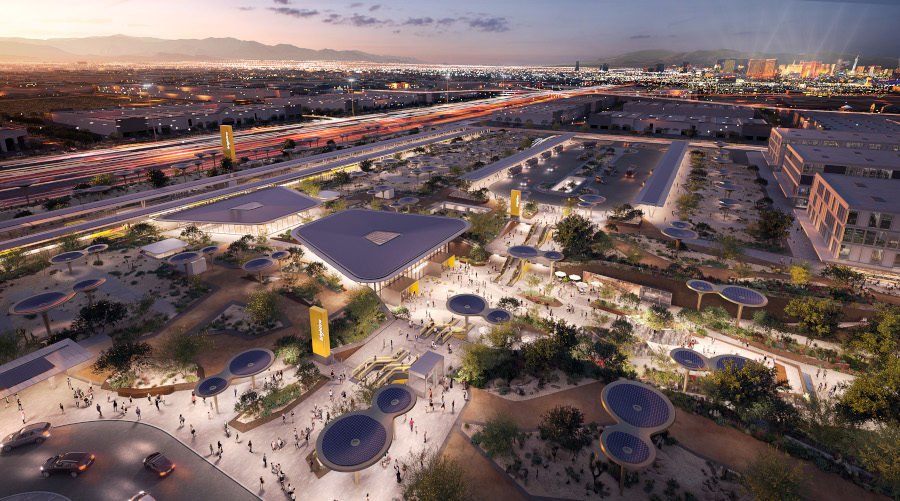
The U.S. Department of Transportation has provided an additional infusion of financial aid for a long-delayed $12 billion high-speed passenger rail line from Las Vegas to the South from California On Jan. 23, the DOT announced it will allocate $2.5 billion in private activity bonds for the 218-mile Brightline West project.
The rail line would run primarily along the median of Interstate-15. Its western terminus would be Rancho Cucamonga, California DOT and Brightline say the trains could reach 186 mph, cutting travel time to two hours, which is about half the time it takes to drive. Plans call for the train to run on electricity and produce zero carbon emissions.
“We appreciate the trust placed in us by DOT and we’re ready to get to work,” Brightline founder and president Wes Edens said in a statement.
Brightline says it expects to break ground “in early 2024,” adding that construction on the project is expected to take about four years. FField investigation work in the project corridor (the I-15 right-of-way) is underway, Brightline said Jan. 16.
The DOT’s new aid follows the department’s allocation of $1 million in private activity bonds in 2020 and its $3 billion Infrastructure Investment and Jobs Act grant to the Nevada DOT in december
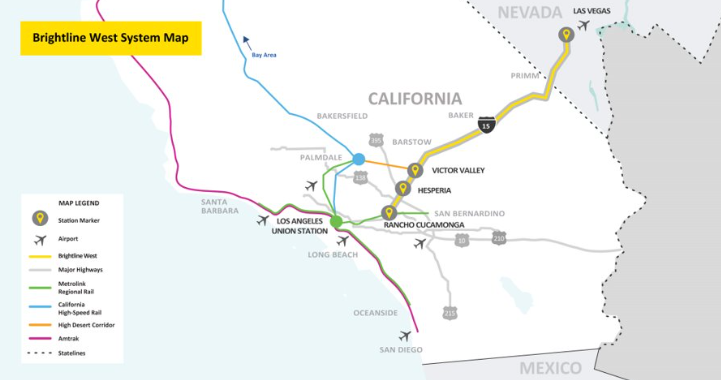 Map courtesy of the Nevada Department of Transportation
The IIJA doubled DOT’s private activity bond capacity to $30 billion from $15 billion. The bonds give privately financed transportation projects access to tax-exempt bonds. This lowers the borrower’s interest rate for the bonds and, according to the DOT, increases the presence of the private sector in financing infrastructure projects.
Last June, the DOT also awarded a $25 million Rebuilding American Infrastructure with Sustainability and Equity, or RAISE, grant to the San Bernardino County Transportation Authority to help fund the planned Brightline West stations for Hesperia and Victor Valley, Calif.
DOT Secretary Pete Buttigieg said in a statement that the new financial assistance represents “the next step in delivering on the promise of high-speed rail in the American West.”
