

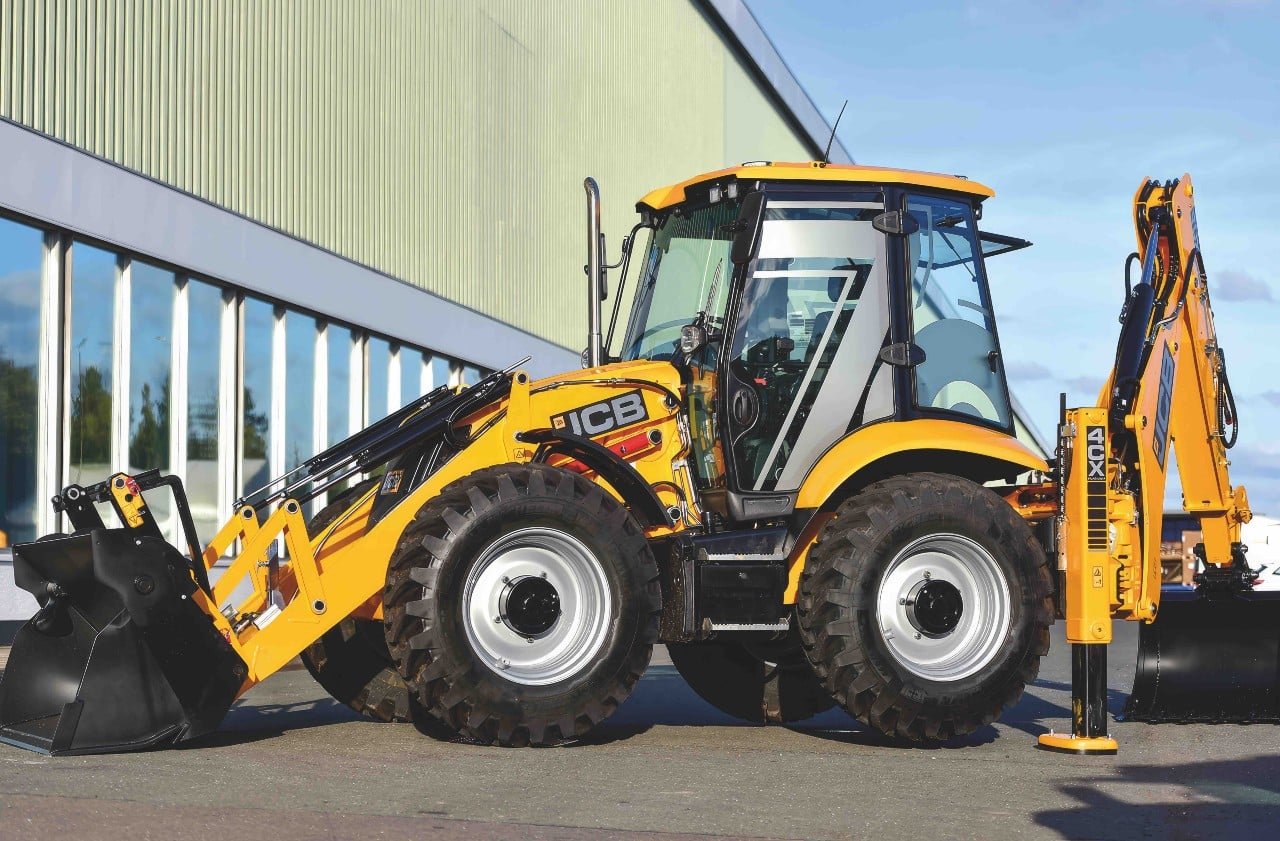
The JCB Backhoe Platinum Edition includes limited edition decals and signage. Image: CEA.
JCB machines are common in the global road and infrastructure industries. With 70 years of backhoe innovation, there’s more to come.
meIn the bustling world of construction equipment, few machines can claim the iconic status of the JCB backhoe. With its distinctive silhouette and versatile capabilities, the JCB backhoe has become an indispensable tool for construction professionals around the world.
This year marks an important milestone for JCB as the company celebrates 70 years of backhoe innovation.
Glenn McLeod, National Manager for Government Enterprises and Backhoe Sales Manager, has been associated with JCB Backhoes for 37 years. Throughout this time he has been heavily involved in the JCB backhoe range and its success in Australia. Its intimate knowledge of the product and industry requirements has seen JCB maintain a healthy market share in this segment every year.
“70 years of backhoe progress marks a remarkable journey driven by the company’s focus on innovation and industry leadership,” says McLeod.
“By creating the backhoe concept, JCB has produced one of the most versatile pieces of construction machinery in use around the world. With the iconic 3CX model, introduced in the 1980s, the JCB backhoe range is quickly became a global standard, showing a dedication to performance and versatility.”

The history of the JCB backhoe began in 1953 when founder Joseph Cyril Bamford developed the first hydraulic backhoe. This revolutionary machine quickly gained popularity for its versatility and efficiency, transforming the construction industry. Over the decades, JCB has continually pushed the boundaries of backhoe design, introducing innovative advances that have set benchmarks in the industry.
A legacy of innovation
JCB’s commitment to innovation is evident in the evolution of its backhoe range. Later models have integrated cutting-edge technology, such as EcoMax engines, to improve fuel efficiency and precision controls to increase productivity. JCB’s focus on operator comfort, safety features and sustainable engineering has also set benchmarks in the industry.
In the 1980s, JCB introduced the iconic 3CX model, which quickly became a global standard for backhoes. This model demonstrated JCB’s dedication to performance and versatility, cementing the company’s position as a leader in the backhoe market.
“Celebrating seven decades of backhoe progress, JCB remains at the forefront,” says McLeod. “It exemplifies a legacy of innovation that has shaped the company’s success and significantly influenced the evolution of backhoes in the construction industry worldwide.”
A tribute to excellence
JCB has introduced a special Platinum Edition of its backhoe range to commemorate this momentous occasion. Platinum Edition models will include limited edition Platinum decals and a grille badge. They will have platinum colored wheels. The cabin will have an embroidered graphic on the carpet, upgraded seat material with 70th anniversary branding and a center steering wheel cover with the 70th anniversary logo.
“Each machine will also have a plaque and customers will receive a free special Platinum gift pack with the backhoe,” says McLeod.
Related stories:
The strengths of JCB backhoes
The JCB backhoe range has consistently demonstrated its strengths in a number of key areas.
The versatility of JCB backhoes is designed to tackle a wide range of tasks. It ranges from digging and loading to trenching and material handling. This versatility makes them indispensable on construction sites, where adaptability is essential.
“JCB has a long history of pioneering advances in backhoe technology,” says McLeod. “EcoMax engines, advanced control systems and ergonomic designs are just a few examples of JCB’s commitment to innovation.”
JCB backhoes are built to withstand demanding construction environments. Its robust construction and durable components ensure longevity and minimize downtime.
“As a company, JCB prioritizes ease of maintenance, with accessible service points and user-friendly diagnostics,” says McLeod. “This improves overall efficiency and lowers operating costs.”
JCB’s in-seat servo controls allow operators to work comfortably through 90 degrees, providing unmatched comfort, safety and ergonomics.

The future of JCB backhoes
As JCB celebrates 70 years of backhoe innovation, the company hopes to continue its legacy of excellence. With a focus on alternative energy sources such as hydrogen combustion engines and electric power, JCB is committed to developing efficient and environmentally sustainable backhoes for the future.
JCB’s range of backhoes is a comprehensive solution for various construction applications. JCB is committed to performance, innovation, durability and user-centred design.
“If one thing is certain, the backhoe will stay and product development will continue,” says McLeod. “JCB is currently very advanced with the dramatic development of alternative energy sources. Zero emission carbon dioxide hydrogen combustion engines are a key focus of JCB.
Working prototypes are currently being evaluated, with major production looking very likely in the not-too-distant future.
“JCB has also developed and continues to introduce electric power into several product lines,” says McLeod. “Perhaps even a hybrid backhoe is possible, offering the best working range and reduced emissions.”
There is no doubt that JCB will continue to evolve the backhoe to improve productivity and operator comfort, further increasing productivity.
“Who knows… maybe the JCB backhoe will be the first construction machine building infrastructure on the Moon or Mars. As with all JCB products, it’s about innovation, not imitation.”
This article was originally published in the February edition of our magazine. To read the magazine, click here
