

The US General Services Administration manages more than 1,000 federal buildings in the US that were built when hazardous materials such as asbestos and lead paint were commonly used. Its policy is to inspect buildings that may contain asbestos every five years, but hundreds of them are pending inspection. GSA estimates it has more than $2 billion in unfunded environmental liabilities, with asbestos-related cleanups accounting for $1.6 billion of that total, according to a new report from the US Government Accountability Office.
Persistent asbestos could pose health hazards and could also delay GSA’s efforts to sell properties that are no longer needed, GAO says. GSA takes immediate action to deal with damaged asbestos, but generally waits for larger projects, such as renovations to reduce asbestos.
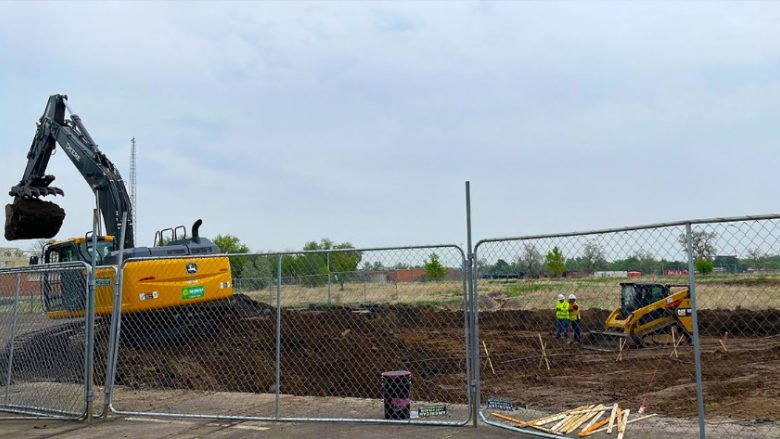
At the Denver Federal Center in Lakewood, Colorado, several parcels are being prepared for redevelopment. But before any construction begins, GSA, its property manager, wants to clean up soil and groundwater contamination related to past munitions manufacturing and the demolition of buildings that contained asbestos.
Fully addressing the contamination is estimated to cost $26 million, according to GAO. But GSA officials say a complete cleanup of the properties is unlikely due to cost and physical feasibility. Instead, the agency has established an interceptor ditch for the contaminated groundwater and expects to have ongoing monitoring and management costs.
The Denver Federal Center represents GSA’s largest hazardous release site by cost estimate, according to the GAO report. But about two-thirds of the buildings managed by the agency that are supposed to be inspected for asbestos every five years fail to comply with the asbestos inspection policy. More than 200 have not been inspected for changes in asbestos condition in 10 to 20 years, and 11 have not been inspected for more than 20 years. For another 228 buildings, GSA could not say when they were last inspected.
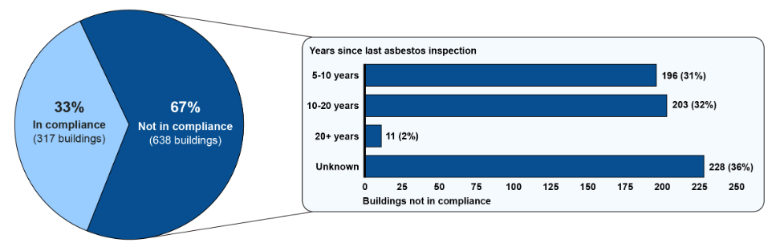 About two-thirds of GSA buildings that are required to undergo asbestos inspections are not in compliance with its policy. Chart courtesy of the Government Accountability Office
Speaking with the GAO for the report, GSA officials identified several reasons for the backlog of inspections, including limited funding, staff shortages and incomplete records. Additionally, the database it uses to track asbestos information has several limitations, including file size upload limits and a lack of a mechanism to track inspection completion . GSA officials must manually search the database, which is time-consuming.
GSA was also one of four federal owners with maintenance and repair backlogs that GAO studied for another report last year.
In the new report, GAO recommended two strategies GSA could take to address the problem: It could implement a plan to ensure asbestos inspections are conducted in accordance with its current policy, or it could revise the policy to use a risk-based approach. with strategies to account for funding shortages, backlog inspections and updating their database to facilitate compliance monitoring.
In response to the report, GSA Administrator Robin Carnahan wrote that the agency “agrees with the recommendation and is developing a plan to take appropriate action on the recommendation.”
GSA did not immediately respond to inquiries seeking more details about the plan.
