

For decades, the standard choice for electrical cable channels was galvanized steel conduit. However, in 2024, more and more homeowners, designers and contractors are choosing aluminum, both rigid aluminum conduit and aluminum EMT (electrical metallic conduit) over galvanized steel, for its sustainability and a series of other advantages.
Aluminum conduit and EMT can be used in almost all applications where galvanized steel is used, and performs the same UL standards as steel conduit.
Lower weight means faster installation
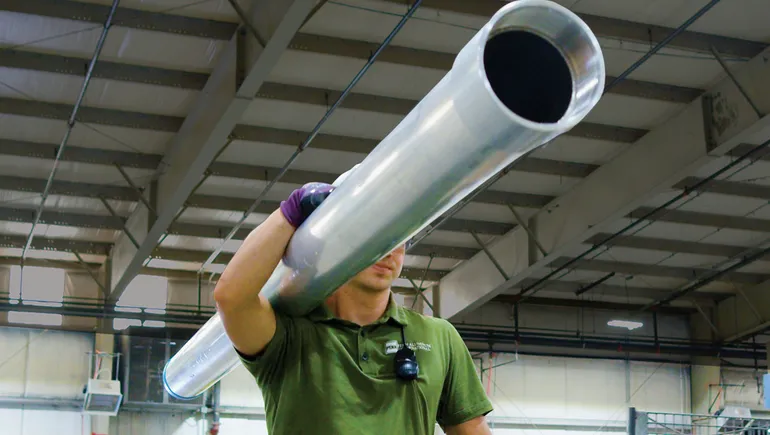
At one-third the weight of galvanized steel, the aluminum conduit and EMT makes installation faster and easier, reducing labor requirements and costs. Aluminum conduit and EMT they are easier to lift and transport, often requiring only one person when two or more would be needed with steel. Aluminum also makes on-site fabrication faster and easier, including cutting, bending and threading, allowing projects to be completed in less time with the same or fewer people.
Recycled aluminum is the sustainable option
For those interested in sustainable building products, aluminum conduit and EMT is the ideal choice. It is made of recycled aluminum and is 100% recyclable at the end of the building’s useful life. The significantly lower weight of aluminum also allows it to be shipped much more efficiently, reducing fuel consumption and emissions. Also, scrap aluminum is easy to recycle (and has a higher monetary value than steel), so it should never end up in a landfill.
Reduced material costs
The lower cost of aluminum alloy, coupled with the aluminum extrusion process, means that aluminum conduit and EMT offer significant cost savings over galvanized steel products (one of the few cases where the more sustainable product is less expensive). The lighter weight also translates into lower shipping costs compared to steel. In addition, the The immediate resale value of scrap aluminum also helps offset material costs.
Increased safety in the workplace
Another important issue in today’s construction industry is safety. At one-third the weight of steel, it’s easy to see how much safer it is for contractors to lift, transport and install aluminum conduit and EMT compared to steel. The significantly lighter weight means less risk of injury, both related to lifting and falling. Less effort required also means less fatigue, which is one of the most common causes of workplace injuries and a key loss of productivity. In a job market where skilled workers are more valuable than ever, a safer workplace with aluminum ductwork can provide a significant advantage.
About Penn Aluminum Conduit & EMT
Penn Aluminum, a Marmon/Berkshire Hathaway company, has been in business for over 100 years and has focused specifically on aluminum tubing for the past 50 years. Before entering the ducting market, the company specialized in providing innovative engineering solutions for the demanding automotive, HVAC and defense industries, where high quality and extremely tight tolerances are mandatory. Most vehicles made in the USA contain aluminum Penn tubes in their HVAC systems.
As the demand for sustainable building products grew, Penn saw an opportunity to address an unmet need for aluminum conduit and EMT. After years of research and development, perfecting its aluminum alloy to provide consistent and reliable wire bending and stretching, the company introduced its products to the construction market in 2021 and found immediate acceptance in major hospitals, schools, stadiums, office buildings and other projects. type
All Penn Aluminum Conduit & EMT products are approved and manufactured in America and are produced from domestic recycled aluminum. The company’s state-of-the-art manufacturing facility (which is ISO/IATF 16949 certified) in southern Illinois allows for fast and efficient nationwide shipping. For more information, visit pennconduit.com.
