

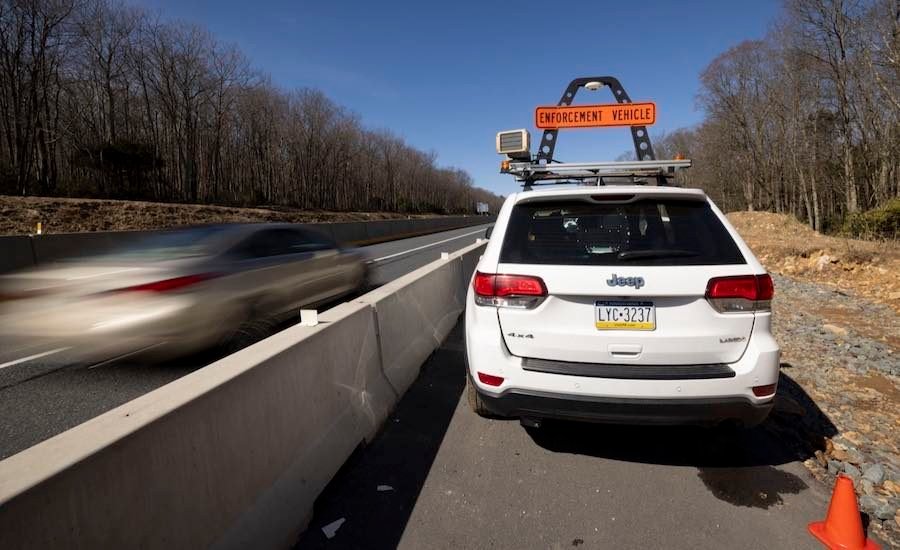
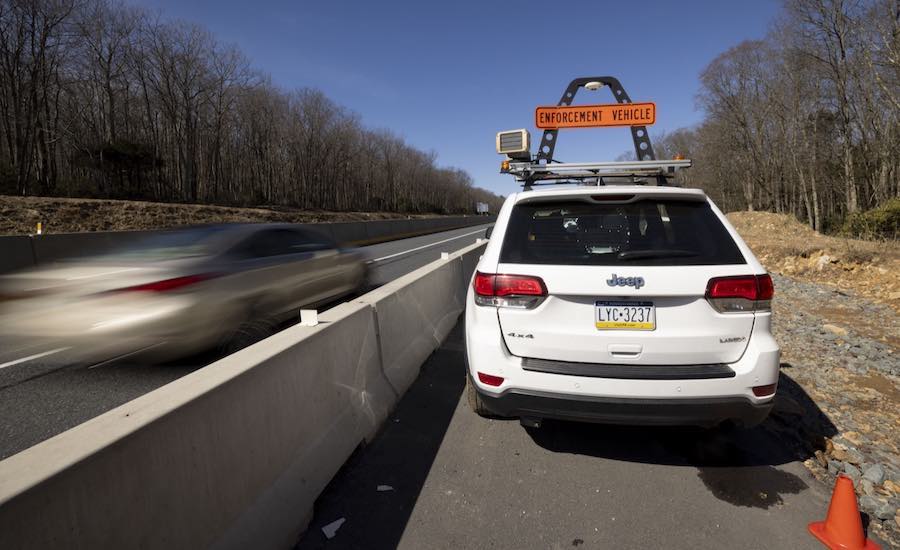
The Pennsylvania Department of Transportation and the Pennsylvania Turnpike Commission, in partnership with the Pennsylvania State Police, have officially begun implementing the work zone speed camera program throughout the state Building on a successful pilot study made permanent by the state Legislature late last year, the program uses electronic speed-timing devices mounted on vehicles to detect and record motorists who exceed the posted speed limits. posted work zone at 11 miles per hour or more.
Camera systems only work in active work areas where workers are present. Drivers are alerted to camera-equipped work zones by high-visibility signage placed before the control zone. According to the agencies, the deployments are selected through “a data-driven process in order to maximize the effectiveness of the systems.”
Speed camera deployments under the pilot program reduced speeding in work zones by 47 percent, the agencies say. Work zone accidents also decreased by up to 50% when a speed enforcement vehicle was present.
Under the program, registered vehicle owners will receive a warning letter for a first work zone speeding violation, a violation notice with a $75 fine for a second violation, and a warning offense with a fine of $150 for the third offense and all subsequent offenses. Revenue from the fines will be used to offset program costs.
In a statement, Pennsylvania Turnpike Chief Operating Officer Craig Shuey noted that the first warnings issued during the pilot program had a positive effect on driver behavior, with less than 17 percent of violations coming from repeat offenders.
“Also, the program serves as a reminder to the road that safety is literally in the hands of every driver when behind the wheel,” added Shuey.
The pilot program also found that enforcement challenges are not uniform. According to its 2023 annual report, the program found that travel speeds adjacent to work zones protected by barriers have been higher than those adjacent to work zones delimited only by barrels, cones or vertical panels.
“Over the life of the program, the percentage of vehicles above the speed limit and the percentage of vehicles speeding has been more than twice as high in barrier-protected work zones as in unprotected work zones” , the report says.
At least two dozen states have expressed interest in Pennsylvania’s pilot program, according to the report. He noted that a published Purdue University study commissioned by the Indiana Department of Transportation verified the effectiveness of the state’s work zone speed enforcement approach.
