

High-speed rail projects often come with challenges that can lead to delays, controversy and cost overruns, but there are ways to run them smoothly, according to new research from AECOM.
The Dallas-based contractor report delve into industry trends and how to make these notoriously challenging projects successful. It is based on a survey of 112 senior decision-makers involved in high-speed rail projects worldwide.
The growth of rail is key to decarbonising the transport industry, and the report expects these projects to thrive in the coming years. However US rail projects tend to take longer to complete and are more expensive than similar ones built in other countries, a separate analysis by the Eno Center for Transportation found. This is in part because American transit agencies rarely have the structure, authority, or expertise to deliver a major transit construction project.
Unique obstacles
Another challenge is that rail construction often stretches over longer timescales than other megaprojects, and that extended duration carries risks, according to the AECOM report. Political parties change and public opinion can change as rail lines are developed.
The H2 project in the United Kingdom is an example of a project that has fallen victim to political changes: New Prime Minister Rishi Sunak canceled the effort when he took office last year, citing high costs and bad management
In addition, inflation is particularly affecting these projects, causing them to go over budget and making expansion difficult. In fact, 73% of respondents to AECOM’s report worry that the rising cost of construction, equipment and materials could stall projects that are already underway.
And funding is another major concern, as cost overruns have derailed high-speed rail projects. A notable example from the US is The California Bullet Trainwhich now has a funding gap of over $100 billion, jeopardizing its full construction and thus its full utility.
Other important issues include land acquisition, property rights and right-of-way disputes. Inevitably, there will be people who, while in favor of the idea of high-speed rail, are unhappy with how particular proposals affect them, according to the report, as well as those who are unaware of the benefits.
The report also noted that complex approval and authorization processes can lead to delays and additional costs.
Best Practices
While each high-speed rail project is unique, successful ones have cross-cutting lines. The AECOM report highlighted several best practices for streamlining delivery:
- New financing models.
- Greater regional and international cooperation.
- Decisive long-term political leadership.
- New design and construction.
- Increased collaboration and disclosure of the sector.
- User-centered design and engagement.
- Design-to-cost and disciplined cost control.
The construction of railways in evolution
While many of these elements are out of the builders’ hands, some are within their control. In fact, 79% of respondents are excited about the prospect of new construction methods, which can reduce the time and cost needed to bring high-speed rail projects into operation.
Examples include modular construction methods, standardization of key elements, and more advanced machinery for tasks such as tunneling. The tunnels are being built using the cut-and-cover method, and the use of prefabricated arches has helped save time, costs and carbon, the report said.
Five years from now, the two most impactful innovations are expected to be energy-efficient design and low-carbon materials, which can further enhance the positive environmental impact of rail projects.
“One of the things I’m most excited about is that we’re looking to operate entirely on renewable energy,” former California High Speed Rail Authority CEO Brian Kelly said in the report. “We have land in the right-of-way parcels to host solar installations, which will also mean we can provide our service without taxing the power grid.”
How to build the railway better
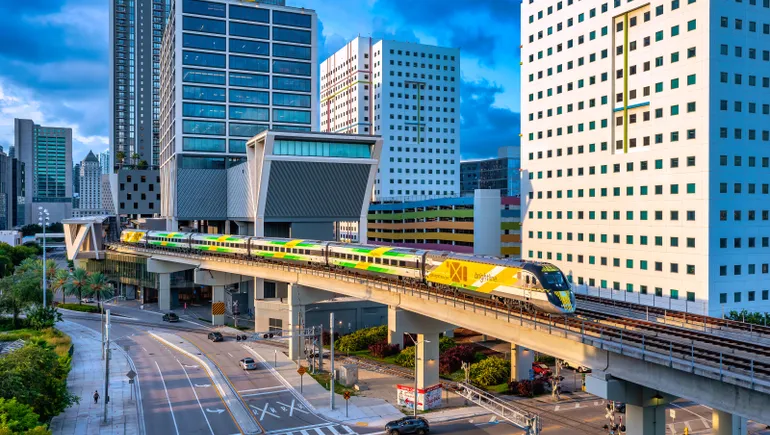
The question of how to finance high-speed rail infrastructure looms large in light of its massive upfront cost. Public funding remains key, but there are also successful examples of private funding for these projects, such as the Brightline Railroad in Florida and the upcoming connect Los Angeles and Las Vegas.
Brightline illustrates the importance of leveraging existing transportation corridors to expedite land acquisition and permitting while reducing costs. Public-private partnership models often bring a deeper degree of financial rigor in meeting project budgets, the report notes.
It is also vital to sort out land rights before going ahead with projects, the report’s authors said. Strong government leadership, including planning, management and policy, is essential for success. Successful projects tend to change minds, paving the way for the development of new lines and additional capacity.
“Big ideas and plans only get you so far. To get past this tipping point where the growth trajectory changes significantly, people need to enjoy the high-speed rail experience. You have to demonstrate the benefits,” Brightline CEO Michael Reininger said in the report.
