

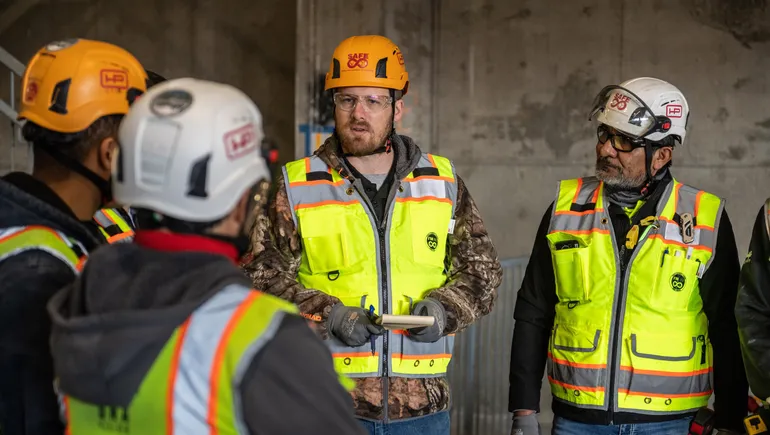
The foundation of the construction industry is the people, the craftsmen, who are at work every day. More than 10.7 million people were employed in craft roles in 2023 with demand continuing to grow. The unemployment rate in the construction sector fluctuates monthly and in December 2023 the rate was 4.4 per cent, which is higher than the national unemployment rate of 3.7 per cent during the same period of time. Office workers and skilled tradespeople are challenged roles and without these jobs, the construction industry would falter. Creating a system where every person is engaged and valued continues to be a priority every year across the industry.
Every voice matters
Craftsmen are the front line of construction, with unique, first-hand knowledge of the work being done on the job site. This knowledge includes the safety measures being taken, the effectiveness of communication between craftsmen and on-site management, the efficiency of team members and more. This knowledge can provide valuable insight into the safety and success of each project. They can also create opportunities to empower all voices in the workplace and demonstrate the value of those voices. Encouraging everyone to participate in safety meetings, pre-task planning, or setting project goals and expectations shows how each individual and voice is heard and supported. The trust that comes from valuing and involving each team member can lead to safer workplaces and more efficient work.
Involvement of team members
The demand for skilled craft workers continues to grow with more than 400,000 jobs per month unmet in 2023. If this demand continues to increase and the number of workers continues to decrease, the base of the industry is at risk. Putting safety first and valuing every voice is crucial. With a safe environment where employees feel confident that they are engaged, valued and heard, workplaces become more attractive.
By creating an environment where everyone is involved, there are opportunities to learn from each person within the organization. Human and organizational performance (HOP) is gaining industry attention as a different way to approach safety. The National Safety Council (NSC) defines HOP as “an operating philosophy that combines human factors engineering with organizational psychology and leads to better, more efficient, more resilient, and safer workplaces where employees and leaders are committed and valued by each other and by the organization..” Author Todd E. Conklin, Ph.D. discusses five key concepts that play a direct role in creating a welcoming and comfortable work environment for all team members.
- The understanding that people are fallible and that everyone makes mistakes;
- Blaming individuals for mistakes solves nothing;
- Learning and improvement are vital to growth in the workplace;
- Context drives behavior; i
- The leadership response to the problems of failure.
When these concepts are applied consistently, leaders build trust and confidence among team members. This trust enables honest communication and genuine learning, which facilitates the removal of barriers that may prevent safe work in the field, such as identifying and correcting organizational weaknesses that may lead to unsafe conditions or competing priorities, and the identification and early mitigation of probable error situations.
There are tools and programs available such as the Craft Voice in Safety (CVIS), OneVoice, etc. which, when implemented, offer artisans a direct line to communicate with executives. OneVoice’s mission, for example, is to “create a culture where everyone has a voice. In this program, the craft takes care of the craft in partnership with management through ownership, communication and prevention to achieve the common goal of zero injuries. The mission allows us to directly connect the experience of our trade with the commitment of our projectleaders, creating an environment of empowerment and open communication that ultimately leads to better outcomes.” The missions of CVIS and similar programs are complementary.
Creating a stronger industry
Construction Safety Week, the annual week-long national initiative, will take place May 6-10. As companies incorporate craft participation into their programs, there are several examples of ways they can get involved. At Construction Safety Week, we provide tools that companies can use throughout the year or as inspiration for additional engagement opportunities. Some of these include Toolbox talks, fostering personal connections between team members at all levels, understanding work-life balance for everyone, and ensuring there is open communication and health resources mentally available and animated for use..
In 2024, Construction Safety Week and OSHA are teaming up to raise awareness to stop falls and workplace injuries by calling for the largest industry-wide construction shutdown ever. The alignment between Construction Safety Week and OSHA brings the industry together in a new and impactful way, reinforcing our commitment to creating a positive safety culture with craft commitment. With so many people participating in the booth on May 8 (or a dedicated time during the week), we can raise more awareness than ever of the importance of safety in the industry and show how each person has a valuable voice that needs to be heard. ‘to listen. .
