

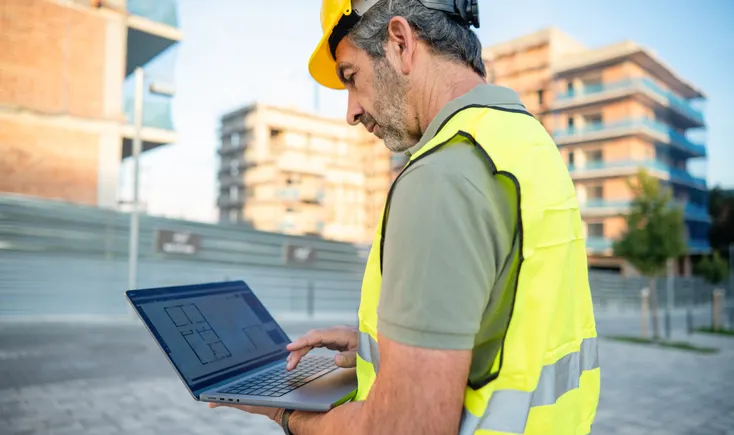
Spend time with any estimator right now and a theme quickly emerges. The conversation about technology has gone beyond curiosity. What matters now is whether it can be trusted in the midst of a live bid.
This hesitation is understandable. Construction has historically been slow to adopt new technologies, with only 1.4% of companies using AI to speed up workflows. In preconstruction, the bar for trust is even higher. Every amount is tied to scope, every assumption has financial implications, and every missed detail has a cost. Speed alone has never been enough to gain trust in this environment.
What is starting to change this perception is not automation per se, but the way AI is introduced into workflows. The shift to a human-in-the-loop model has been critical. Rather than replacing the appraiser’s judgment, these systems are used to support it. The system handles scale and repetitive work, while the estimator maintains control over validation, interpretation, and final decisions.
At Beam AIwe have seen how this dynamic plays out More than 1200 construction companies in the USA and Canada. Teams do not cede responsibility; they are rebalancing it. As a result, they are able to take on more deals, reduce time spent on take-off and improve consistency in how estimates are built.
That’s why trust in AI-assisted workflows develops gradually. It depends on how well the systems perform under actual project conditions, how clearly the teams can interpret the results, and how well the workflow aligns with how estimators already work.
Clarity is what earns the first level of trust
Material take-offs still represent a significant part of the bid cycle, often between 50 and 70%. This time has never been spent just measuring. A large part of this goes into building conviction in numbers.
When AI enters the workflow, the expectation doesn’t change. If anything, it becomes more explicit. Estimators want to see how quantities are derived, how boundary conditions are handled, and whether the logic holds across different drawings.
The power to win a bid lies in human judgment, meaning the experience of the appraiser. The question always comes down to: Can AI match it?
The teams that really succeed with AI-assisted workflows tend to be the ones that don’t treat it like a black box. They spend time understanding how the results are structured and where to focus their attention during reviews. Also, the teams that win are the ones that actually give this technology a shot. This kind of transparency and collaboration becomes the foundation upon which trust begins to form.
The review doesn’t go away; it becomes more focused
One of the most interesting changes appears in how review processes evolve. Rather than reducing security, AI tends to sharpen it.
Estimators no longer spend hours measuring manually. The effort is focused on validating scope coverage, checking for minor inconsistencies, and ensuring the overall bid is competitive enough to win. Estimators move up the value chain and their role becomes more of judgment rather than manual execution.
Over time, teams begin to standardize how they review results. Internal checkpoints become clearer and attention shifts to areas of higher risk. This consistency in review creates a sense of control, which is essential for building trust.
Adoption expands through experience
Adoption rarely happens across the entire workflow at once. Estimating teams are deliberate about where they introduce change, especially when the most important deadlines, margins, and relationships are at stake.
Initial use is often limited to specific trades, repeatable scopes, or project types where variability is easier to manage. This allows teams to evaluate performance without exposing all bids to risk.
As familiarity grows, so does the scope of use. What starts as a controlled application gradually expands to more complex projects. This progression is driven by experience. The more teams work with the system, the better they understand how it behaves in different scenarios.
Confidence is built through repetition
Confidence rarely comes from a single successful project. It develops with repeated use.
As teams work through multiple deals, they begin to recognize patterns in the results. They learn where to focus their checks and where the system works consistently. This creates a work pace where estimators can move more confidently without losing control over the outcome.
At this stage, AI becomes part of the workflow rather than an external tool, supporting teams to handle higher volumes without compromising accuracy.
This impact becomes tangible when you look at how teams work today. One of our long-term partners, Henry Greenberg, president of Guardian Roofingreduced bid execution time by 60% and saved more than 20 hours per week on take-offs. “I used to spend 25 hours a week on takeoffs, now it’s only 5. Beam AI has freed up enough time to handle 800 projects a year instead of 400, without hiring another estimator.”
At Rexel (Capitol Light), teams reduced takeoff time by up to 75% and significantly improved quote turnaround times
Trust is built in the work itself
The larger context makes this change even more relevant. Demand for projects continues to increase, while the availability of experienced estimators is expected to decrease over the next decade. Teams are already feeling the pressure to do more with limited capacity.
In this environment, AI adoption is less about experimentation and more about necessity. But need alone does not guarantee adoption at scale. Trust determines whether these systems are part of daily workflows.
Over time, the impact becomes apparent. Estimators spend less time measuring and more time making decisions that influence outcomes. Bid capacity improves, workflows become more stable, and teams operate more clearly.
In a discipline where accuracy and accountability define success, these are the ones who ultimately earn trust.
