

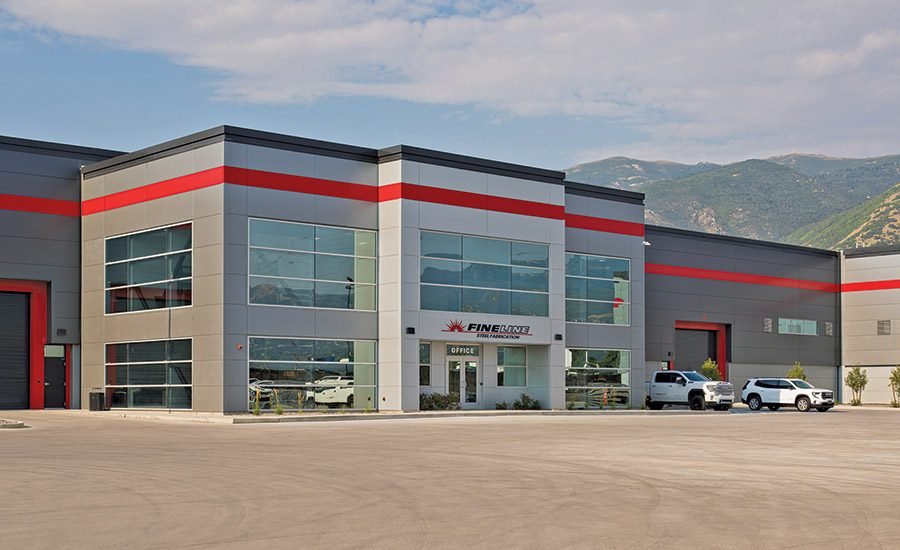
Fineline steel fabrication
Centerville, Utah
BEST PROJECT
Presented by Hogan & Associates Construction
owner Fineline steel fabrication
Leading design company Frank N. Murdock Jr. and associates
General Contractor Hogan & Associates Construction
Road engineer Reference engineering
Structural Engineer Calder Richards Structural Consulting Engineers
Wrapped in a bright red stripe, Fineline’s new 900-foot-long, 113,000-square-foot structure houses the manufacturer’s automated steel fabrication line. Situated on 9 acres, the facility offers its employees a better workplace and raises industry standards. Part of what dictated the length of the building was the robotic machinery to be housed inside, which also affected the design and location of the site. However, the new facility is also within meters of Fineline’s former buildings, so the requirements for occupied space and robotic machinery made the placement of the building critical. The team carefully navigated these spaces so steel production could continue during construction of the new facility.
Also, due to the robotic machinery requirements, the space does not have many interior walls, which created challenges for the trades working in the same space.
Due to the building’s unique requirements, the team timed the placement of each component as closely as possible to finish the floor, steelwork and envelope almost in tandem.

Photo courtesy of Kyle Aiken Photography
Material delays presented a challenge early on, and halfway through the project, the team changed the roof structure from joist and deck to I-beam. Since the steel fabrication shop has high energy demands, the team selected in-stock items to mitigate lead times and electrical gear delays while meeting the building’s energy requirements.
As part of the owner’s goal to improve the work environment for its employees, the facility will use a different cable that burns more efficiently, generating less smoke and without sulfur. The project team also installed air systems that constantly circulate and separate the welding air to ensure that smoke does not pass through the hoods.
This new facility will increase Fineline’s production sixfold, speeding up the steelmaking process. Meanwhile, as the market moves toward automation, Fineline is helping some welders and material handlers become engineers. Now they use robotics instead of welding or driving a forklift. It has also allowed Fineline to lower operating costs, add jobs to the community and increase its workforce by 63%.
