

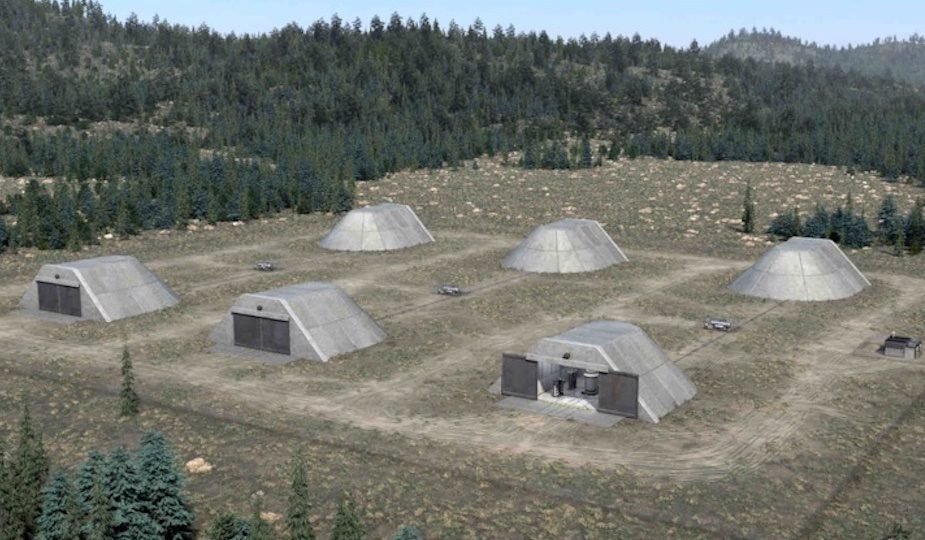

Design and construction firm Burns & McDonnell, Kansas City, will provide detailed engineering to nuclear technology company BWX Technologies Inc. (BWXT) for the development of small-scale transportable reactors that can provide thermal and electrical power for users in remote locations, such as mines. , military installations and data centers.
Under an agreement signed late last month, the company is advancing its work to produce the BWXT Advanced Nuclear Reactor, a factory-built microreactor system that is now being designed for planned multi-site development by the Wyoming Power Authority in the state. Each system would provide 50 MW of thermal power (MWth). Burns & McDonnell will design the balance of plant systems for the microreactor, including power plant design and pre-construction planning.
BWXT has been developing the microreactor since 2021 as part of the US Department of Energy’s Advanced Reactor Demonstration Program, with the effort receiving a funding award of $85.3 million over seven years. Burns & McDonnell and BWXT completed the first phase of the project for the state agency in early 2024 and the second phase will be completed in the third quarter of 2025. The work involves the completion of the conceptual design of a main microreactor unit , the development of a regulatory engagement plan and “demonstrating the capability of Wyoming’s supply chain to manufacture nuclear components,” BWXT said.
“As electricity demand grows and energy markets continue to evolve, small-scale nuclear reactors will provide new manufacturing opportunities and new energy production models for our industrial sector,” says Sean Schaub, coordinator of the authority nuclear industry.
The Wyoming agency has provided an investment of nearly $10 million to BWXT to assess the feasibility of deploying microreactors in the sparsely populated state to increase and diversify its energy production. The total cost of the project is estimated at $20.5 million, with the state investment to be offset by other funding sources, according to the authority.
Burns & McDonnell said in a statement that the BWXT advanced nuclear reactor is a passively safe design that can power remote facilities, while providing “cheap, safe and carbon-free sources of heat and electricity.”
In addition to supply chain development, Burns & McDonnell will support BWXT in the development of constructability, schedule and cost estimation, says Luke Krooswyk, its nuclear reactor project manager. “Being an integrated EPC allows Burns & McDonnell to approach the project with an early build mentality.”
The reactor runs on so-called TRISO nuclear fuel, which is stronger than traditional nuclear fuel and less likely to release radioactive materials in an accident, BWXT says. It also has a passive cooling system that does not require external energy. “We’re trying to minimize the use of new technology,” says Erik Nygaard, director of product development at BWXT. “From our engagements with end users, one of the main things we’ve heard they want is predictability in operations and a highly reliable system.”
BWXT has also entered into a cooperative agreement with the state as it evaluates locations for a potential new TRISO nuclear fuel production facility to support expected demand for microreactors.
“With demand for clean, reliable energy at an all-time high, nuclear power is poised to play a crucial role … and microreactors offer extended reach to new users,” said Scott Strawn, vice president and general manager of the energy group at Burns & McDonnell.
BWXT sees “tremendous pent-up demand” for microreactors and small nuclear reactors in the U.S.,” Nygaard says. “Many parties have told us that if we had a product to sell today, they would buy it.”
In recent years, Wyoming has become a growing center for advanced nuclear development, including the TerraPower Natrium nuclear reactor project that is backed by tech billionaire Bill Gates. It broke ground in June near the site of a former coal-fired power plant in Kemmerer for non-nuclear work, with Bechtel as the project’s EPC contractor.
The $4 billion project aims to demonstrate advanced nuclear technology combining a sodium-cooled fast reactor with molten salt-based energy storage and includes BWXT as a supplier. In April, it became the first advanced nuclear power plant in the United States to seek a federal construction and operating permit to test its technology on a commercial scale.
