

.webp?t=1777472100)
After nearly 60 years of discussion, Chicago has moved forward on a $5.7 billion Red Line extension planned to provide rapid rail transit to the city’s South End, billed as the largest capital project in Chicago Transit Authority (CTA) history.
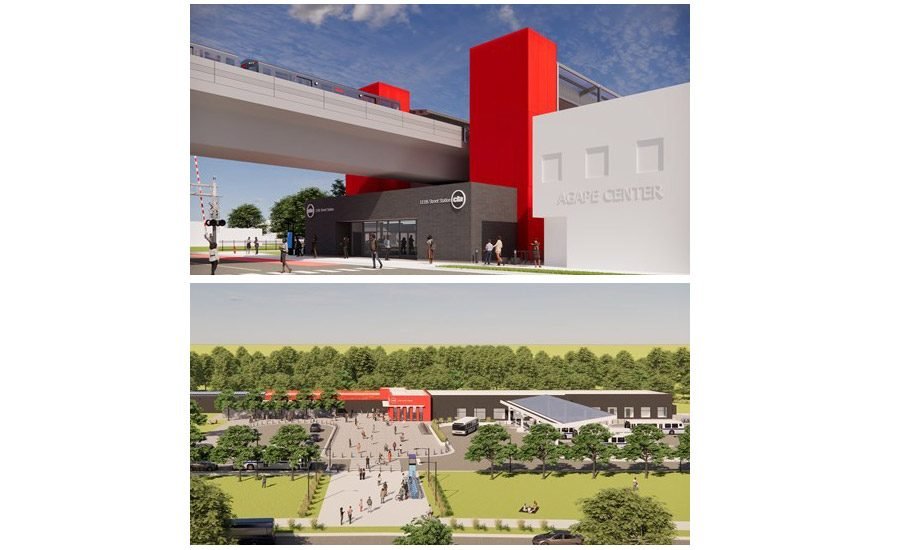
The extension will cover 5.5 miles from 95th Street up to 130th street and will include the construction of four new Red Line stations at 103rd111, Michigan and 130th streets In addition, a new rail yard and related rail facilities are planned near 120th Street to improve the operational efficiency of the entire Red Line and CTA system.
Chicago-based Walsh Construction and French contractor VINCI are serving as the design-build contractor for the project, which began on April 24.
Work has already begun to prepare the project for construction, including the demolition of the acquired properties and the relocation of utility poles and other equipment where the new track will be built.
Construction is expected to begin this spring with work including drilling new elevated track columns, pouring concrete to create the new track foundations followed by installing track columns. Construction of the station is scheduled to begin in 2027 and is expected to be completed by 2030.
The CTA has contracted with workforce assistance agencies including Chicago Women in Trades, HIRE 360 and Metropolitan Family Services.
CTA and design-build contractor Walsh-VINCI Transit Community Partners have committed to creating pathways for Chicagoans to receive training and access to jobs on the project.
CTA included targets in the Walsh-VINCI contract to ensure that small businesses certified as Disadvantaged Business Enterprises (DBE) could bid for subcontract work. These targets are 25 percent for project design and 22 percent for project construction.
“Today’s news demonstrates our shared commitment to transit equity and opportunity for all Chicagoans,” Chicago Mayor Brandon Johnson said in a news release. “Far South Side residents have waited decades for this crucial rail service to come to life.”
The project is expected to generate more than 12,500 construction jobs.
