

.webp?t=1774881913)
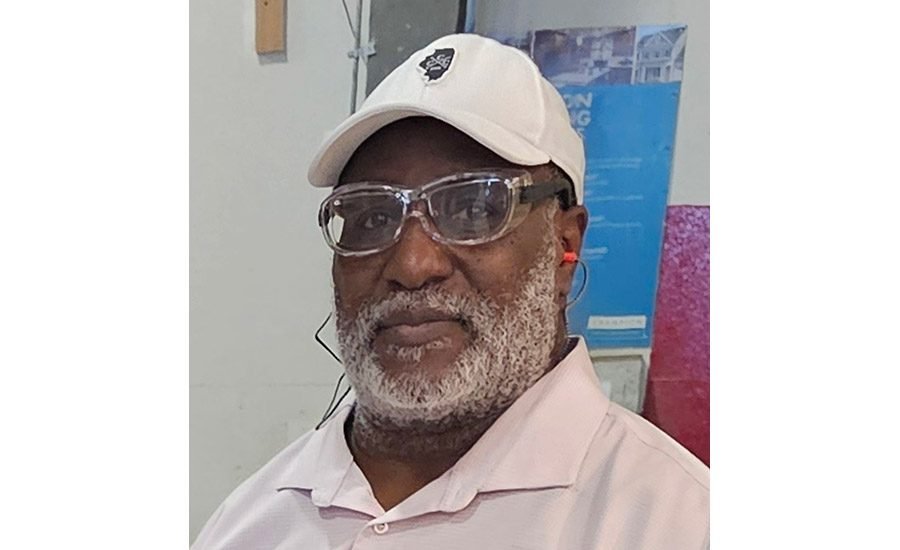
A contractor killed on Chicago’s West Side on March 24 is being remembered as a guide and advocate for minority-owned businesses seeking to be part of Project 1901, a 15-year, more than $7 billion plan to redevelop 55 acres around Chicago’s United Center with housing, retail, entertainment and a public plaza.
Jerry Lewis, 67, was walking in the 2100 block of West Madison Street around 12:50 p.m. on March 24 when two men, Nassie Mason, 28, and Erving Harris, 31, got out of a Honda and approached Lewis. Mason allegedly shot Lewis in the back of the head before Harris allegedly shot him three times in the body, according to local news reports.
No motive has yet been released for the alleged killing witnessed by Chicago police who were patrolling the area in an unmarked vehicle and arrested the two men within eight seconds. The two suspects were also caught on surveillance cameras allegedly waiting for Lewis to exit a building for 90 minutes before walking up to him and shooting him.
Mason and Harris, both of Chicago, were charged with first-degree murder and felony possession of a weapon. At a hearing on March 27, both men were remanded in custody pending trial.
Lewis, who owns a construction and development company, served as executive director of the 1901 Community Implementation Committee, training minority-owned contractors to participate in the future work of Project 1901. One of the people participating in the training is Traci Quinn, founder and CEO of Pink Hats Construction & Development Group.
“Jerry Lewis was more than a mentor—he was a visionary, a connector, and a true advocate for people who are often overlooked, especially on the West Side of Chicago,” she says. “Through his leadership with Project 1901 and his presence in the construction and development space, he created real pathways for people like me and many others to enter opportunities that we might not otherwise have had access to.”
Quinn says she and others are learning about estimating, bidding, accounting, engineering, design and other topics at the committee-sponsored training. Intends to bid for carpentry, painting and plasterboard work in 1901.
“Jerry believed in building people,” he adds. “It poured [his energy] in emerging developers, small contractors and returning citizens [from prison]helping us see that we belong to rooms and projects that historically excluded us. He didn’t just talk about equity, he actively created it.”
The Chicago Tribune notes in an editorial that “Over the years, Lewis hired men from the West Side, some of whom had past gang ties or criminal records. Born and raised on the West Side, Lewis raised his family in the southern suburbs, but never lost touch with his roots. He dedicated himself to mentoring others in his old neighborhood who aspired to follow in his footsteps.”
At a May 2024 hearing on an affordable housing project in Chicago, the editorial notes that Lewis said “wI’ve taken 15 previously incarcerated gang leaders and helped them start their own businesses,” and that these companies “are hiring in the community to make sure that the violence is reduced, that there are … well-paying jobs with the unions.”
