

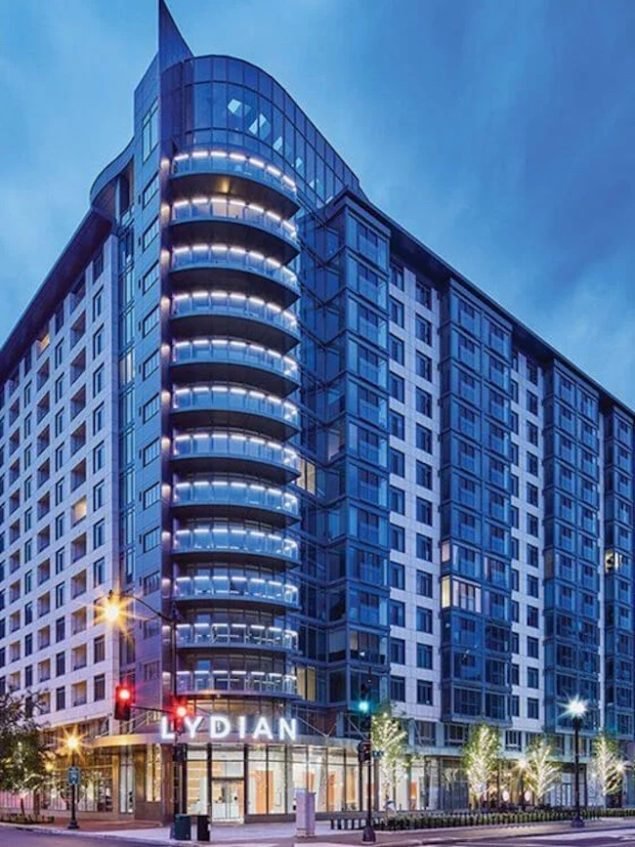

In what the Washington, DC attorney general has called the city’s largest workers’ rights settlement story, a major specialty contractor and other companies in the construction industry must pay more than $1.75 million in restitution to about 1,200 construction workers who were denied overtime pay, sick leave and other benefits as a result of being misclassified as independent contractors on various projects in the area.
Totaling $3.45 million, including civil penalties and attorney’s fees, the settlement announced July 29 by Attorney General Brian Schwalb’s office resolves a lawsuit it filed in 2022 against Power Design Inc., a large electrical contractor from St. Petersburg, Florida; general contractor John Moriarty & Associates, Arlington, Va., several local job brokers, as well as electrical subcontractors including MBJ Electric and K&K Electric & Construction, both of Maryland.
The lawsuit alleged that the misclassification practices, which spanned eight Power Design projects in Washington, were part of a deliberate attempt to suppress labor costs and increase profits. Because city law holds general contractors liable for labor violations committed by the subcontractors they work for, the agency sought to hold Moriarty liable for subcontracting with companies that systematically misclassified workers.
In addition to the monetary payments, the terms of the settlement require the companies to review their payroll and hiring practices to avoid misclassifying workers in the future.
Power Design, which ranks 28th on ENR’s current list of 600 specialty contractors with $987 million in 2022 revenue, must provide certified reports to Schwalb over the next three years to demonstrate compliance with the terms of the settlement agreement and with the District of Columbia Law. Moriarty must include language in all future subcontracts for local projects requiring subcontractors to strictly comply with all city wage and hour laws, list the names of all people working on the projects, and prominently post bilingual workplace notices informing workers of their rights under DC labor laws. .
In agreeing to the settlement, Power Design and Moriarty, who have collaborated on numerous projects in the Washington, DC area, admit no wrongdoing or liability. In a statement to ENR, Power Design claimed that while it was paying workers “amounts in accordance with law,” its subcontractors MBJ and K&K “were not passing these benefits on to employees who were actively working” on these projects on time .
The statement added that Power Design took “prompt corrective action” to quickly address the subcontractors’ mistakes and fully compensate affected employees,” while also severing its relationship with the two subcontractors. According to a Power Design spokesperson, less than 100 MBJ and K&K employees were working on their projects when the alleged misclassification errors occurred.
ENR could not reach the two subcontractors for comment.
In a separate statement, Moriarty said the company “has never been part of any scheme to pay reduced wages to workers” and accepted the precautionary terms of the settlement “in order to assist the Attorney General’s Office in developing future cases against non-following subcontractors.” the Law.”
Power Design and its labor brokers faced a similar misclassification lawsuit from the District of Columbia Attorney General, which led to a $2.75 million settlement in 2020. According to Power Design’s statement, the adjustments in the company’s subcontracting program were completed the following year “guarantee all subcontractors.” involved in [firm] Projects strictly adheres to rigorous payroll procedures, including working with a third-party payroll auditor and ensuring the correct classification of compensation for each employee who contributes to a project.” The statement adds that Power Design does not has had any compliance issues since implementing the improvements.
The January 2021 policy changes “were unrelated to the 2020 agreement, which we have fully complied with,” a company spokesperson told ENR. “These updates were proactive and voluntary measures stemming from our ongoing compliance efforts. They exceeded the 2020 settlement requirements, targeting areas of improvement in [city] practices of subcontractors”.
However, the attorney general says he discovered evidence that Power Design failed to comply with the requirements of the 2020 settlement because it “failed to implement sufficient policies to ensure compliance” with the Workplace Fraud Act. district and the Minimum Wage Review Act, leading to the 2022 demand.
