


Four Atlantic coastal states will use more than $421 million in funding through a US Environmental Protection Agency grant to restore coastal areas as part of an ambitious program to reduce carbon emissions, officials announced on July 30.
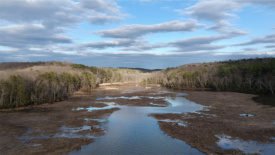
Gathered at the Green Swamp Preserve in Supply, North Carolina, in Brunswick County near the coast, EPA Administrator Michael Regan, North Carolina Gov. Roy Cooper (D) and other officials detail the significance and impact of the EPA’s Climate Pollution Reduction Grants grant. program
The $421 million grant will fund 21 implementation-ready projects planned by the Atlantic Conservation Commission, a four-state coalition focused on protecting and restoring coastal, peatland and forest lands. Participating entities include the North Carolina Department of Natural and Cultural Resources, the South Carolina Office of Resilience, the Maryland Department of the Environment, and the Virginia Department of Water Resources.
The projects will restore coastal habitats and forests through reforestation, land revitalization and planting to improve natural carbon sinks. They include coastal and habitat restoration efforts, as well as projects to reduce soil runoff and nitrogen pollution to improve water quality in the Chesapeake Bay.
“Renewable energies in the electricity sector i [electric vehicles] on the road we get most of the headlines and attention when we talk about carbon reduction, and it’s important for us to continue to do those things,” Cooper said, “but this grant is estimated to have the equivalent carbon reduction of take 6 billion gas cars off the road.”
The projects, according to the EPA, will protect and restore 33,000 acres of carbon-rich coastal peatlands and wetlands in North Carolina and Virginia, plant 217,700 trees and 4.8 million native wetland species in Maryland, reforest 55,000 acres in North Carolina and will improve management of 93,000 acres in the Appalachian and bottomland forests of South Carolina, Virginia and Maryland.
“These grants represent a historic opportunity for communities to chart their own path to a cleaner, more resilient future and the opportunity for all levels of government to develop and implement climate solutions that address the needs of local communities and the opportunity to give communities, especially overburdened and underserved communities, a seat at the table while fighting climate change,” Regan said.
Around the world, peatlands like those at Green Swamp Preserve store twice as much carbon as the world’s forests, Regan said, meaning that when they’re destroyed or burned, they release huge amounts of climate pollution, threatening biological diversity and ecological health, as well as the health of surrounding communities.
Regan, the former secretary of the North Carolina Department of Environmental Quality, called the grant program for climate pollution reduction “one of the most innovative and exciting programs.”
“That’s sweet,” said Katherine Skinner, North Carolina executive director of the Nature Conservancy. The groups are “ready to go” on the projects, he said, thanks to decades of work by environmental groups and Cooper, who said he got on the phone with the governors of the other three states to align the coalition.
Funded by the Inflation Reduction Act, the grant is designed to implement community-driven solutions to address the climate crisis, reduce air pollution, advance environmental justice, and accelerate the energy transition net of the country
The EPA, which expects to announce another $300 million in selections under the Climate Pollution Reduction Grant Program later this summer, selected 25 winning projects through a competition that received nearly 300 sol· requests The $4.3 billion in awards is the second phase of the climate mitigation grant program, which awarded a quarter of a billion in its first phase.
As ENR reported earlier this month, the Atlantic Conservation Commission award joins two dozen others in 30 states and tribal territories that are expected to reduce greenhouse gas pollution by 148 metric tons in 2030 and 971 million metric tons in 2050, the same as generating 5 million homes every year for 25 years.
The ACC project itself is expected to reduce 3.4 million metric tons of carbon dioxide between 2025-30 and a total of 28 million metric tons between 2025-50.
