

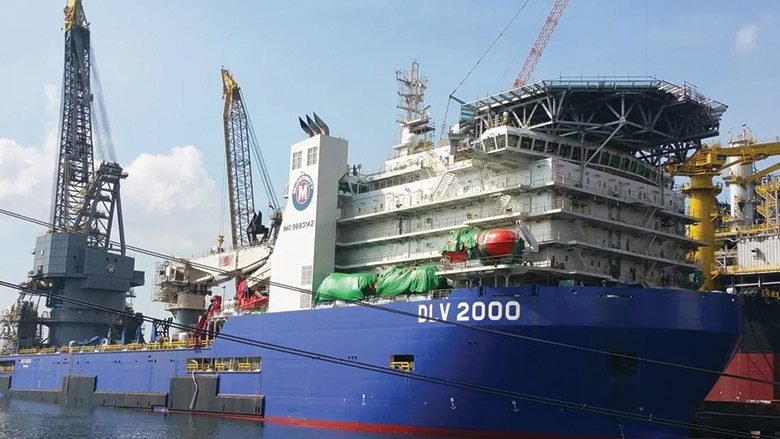

Houston-based offshore contractor McDermott International won a contract from a unit of Malaysia’s state-owned energy company Petronas for the engineering, procurement, construction, installation and commissioning of a subsea natural gas development project 75 miles off the coast of Brunei on the island of Borneo. The contractor describes the Kelidang project as “one of the largest conventional gas projects in the country” and the first in deep water of about 150 meters.
No contract value was disclosed, but reports estimate it at “up to $1 billion” and the development investment at nearly $1.4 billion, with the final investment approved in November. McDermott’s award follows his engineering and front-end design work for the project, he says.
Under the scope of the contract, the company will provide services for a subsea production system and associated infrastructure, including umbilicals, risers and flowlines, to connect six wells to a floating production unit for natural gas recovery. It will also provide services for a gas export pipeline that will supply feedstock to Brunei’s liquefied natural gas sector. The project would have a daily gas processing capacity of 450 million cubic feet.
McDermott’s engineering center in Kuala Lumpur, Malaysia, will lead project management, said Mahesh Swaminathan, senior vice president. MISC, a unit of Petronas and a major Malaysian marine contractor, is also working on the project. Petronas will operate the project and has a 45% stake. Other stakeholders include Murphy Oil, Shell, Mitsubishi Corp. and Brunei National Petroleum Co. Commercial production will begin around 2030.
Brunei’s economy grew by 4.2% in 2024, with a similar expectation for 2025, and oil and gas revenues are key to this growth, according to a recent report by the University of Brunei. “While the share of upstream exports has declined, this has been largely offset by growth in oil and gas and chemicals,” he said. The share of fuel exports fell from 95.2% to 80% between 2010 and 2022, while chemical exports grew from 1% to 17.5%. “Strategic diversification into these… for export is both profitable and sustainable,” the report said.
________________________________________________________________________________________________
2 million dollars
Final investment decision amount for the Gorgon 3 offshore gas development project in Western Australia approved by energy firm Chevron and its partners on 4 December. It will link two offshore gas fields with the Barrow Island gas gathering infrastructure and LNG production facilities.
Source: Chevron Australia
Canada’s next LNG export site could begin work
Construction on the proposed Ksi Lisims LNG export terminal in Prince Rupert, B.C., initially estimated at $10 billion and set to be Canada’s second such facility, could begin in 2026 after Canadian Prime Minister Mark Carney said it would be added to a list of domestic infrastructure projects being accelerated to boost the economy.
Set to be a two-structure, low-carbon floating LNG facility with an expected capacity of 12 million metric tons per year when operational in 2028-29, Ksi Lisims is a joint venture between natural gas producers from the United States and Canada and the Nisga’a First Nation, and is expected to issue a final investment decision early next year.
Contractors include Black & Veatch for front-end engineering; Samsung Heavy Industries for construction; Siemens Energy for electrical systems; and Ledcor for initial site work. Bechtel is the pipeline contractor for the up to 560-mile Prince Rupert Gas Transmission pipeline that will transport gas from northeastern British Columbia to the site, also on the fast list.
But both projects have faced opposition from environmental groups and First Nations tribes.
KSI Lisims follows the commissioning this year of Canada’s 14 million tonne per year LNG export facility, also in British Columbia.
