

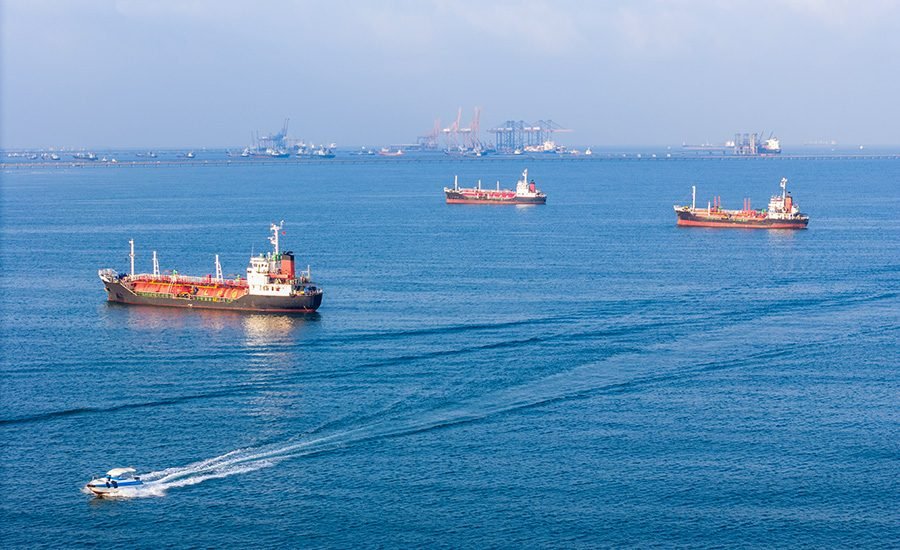

The war between the United States, Israel and Iran has created a massive need for repair and restoration work that will go directly into the hands of the engineering and construction industry, but the work will affect projects and supply chains far from the Gulf.
Damage to more than 80 oil and gas facilities across the region has produced an estimate of restoration costs ranging from $34 billion to $58 billion, according to Rystad Energy, with downstream petrochemical and refining assets bearing the brunt due to the scale and complexity of the destruction. The contractors, fabrication yards and long-haul equipment needed to execute this work are the same ones already committed to a global wave of LNG, offshore and refining projects sanctioned from 2023.
“The repair work does not create new capacity. It redirects existing capacity and this redirection will be felt in project delays and inflation well beyond the Middle East,” Rystad Energy said in a recent market update.
International Energy Agency Executive Director Fatih Birol said some of the most severely damaged facilities could take up to two years to return to pre-war production, a recovery time long enough to directly compete with active project cycles elsewhere.
RELATED
Trump implements Defense Production Act to address grid equipment bottlenecks and energy projects
Team stacks are the critical path
In the LNG, offshore and refining markets, the constraint is not funding or will. It’s recruitment.
Critical components, including large-frame gas turbines and industrial compressors, the class of equipment most represented in both damaged Gulf facilities and active new-build projects, are produced by a limited number of manufacturers.
Looking for quick answers on construction and engineering topics?
Try Ask ENR, our new intelligent AI search tool.
Ask ENR →
Global backlogs for these components had already accumulated for 2 to 4 years before the conflict began. Demand for repairs now competes with existing order queues for the same hardware.
Rystad’s analysis is straightforward on this point: the delay is structural, not temporal. Infrastructure can be rebuilt, but the tight supply of equipment and uneven access to specialist contractors determine how quickly recovery occurs and how much projects elsewhere in the queue cost.
RELATED
It damaged the key Saudi gas pipeline in the latest blow to the region’s energy infrastructure
Ras Laffan: where repair and expansion collide
The industrial city of Ras Laffan in Qatar offers the clearest view of the problem in concentrated form. Damage to the complex’s liquefaction infrastructure has reduced production and disrupted LNG production and contractual delivery obligations.
At the same time, the site is the center of QatarEnergy’s North Field expansion program, where a consortium led by Technip Energies is running major LNG train additions.
Both programs are based on the same group of engineering teams, manufacturing yards and construction crews. Rystad’s assessment indicates that if repair activity absorbs some of that capacity, ongoing expansion projects face delays of months, not because of any formal schedule changes, but because of slower progress in execution as resources are reallocated.
The implication: the system cannot be rebuilt and expanded simultaneously. In Ras Laffan, this is not a theoretical limitation. This is a live resource conflict in one of the largest active gas construction programs in the world.
RELATED
Jordan moves to expand freight rail network as Hormuz disruptions alter supply routes
The margin for derivation is slim
The existing infrastructure offers limited coverage. Saudi Arabia’s East-West crude oil pipeline, the Petroline, emerged as the main export route after Iran closed the Strait of Hormuz, but an Iranian attack on a pumping station in April cut flows by about 700,000 barrels per day before performance was restored, the Saudi Press Agency reported.
The attacks followed an April 8 ceasefire between the US and Iran that has largely halted direct attacks, although infrastructure damage and supply disruptions continue to affect operations across the region.
”
Repair work does not create new capacity; redirect existing capacity.
– Rystad Energy
The UAE export route via Fujairah provides additional redundancy, but both bypass systems are fixed terminal infrastructure facing the same operational and security conditions as the wider network.
Cargo operations at the Red Sea export terminal at Yanbu were also briefly halted after the attacks on regional shipping lanes, showing that facilities far from the Persian Gulf are not immune to exposure.
War risk insurance premiums for tankers operating in the region have risen sharply, with the same coverage uncertain in some cases. Peter Hulyer, head of UK protection and indemnity at Marsh, told media that insurers are offering to reinstate policies “on terms to be agreed”, a condition that leaves shipowners and cargo operators without the certainty needed to commit vessels to the region.
The extent of the reconstruction needed is becoming increasingly clear. Rystad puts midstream and upstream remediation costs at $30 billion to $50 billion for oil and gas facilities alone, with non-hydrocarbon infrastructure (aluminum smelters, steel plants, power plants and desalination facilities) adding $3 billion to $8 billion. Engineering and construction account for the largest share of planned facility-level spending, with equipment and materials second.
For the broader market, the IMF’s April 2026 World Economic Outlook warned that continued energy disruption is pushing the global economy into a more adverse scenario.
Chief economist Pierre-Olivier Gourinchas said the global economy was moving “closer to the adverse scenario” as disruptions persist, with oil prices likely to exceed $110 a barrel under the IMF’s most severe projection – a sustained price environment that would reshape capital allocation and project economics in the energy construction sector.
Industry analysis and IEA assessments suggest that oil reserves can make up for disruptions in weeks, not months.
The implication for the construction and engineering markets is that the hiring and capacity pressures emerging now are not temporary artifacts of a brief shock. They reflect a repair cycle that will compete with active capital programs for the duration.
With damage piling up, recovery timelines stretching into years, and the same contractors needed in two places at once, rebuilding the Gulf is not just an energy story. It’s a limitation of the construction industry, and it’s already being implemented.
