


This audio is automatically generated. Please let us know if you have any comments.
From the I-66 corridor construction sites in Virginia to the New Terminal 1 at JFK Airport in New York City, Ferrovial sees risk management and digital innovation as the basis for getting work done on time and on budget.
The Amsterdam-based civil engineering firm has steadily grown its U.S. footprint over the years, taking on a variety of complex infrastructure works that go. The firm recorded substantial increase in income across all business divisions in the first nine months of 2025 and highlighted its work on US highways in a recent earnings report.
Much of that success comes from addressing risk early, said Ignacio Gastón, CEO of Ferrovial Construction, the firm’s building division. This will matter even more in the future due to industry issues like now labor shortages and economic volatility.
Here, Gastón talks to Construction Dive about the balance between long-term investments and short-term risks, collaboration between project partners and construction technology.
The following has been edited for brevity and clarity.
CONSTRUCTION DIVE: How does Ferrovial balance long-term investments with short-term risks such as inflation, financing and other concerns?
IGNACIO GASTON: Ferrovial’s integrated business model allows us to have a vision of the future and navigate short-term market dynamics. Our assets are anchored in high-growth metropolitan areas, where pricing power often outpaces inflation, providing resilience even in volatile economic conditions.
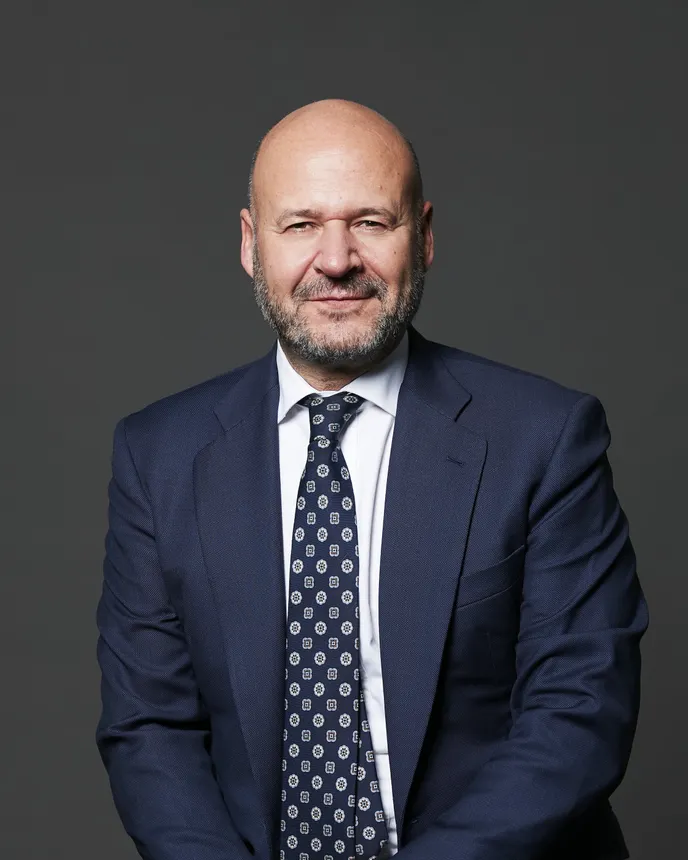
Ignacio Gaston
Authorization granted by Ferrovial
By combining expertise in financing, construction and operations, we deliver projects that generate stable income and strong margins. Our I-66 project in Virginia is a clear example. We upgraded 22.5 miles of highway with express lanes while balancing short-term market pressures and long-term planning, completing a vital corridor on time and on budget.
This approach allows us to confidently invest in infrastructure that supports growing local economies and improves mobility, from highways and airports to energy and water systems.
How do you decide which risks to take and which to share with partners on important projects?
On complex infrastructure projects, we collaborate with partners, subcontractors and technology providers. Our risk management strategy is deliberate and tailored to each project.
Risk is allocated to the most appropriate party to mitigate the risk. Contractual structures such as joint ventures, public-private partnerships and design-build contracts include detailed risk allocation clauses to formalize who bears what risk.
We also leverage technology to automate operational risk management across hundreds of projects. This digital approach helps us continuously assess and adjust risk-sharing strategies as projects evolve, including real-time document synchronization between platforms to reduce information gaps and AI-powered monitoring to proactively flag risks and ensure consistent data flow between stakeholders.
How do you prepare for policy or regulatory changes affecting infrastructure pipelines?
With 20 years of experience operating in the US, we are well prepared to respond to changing policies and regulations. Our diverse portfolio of projects, including waterworks and large-scale solar projects, show how we align with changing priorities and still support reliable growth.
We also stay closely engaged with local, state and federal partners to anticipate new requirements and keep projects on track. This is especially important now, with news of extended loans from the Transportation Infrastructure Innovation and Financing Act and streamlined authorization processes speeding up project timelines.
How do you manage risk when adopting new construction technologies?
We manage risk by adopting new construction technologies through a controlled and measurable process.
Before implementation, we define the business case and expected value and pilot each solution in a limited scope and with low impact. Cross-functional collaboration across departments ensures alignment with project goals and data standards.
Throughout deployment, we monitor performance using measurable KPIs and feedback loops, addressing both technical and human factors through governance and training. This structured, data-driven approach allows us to scale innovations with confidence while minimizing operational and financial risk.
Any other trends you think are important to highlight?
We engage with our stakeholders starting from the procurement, pre-construction and design phases. We work closely with owners to identify risks and develop documents that are the foundation of a successful process before construction begins.
One of the biggest changes is that the infrastructure itself is becoming smarter and more resilient by using AI and digital tools to reduce uncertainty and improve outcomes.
We are incorporating predictive maintenance applications, real-time site monitoring, schedule optimization and even price forecasting into our own workflows, all of which are critical in today’s environment. These technologies not only reduce risk, but also deliver more value to communities and investors, making infrastructure a stable asset class that improves long-term project outcomes.
