

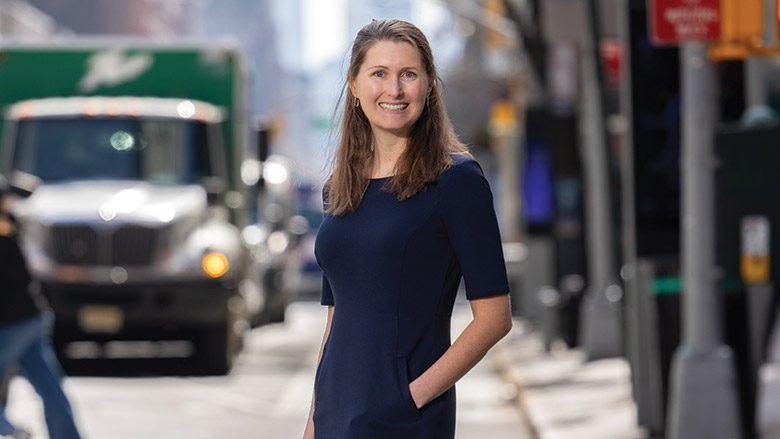

Jane Wilberding
35, Senior Mobility Manager, HNTB and Co-Founder, Parking Reform Network
Chicago
Drawing on more than a decade of experience in transport planning, mobility strategy and equitable infrastructure development, Wilberding is rethinking how cities move. At HNTB, he has led complex efforts that include modernizing sidewalk management, advancing electric vehicle infrastructure, and expanding Chicago’s Divvy bike share to historically underserved neighborhoods, a project widely viewed as a national model for equitable micromobility. Co-founder of the Parking Reform Network, she has helped shape policy reforms in dozens of cities and several states.
How did you become interested in mobility?
I became interested in mobility through travel. I studied abroad in Copenhagen, where I could get anywhere I could dream of by bike, train, bus, or on foot safely and comfortably. After growing up in a more suburban environment where you needed a car to cross the street, this was a drastic and cathartic change.
What did you learn living abroad?
Living in a city designed for people taught me the importance of designing life between buildings. Our most meaningful everyday experiences—walking down city streets, resting on a bench along a waterway, and interacting with others in open spaces—are shaped by how we move through the built environment. Mobility informs what we can or cannot access, how we experience our communities.
What is a challenge you have overcome in your career?
Proposals like reducing parking or reallocating road space for pedestrians and cyclists often draw fierce backlash, even when data shows it leads to safer and more efficient outcomes. Through many project conversations, I’ve learned to present difficult ideas in a way that meets people where they are: listening closely to concerns, recognizing what residents value, and finding solutions that balance technical goals with community amenity. This experience has taught me that the best technical solution is not always the right answer for the moment. Successful projects require trust, empathy, patience and strategic communication.
What is one of your favorite projects?
One of my favorite projects was working with the Illinois Medical District, the nation’s largest urban medical district, to reduce reliance on cars and create a safer and more walkable environment on their 560-acre campus. With more than 23,000 parking spaces and five major hospital systems, the district had significant transportation challenges and a wide range of stakeholder needs. Major wins included eliminating commuter fares, introducing discounted Divvy bike-share memberships for employees, and launching the region’s first pay-for-parking program. Getting five hospital systems to agree on anything, let alone a major change in cars, was incredibly rewarding.
What’s the best career advice you’ve been given?
Delegating can be difficult, especially when you are passionate about a project or have a clear vision. But I’ve learned that my team is there for a reason. They are very capable, motivated and eager to grow. Letting go of tasks I once felt I needed to hold created space for others to take on bigger roles, bring new ideas, and strengthen the work in ways I couldn’t have done alone.
What is your career advice for other young professionals in the industry?
Don’t take yourself too seriously! Leading with humor humanizes us, builds trust, and often helps us find common ground during tense or complex discussions. Our work has important long-term impacts, but approaching it lightly makes the process more enjoyable for everyone involved. Teams that can laugh together collaborate more openly, approach challenges more creatively, and build stronger relationships. This career is often demanding – you’ll do a better job and have a better time doing it, if you let yourself enjoy the people around you and let yourself have a joke.
Looking for quick answers on construction and engineering topics?
Try Ask ENR, our new intelligent AI search tool.
Ask ENR →
