

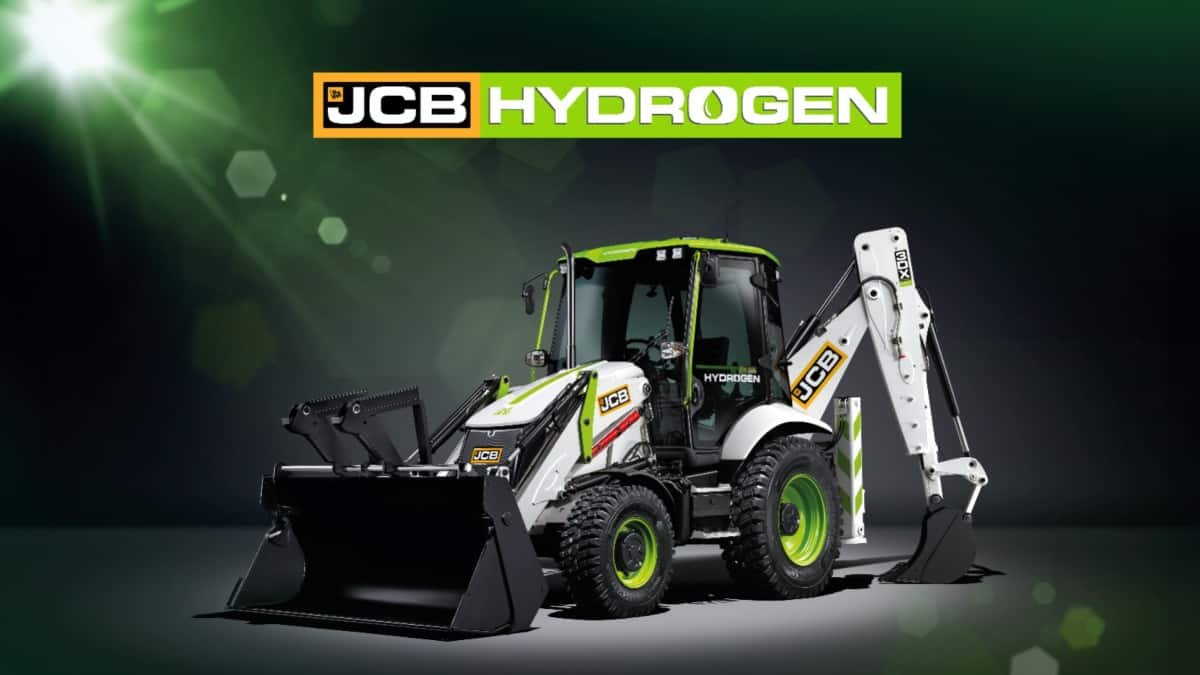
JCB made its first global debut with its £100 million (Rs 1,019 crore) project to produce super-efficient hydrogen engines in India in the presence of Road Transport and Highways Minister Nitin Gadkari.
The minister unveiled a JCB backhoe powered by a purpose-built hydrogen combustion engine developed by JCB to meet carbon emission reduction targets.
A team of 150 JCB engineers is working on the initiative to develop hydrogen combustion engines, and more than 75 prototypes have already been manufactured at JCB’s engine plant in the UK. JCB hydrogen engine prototypes already power the Loadall backhoe and telehandlers. Separately, JCB UK has also introduced its own mobile bowser designed and built to carry fuel to the machines.
The company says its current drive to reduce fuel consumption means its diesel
Deepak Shetty, CEO and MD, JCB India
“India is making concerted efforts to make hydrogen our carbon-free fuel of the future; the National Hydrogen Mission is creating the conditions for a hydrogen ecosystem, which is essential to achieving successful this cutting-edge hydrogen combustion technology,” Shetty added.
Lord Bamford, chairman of JCB, said: “India has a real opportunity to put hydrogen at the heart of its net zero future: it is a net zero carbon fuel that can be produced from renewable energy. The India is blessed with sun and water resources, the two key elements needed to produce hydrogen. It is a fuel that allows for quick refueling and is a mobile fuel solution, so you can bring the fuel to the machine. Our machines work long hours, especially in India, so it is essential to minimize downtime for recharging or refueling.As such, hydrogen is a perfect solution for India, especially for the mobility sector lands”.
He also said that “fossil fuels are not the future. The unique combustion properties of hydrogen allow the hydrogen engine to deliver the same power, torque and efficiency as today’s JCB machines, but in a carbon-free way. Hydrogen combustion engines also offer other important advantages. Leveraging diesel engine technology and components, they do not require rare earth elements and, critically, the combustion technology is already well proven in construction equipment. It is a cost-effective, robust, reliable technology known not only in the construction industry, but worldwide.”
Shetty also shared his optimism that “It is only a matter of time before hydrogen is available in India for a variety of applications. The transition from diesel to hydrogen will be much faster than we think, and JCB India will be ready Our hydrogen combustion technology is already well developed Many machines are currently in testing and JCB is the first construction equipment manufacturer to introduce hydrogen combustion engines and machine prototypes powered by these engines. What you are seeing here today is Asia’s first construction machine powered by a hydrogen combustion engine.”
