


After suffering what it said were “significant” financial losses last year, Denmark-based offshore wind developer Orsted A/S is reshaping its business. The company announced plans to de-risk its US operations and withdraw entirely from some smaller markets, including Norway, Spain, Portugal and Japan.
A major global player in this clean energy sector, the company is also reducing its focus on floating offshore projects in a strategy that will result in the loss of 600-800 jobs.
“We now present a solid business plan and … plan to more than double our current installed renewable energy capacity by 2030,” said Mads Nipper, Orsted’s president and CEO.
However, the new target of 35-38 GW of all types by 2030 represents a significant drop from the previous target of 50 GW. Orsted now has 6.7 GW of offshore projects coming online in 2027 in Taiwan, Germany, the UK and the US East Coast.
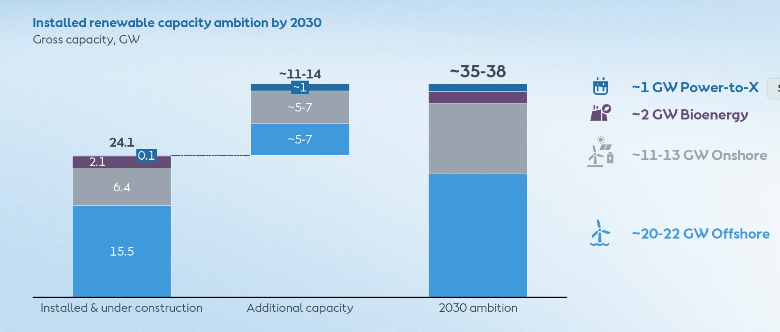 Chart courtesy of Ørsted
The company has also secured the rights to three offshore projects totaling 3.7 GW in the United States and Poland, due for completion in 2029, and plans to invest about $26 billion in offshore projects in 2030
While some of Orsted’s difficulties are in the US market, the European market has just had “its best year on record for new offshore wind installations”, according to the trade body based in Belgium WindEurope.
A “record” 4.2 GW of new offshore capacity came online last year, up 40% from 2022, he said. In addition, $32 billion of new investments were committed covering 9 GW across eight wind farms.
If all European countries implemented their procurement plans, 40 GW of projects would be auctioned this year, WindEurope notes. The biggest potential in the next two years will be in Germany, Denmark, the UK, France and the Netherlands.
And in a significant recognition of rapidly rising offshore project construction costs, the UK government has increased the strike price cap for this year’s auction by 66%, the trade body adds.
