

This audio is automatically generated. Please let us know if you have any comments.
OSHA has updated and expanded it National Heat Hazards Emphasis Program for US jobs, according to an April 10 news release.
The previous NEP, originally issued in April 2022 and extended in 2025, officially expired on April 8. But on April 10, OSHA issued an updated NEP that is now scheduled to remain in place until 2031.
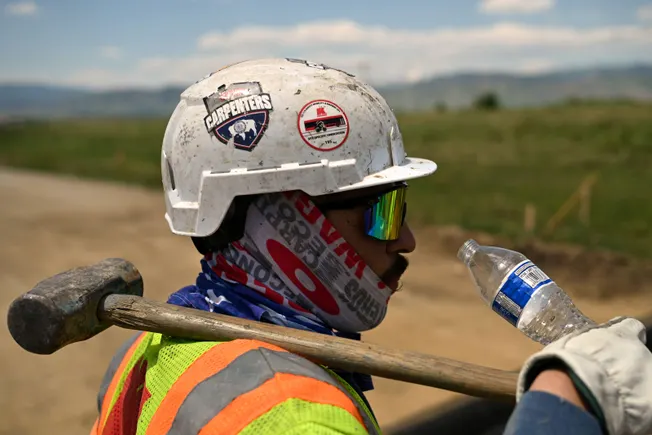
Although not an official OSHA standard, the NEP provides resources and guidance to employers while describing how the agency addresses heat as a hazard, including enforcement actions, when temperatures rise. The NEP highlights construction as one of those industries with a high risk of heat injury and illness.
Under the new NEP, OSHA compliance officers will continue to conduct assistance and enforcement programs and expand any inspections where there is evidence of heat hazards on heat priority days, or when the heat index is expected to reach 80 degrees or higher. In addition, compliance officers will conduct random inspections for high-risk industries these days.
The review comes with additional appendices that describe the changes and formalizes procedures that were previously addressed through informal guidance, Mini Kapoor, a partner at the Dallas-based law firm Haynes and Boone, wrote in a JD Supra post.
The fundamentals of worker protection remain the same, Kapoor wrote. The basics of a heat illness prevention plan include:
- Provide fresh, easily accessible drinking water to employees.
- Creation of access to shaded or cool areas.
- Schedule breaks in these areas.
- Establishing gradual exposure protocols for new employees.
- Train and educate workers about symptoms, prevention measures and emergency response.
- Monitoring workers with buddy systems or monitoring features to identify early signs of heat illness.
The updated appendices to the NEP further explain how OSHA inspectors can evaluate an employer’s heat illness prevention program during an inspection, which Kapoor says could be considered a compliance checklist. Additional guidance clarifies when inspectors should issue summonses or warning letters.
Phillip Russell, an OSHA attorney based in Tampa, Fla., with the law firm Ogletree Deakins, said employers should continue to focus on their duty to protect workers.
“I think employers need to continue doing the same things they’ve been doing,” he said. “Treat heat as an occupational hazard and implement appropriate and effective abatement measures.”
Inspections and standards
“Heat illness remains a serious hazard to workers indoors and outdoors, causing preventable injuries and fatalities each year,” according to an OSHA announcement about the update. “Ensuring that employers take the necessary steps to safeguard workers is essential, and this updated program allows OSHA to better focus outreach, compliance assistance, and enforcement efforts in high-risk industries and promote effective prevention practices.”
In particular, the emphasis program is not a standard. However, there is no specific rule mandating what employers must do to protect workers from the heat one proposed in July 2024. This rule has yet to be officially adopted, but the data shows how thermal safety is still a growing area of focus for the agency.
For example, OSHA conducted about 2,400 heat-related hazard inspections per year between 2022 and 2025, according to the updated NEP, including approximately 50 heat-related fatality inspections annually. At the same time, heat-related inspections accounted for 6 percent of all federal OSHA inspections over the previous five years, according to the NEP. This was a considerable increase of 0.5% part of all inspections before the NEP, Safety and Health magazine reported.
