

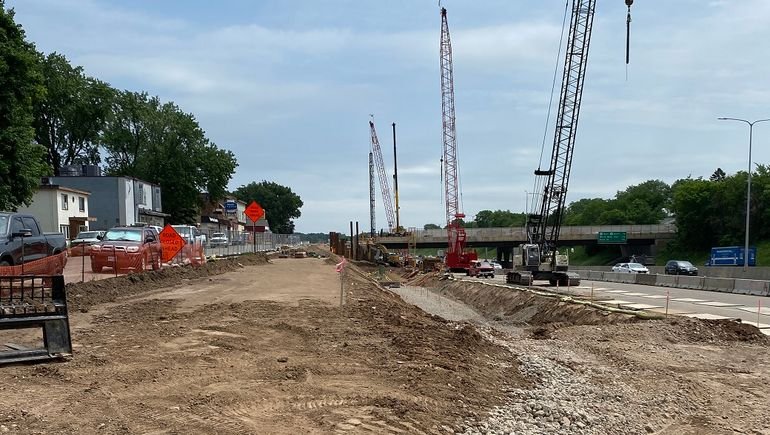
Large construction projects have numerous stakeholders who are responsible for different aspects throughout the construction life cycle, stormwater runoff management is critical as active construction sites can contribute greatly to pollutants entering a community’s waterways if not managed properly.
Many communities, as well as DOTs, must continue to comply with Municipal Separate Storm Sewer (MS4) regulations. Essential to preserving community water quality, the Stormwater Pollution Prevention Plan requires that inspection information be accurate and standardized to support the ability to quickly protect against contaminants that they seep into community waterways through stormwater runoff. Communication and compliance are vital elements of a well-managed project; in the construction landscape where numerous stakeholders are integral, from local communities and DOT offices to city authorities, utility providers and engineering firms, managing this complex tapestry of collaboration required a new approach.
In the lively heart of St. Paul, Minnesota, the METRO Gold Line Bus Rapid Transit (BRT) project is underway. Expected to open in 2025, this transit system will connect the Metro East to METRO’s extensive regional network, connecting communities and commuters across the region. It promises seamless connectivity to employment centers, housing options, transit arteries and key destinations along the bustling I-94 corridor.
Ames Constructiona full-service civil and heavy industrial general contractor operating throughout North America, secured active construction stormwater inspection responsibilities for the Gold Line project.
Traditionally, stormwater inspectors would visit active construction sites, using a paper form to conduct inspections. After the inspection, they would have to return to an office to finalize their reports, sign them, and these paper letters would be mailed to site operators. Photos are essential documents to include in these reports and it could take hours to compile and tag each photo before adding them to the report.
Recognizing the need for a near-real-time, digital solution to improve inspections, facilitate communication and strengthen project integrity, Nancy Lewis, geospatial manager at Ames Construction, led an innovative transformation.
To optimize inspection allocation and streamline reporting efforts, Nancy Lewis deployed Esri’s Management of rainwater construction activities solution. This solution provides a set of capabilities that help conduct routine construction site inspections, record on-site sediment and erosion control observations, understand the effectiveness of stormwater control measures, and provide actionable reports to interested parties
Inspectors can now seamlessly conduct routine site inspections, recording their observations and evaluating the effectiveness of stormwater control measures. Stakeholders receive actionable reports in real-time, encouraging transparency and rapid response.
Using Esri ArcGIS Survey123, Inspections are scheduled at seven-day intervals, using forms on smartphones or tablets to streamline data collection. ArcGIS Survey123’s ability to incorporate multiple images into reports significantly reduces the time inspectors have to spend in the office, provides valuable documentation for compliance reports, and improves on-site communication with site operators.
In the office, Esri’s ArcGIS dashboards are used to view inspection details as well as photos. Data is presented in an easily digestible format, allowing project managers to understand site conditions and report key performance indicators (KPIs) that allow them to make quick decisions and respond to issues in near real-time.
