

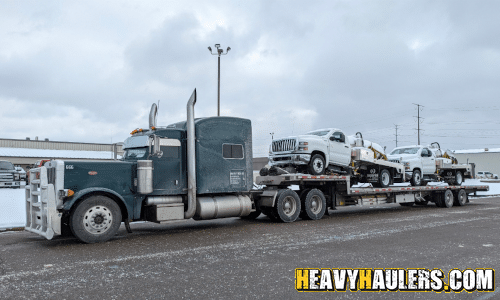
Navigating icy and snowy roads in the winter can be challenging, even for experienced truck drivers. Reduced traction, poor visibility and the impact of cold weather on equipment and drivers are common ice-related risks. However, following winter transportation safety protocols can help ensure safe driving in these dangerous conditions. This article explores the threats experienced in winter, the vital safety protocols for heavy transportation, and the benefits of prioritizing safety in winter transportation.

Recognizing the unique threats of winter
Heavy hauling in winter is no easy task, but knowing the unique threats to expect and making the proper preparations makes it possible. Here are some of the unique winter challenges:
Risks related to ice
Heavy snowfall, fog and icy windshields in winter severely limit visibility on the road. Poor visibility can cause traffic delays due to increased stop times and accidents, making heavy transport extremely difficult.
Impact of the cold on the team
In addition to affecting the drivers, the freezing temperatures also affect the team. Heavy trucks are at risk of breakdowns or poor performance during the winter. A clogged fuel filter is a common challenge experienced by truck drivers during the cold weather.
Essential Winter Safety Protocols for Heavy Transport
Hauling heavy equipment in snow and ice can be challenging for both novice and experienced drivers. Understanding the vital safety protocols for winter heavy haulage can ensure safe driving. Some of the security protocols to follow are:
Equipment checks before the trip
The first step to safe heavy hauling is to properly inspect the truck before you start driving. A pre-trip inspection includes checking antifreeze, oil, washer fluid, electrical systems and tire pressure levels. Making sure your heavy-duty truck is well prepared for the wear and tear of the winter season can help minimize unnecessary breakdowns.
Cargo securing in icy conditions
Before transporting any cargo, it is vital to be familiar with the regulations and requirements for cargo security. When loading your truck, make sure the load is evenly distributed and properly secured to prevent damage to the equipment or unbalancing of the vehicle. Securing cargo also makes other incidents more difficult, such as hazardous chemical spills, injuries, cargo loss, and fatalities.
Communication protocols during snow storms
Effective communication with your logistics agent or driver will ensure smooth transportation during snow storms. Drivers should contact the office to receive route information and real-time weather updates. A well-established communication system will help drivers decide on the best route to take and on their safety. On the other hand, the drivers must also contact their superiors and inform them of the weather conditions and the prevailing situation so that they can reschedule the delivery.
Benefits of prioritizing safety in winter transport
When safety is not observed, the driver, cargo and even the public are at risk. Here are the benefits of prioritizing the safety of heavy transport in winter:
Reduced risk of accidents
By adhering to winter transportation protocols, heavy haulers can reduce the risks of accidents. For example, failure to follow safety protocols when loading and unloading equipment can cause it to fall or slide off the trailer, causing serious damage to the machine and possibly injuring the driver and others.
Improved operational efficiency
When security protocols are followed consistently, smoother operations occur. Reduced equipment breakdowns and accidents mean fewer disruptions to delivery schedules, improving transport efficiency. Additionally, following communication protocols helps drivers and other logistics experts make informed decisions.
Improves driver morale and confidence
Prioritizing safety ensures drivers that their well-being is a priority, thus improving their morale and confidence. Improved morale leads to job satisfaction and ultimately contributes to better performance.
Understanding the unique winter threats and prioritizing winter heavy truck safety protocols is essential not only to reduce downtime and accidents, but also to ensure the well-being of drivers.
At Heavy Haulers, we are committed to maintaining the highest winter safety standards, making us a reliable choice for safe and efficient transportation in harsh winter conditions. Contact our logistics experts today!
