

This audio is automatically generated. Please let us know if you have any comments.
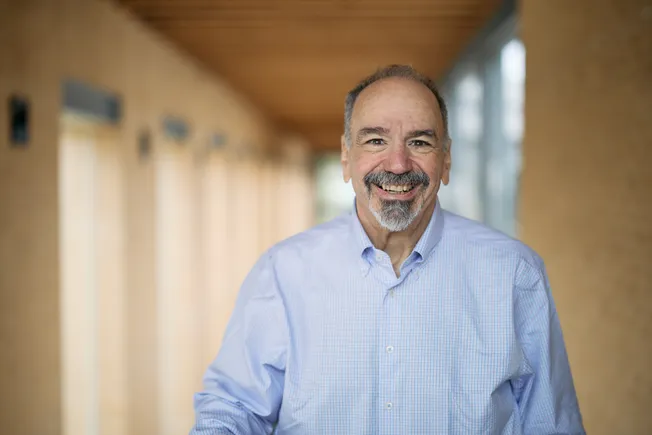
Jim Ansara has kept busy in retirement.
The founder of Shawmut Design and Construction, who retired from the company in 2006, has used his expertise in construction and connections to help deliver state-of-the-art healthcare facilities to developing countries around the world.
The non-profit he co-founded, Build Health International, has designed, built and equipped more than 200 spaces in the Caribbean, Latin America and Africa. Based in Beverly, Massachusetts, BHI works closely with ministries of health, partner organizations, local communities and workers to create world-class sustainable facilities while overcoming the inherent challenges of working in resource-constrained regions.
This year, BHI is one of the few international organizations that has remained active in Haiti, supporting a team from across Haiti that has completed work on the country’s largest solar energy project, ensuring that health workers have the power to continue caring for patients, even. in the midst of political unrest.
Last month, Ansara was named a recipient the 2025 AARP Purpose Prizewhich is presented annually to “extraordinary individuals 50 and older who harness the power of life experience to build a better future for all.” Purpose Award recipients receive $50,000 for their founded nonprofit as well as one year of dedicated support from AARP.
Here, Ansara talks to Construction Dive about the challenges of designing and building healthcare facilities around the world.
This interview has been edited for brevity and clarity.
CONSTRUCTION DIVE: Why did you create BHI?
JIM ANSARA: BHI was officially founded in 2014, but the story begins several years earlier. In 2006, I had recently retired from Shawmut Design & Construction, which I founded in the greater Boston area and ran for over 30 years. After my retirement, I started volunteering with Partners In Health, a global health organization that had done great work in Haiti. It was through PIH that I met global health expert Dr. David Walton, who eventually co-founded BHI.
PIH was working to build a 100-bed community hospital in Mirebalais, Haiti, a small town 60 kilometers north of Port-au-Prince. David and I almost had the design finished when the January 2010 earthquake hit Haiti, destroying up to 70% of the country’s existing health infrastructure, including its largest hospital, in Port-au-Prince.
In response, the Haitian Ministry of Health asked us to change our plans, and our 100-bed hospital became a 300-bed national teaching hospital, the Hôpital Universitaire de Mirebalais, which was built in just over two years.
Through this experience, I recognized the critical need to design, build, and maintain healthcare facilities around the world, especially in regions where it can be incredibly difficult to access the tools and resources we often take for granted in the Global North. BE has built a model that focuses on local partners and workers, and that prioritizes innovation and collaboration to overcome barriers.

Jim Ansara and Logistics Manager Charles Jenkins Bartholomew stand in front of the Maternal Center of Excellence workplace in Sierra Leone.
Permission granted by BHI
The BHI team consists of more than 130 architects, engineers, global health leaders and others based around the world.
What types of projects do you sponsor?
BHI is a non-profit design and construction organization that provides high-quality, dignified and equitable healthcare solutions in low-resource settings around the world. We partner with nonprofits and local governments to provide architecture, engineering, construction, facility maintenance, and training services that strengthen infrastructure and health systems.
BHI’s international team works specifically in low- and middle-income countries. We take jobs that often no one else wants, and we build in some of the most resource-constrained areas of the world.
Our projects range from the design and construction of maternal and newborn health care services, including the future 166-bed Maternal Center of Excellence in Koidu, Sierra Leone, which is expected to greatly reduce maternal mortality.
Following the outbreak of COVID-19, we have worked to strengthen healthcare systems across sub-Saharan Africa by assessing and repairing damaged oxygen plants, as well as providing education and training to local technicians and hospital management to ensure that its plants continue to operate sustainably. .
Finally, we focus on enabling renewable energy systems, especially in countries like Haiti, where fuel shortages and rising costs can prevent hospitals from running smoothly. We have just upgraded and installed 1,800 solar panels on our first project, which will reduce 2,000 tons of carbon dioxide emissions annually.
How have you been able to continue working on the ground in Haiti despite the current political uncertainty in the country?
BHI started in Haiti and we have deep roots in the country. Our long-term commitment to hiring local Haitian workers has allowed us to stay in the country, even when so many other organizations have left.
We have over 40 Haitian team members who continue to advance our projects in the country, working every day to overcome logistical and supply chain challenges, power outages, fuel shortages, political uncertainty and more more We remain committed to the communities where we design and build critical infrastructure, while taking appropriate precautions, prioritizing safety, and maintaining close contact with all team members about conditions on the ground.
Why do you use local labor?
From our earliest days, BHI has prioritized equipping and empowering the local workforce. This is a more sustainable model in the long term, and in this way we can ensure that the knowledge remains within the community.
At the same time, volunteers and experts from the United States and other nations are critical in supporting and training local workers. In the early days of our work in Haiti, volunteers from the United States and the Dominican Republic helped train Haitian workers, including electricians, plumbers, carpenters and other trades. Now, these workers are training the next generation of skilled team members in Haiti.
We still encourage industry and in-kind partners to work with us to support local workers; for example, one of our main partners, Laticrete, recently sent a volunteer to support the installation of hospital floors at our maternity center project in Sierra Leone.
Why is the construction of health buildings so important in developing countries?
Health services require a health infrastructure. Without the staff and space to operate a clinic, equitable access to health care remains out of reach for too many people.
We believe in health equity, or the idea that every person should have accessible and decent care, regardless of their earning capacity or geographic circumstances. By providing architecture, engineering and construction services to facility maintenance and research development, we aim to strengthen health infrastructure and health systems.
Although BHI’s international team is made up of experts, we are constantly learning. Materials and resources available in Haiti may not be available in Sierra Leone and vice versa. We never go into a project assuming we know everything, and aim to meet the unique needs of each partner.
We find that we can achieve the greatest impact—and help deliver the highest quality of care—when we combine our experience working in resource-constrained settings with the knowledge of local partners.
