

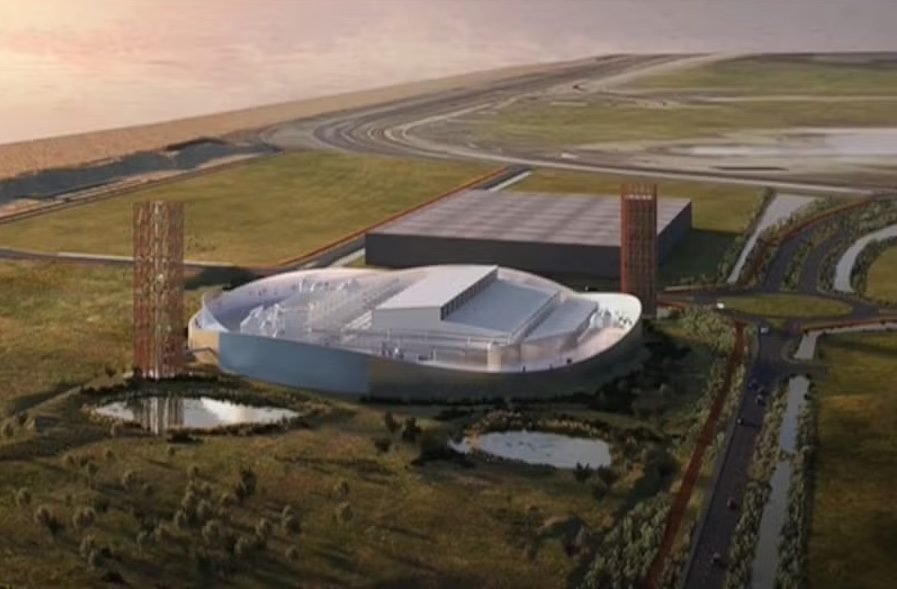

Shell will soon launch its landmark renewable energy project, Holland Hydrogen 1, located in the reclaimed industrial area of Maasvlakte 2 in the Port of Rotterdam that will provide green hydrogen to a nearby energy and industrial complex to demonstrate the fuel’s ability to decarbonize heavy industry.
The estimated $1.17 billion project, which will be Europe’s largest renewable hydrogen plant, is nearing completion and was recently connected by utility Gasunie to a 32 km hydrogen pipeline. The 200MW plant has faced financial and market uncertainties, with project costs and timelines subject to continuous evaluation.
It received substantial support, including a $162 million grant from the European Commission. The project operates under the framework of the Important Project of Common European Interest, which enables coordinated cross-border state assistance that would otherwise be restricted by standard EU competition laws.
The plant has a daily production capacity of 60,000 kg
Operated by Shell subsidiary Rotterdam Hydrogen Company BV, it has the capacity to produce 60,000 kg of green hydrogen per day. Refining, petrochemicals, steel and other metals that are classified as difficult to reduce when targeted by large-scale projects like this. These industries primarily use gray hydrogen, which is produced with natural gas and emits carbon dioxide in the process.
Hydrogen from Holland 1 is located on a nearly six-acre site that will house 10 rows of electrolyzers, each with a 20MW alkaline electrolysis ‘Scalum’ cell produced by Thyssenkrupp Nucera.
Australia-based contractor Worley oversaw engineering, procurement and construction management to ensure the plant’s high-pressure systems and chemical handling facilities using potassium hydroxide electrolytes met strict safety standards.
Looking for quick answers on construction and engineering topics?
Try Ask ENR, our new intelligent AI search tool.
Ask ENR →
Electricity for the plant will be generated at the 759MW Hollandse Kust Noord offshore wind farm located 19km off the north-west coast of the Netherlands which was developed by CrossWind, a joint venture between Shell and Eneco. With 69 turbines supplied by Siemens Gamesa, the facility will generate enough green energy to power 1 million Dutch homes.
Hydrogen from Holland 1 is using modularization to manage the current and future scale of the project. The 10 parallel alkaline electrolyser modules are being assembled in a separate building before being placed in the main plant by Mammoet, which has been contracted to transport and install the heavy components, including the 165-tonne transformers. By building a 200MW hydrogen plant, about 10 times the size of other such plants, Shell says it is achieving significant economies of scale.
Scalum cells will be supplied with a mixture of high purity demineralized water and potassium hydroxide electrolyte subjected to an electric current. Once separated, the hydrogen will be sent to the compressors and pipeline, while the oxygen will be released into the atmosphere. Initially, the hydrogen will go to Shell’s refinery for use in the production of gasoline, diesel and jet fuel, but over time, some will be available for commercial transport. Finally, the plant will be expanded to 400 MW.
The project includes the gas pipeline and the new substation
Alongside the new high-capacity pipeline built by Gasunie subsidiary Hynetwork, transmission system operator TenneT is building a dedicated high-voltage substation to power the site. The hydrogen pipeline will be used in the future by Gasunie and other hydrogen producers such as Air Liquide, which is now building its 200 MW ELYgator electrolyser near Holland Hydrogen 1. In the future it will produce 23,000 kg per day.
To reach commissioning, the project had a number of regulatory and technical obstacles to overcome. There were questions among regulators about whether hydrogen produced with renewable energy should come from a new renewable source instead of taking clean energy from the existing grid.
Shell had to navigate the switch rules to ensure Holland Hydrogen 1 production was legally certified as green. It also had to initiate authorization for large-scale electrolysis in a port environment, establishing safety and environmental standards.
Holland Hydrogen 1 will serve as a key component of the continent’s Hydrogen Backbone, the planned hydrogen pipeline supply system that will run some 40,000 km across Europe by 2040 and serve to decarbonize the EU and provide energy security.
