


Transit agencies are looking to state, local and public-private funding initiatives to bolster their capital and operating budgets as the IIJA runs its course, with future guaranteed federal funding programs uncertain.
While the Build America 250 Act, approved by the House Transportation and Infrastructure Committee, is a “good first step,” the $167.6 billion proposed for transit and rail “falls short,” said Paul Skoutelas, president and CEO of the American Public Transportation Association. APTA held its annual conference in Chicago from October 3-8.
APTA is advocating for $268 billion in federal funding over five years, pushing the message that every $1 invested in public transportation results in $5 in the economy.
At the same time, local and state municipalities are taking matters into their own hands. Jessica Grennan, executive director of APTA’s Center for Transportation Excellence, noted that 34 of the 39 ballot measures so far this year have passed, with 22 measures slated for the November ballot.
“Transit is popular” regardless of political stripe, he said.
In northern Illinois, the Regional Transit Authority was officially replaced by the Northern Illinois Transit Authority in September. NITA now serves as the overall governing authority for the Chicago Transit Authority, Metra and Pace. The change reflects a shift from looking at cutbacks and layoffs to expansion plans and service improvements, said Tom McKone, CTA’s interim chief financial officer. NITA commissioned a report quantifying the value of transit to the region, he noted. “Chicago is not affordable because of housing—it is [affordable] because of the traffic,” he said.
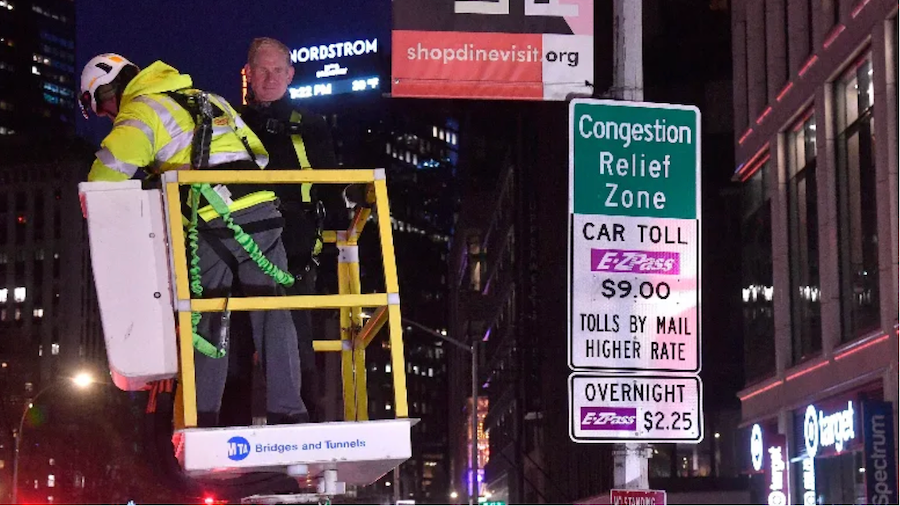
In New York City, congestion pricing has contributed $15 billion to a five-year, $68 billion capital plan, said Jaibala Patel, chief financial officer of the Metropolitan Transportation Authority. By 2025, the MTA would generate $716.5 million in revenue with just $138.1 million in operating expenses, he said.
Looking for quick answers on construction and engineering topics?
Try Ask ENR, our new intelligent AI search tool.
Ask ENR →
Bipartisan support
Freddie O’Connell, Nashville’s mayor, recalled a 2018 transit referendum that failed by a 2-1 margin. In 2024, voters approved a $3.1 billion, 15-year transit program funded by a local sales tax increase after a campaign that emphasized personal choice: “Choose how you get around.”
Oklahoma City Mayor David Holt cited “pragmatic reasons” for transit support even in conservative areas. “Residents see a need,” he said, noting the message of meeting those needs versus “the government telling us how to live.”
Rusty Roberts, senior policy adviser for the Federal Railroad Administration, pointed to the role of the private sector in what he called a “renaissance” of passenger rail in America. Although the media reported financial problems for the Brightline system in Florida, he emphasized that it was not the operating company that filed for bankruptcy, but the smaller LLCs. “Ridership is still double-digit growth,” he said, with 2.1 million riders by 2025, a planned new station in Cocoa, Fla., and an operating profit.
“Neither the government nor the private sector should shoulder 100% of the cost of passenger rail,” Roberts added.
FRA is working with Amtrak on its organizational restructuring, he said. “We are working with them on ideas to make them more agile,” he said, inspired by the models of the European railway agency. While in the nascent stages, the general idea is that the Amtrak organization would have three distinct departments: infrastructure, passenger rail services, and rolling stock. Amtrak’s board will vote on the restructuring proposal in December.
