

Type One Energy raised $200 million in a Series B announced Oct. 6 as it pushes to build its first Project Infinity machine in the first half of 2027 at the Tennessee Valley Authority’s decommissioned coal-fired plant in Clinton, Tenn.
The funding, jointly led by Breakthrough Energy Ventures and Clutterbuck Capital, comes after Tennessee officials said on August 31 that Type One intended to break ground on the first phase of Project Infinity before the end of 2026. Lowercarbon Capital, Siemens Energy Ventures and SiteGround Capital joined the round.
When asked for an updated construction schedule, Alison Mickey, Type One’s vice president of external communications, said in a written response to ENR on Oct. 7: “We’re planning to start in the first half of 2027. We’re not sharing specific timelines beyond that at this time.”
The company said the new funding will continue to support its technology development program, including the deployment of the Infinity One engineering prototype, but did not specify how much will go toward engineering, procurement, manufacturing or construction.
Chief science and engineering officer John Canik described Infinity One as a “30% scale prototype” in an Oct. 6 interview with The Fusion Reportan industry publication focused on commercial fusion energy. ENR has not been able to independently verify what measure the percentage refers to.
“We’re getting close to the start of construction on Bull Run, so getting ready for that is the focus for us right now,” Canik told the publication.
***
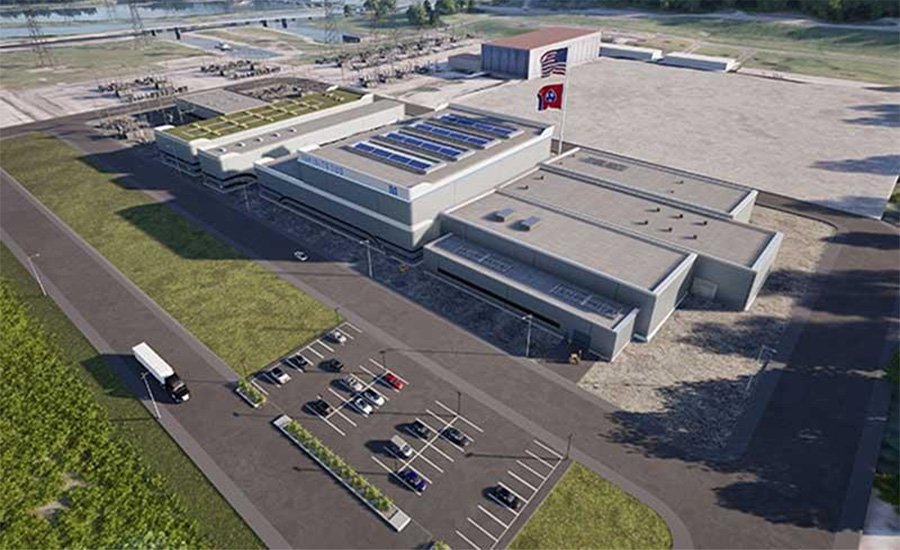
Infinity One will not generate electricity for sale. Rather, the engineering prototype is intended to verify a design that Type One plans to scale into a commercial power plant. TVA says it will be located inside a repurposed section of the decommissioned Bull Run coal plant, which ceased operations in December 2023.
Looking for quick answers on construction and engineering topics?
Try Ask ENR, our new intelligent AI search tool.
Ask ENR →

TVA decommissioned the Bull Run coal plant in December 2023 and is repurposing part of the Tennessee site for Type One Energy’s Infinity One fusion prototype. Click to enlarge.
Photo courtesy of Tennessee Valley Authority
“It’s not an experimental science project … all we want to learn is that our design for the fusion machine in the power plant works as advertised,” CEO Christofer Mowry told Reuters.
ENR reported in February 2025 that Infinity One was estimated to cost around $300 million, with construction expected to begin in late 2026 and expected to be completed by 2029. Type One continues to list commissioning and commissioning in 2029.
In July 2025, Type One said its employees and TVA personnel were performing engineering and construction work to prepare the former coal plant for assembly of Infinity One. TVA’s electrical service shops in Muscle Shoals, Alabama, also began developing welding and fabrication techniques for the prototype.
Procurement is also progressing, although Type One declined to identify contractors or awarded packages. Mickey said the company expects to announce partnerships and contracts for cryogenic, gyrotron and other equipment “in the coming months.”
FILE ENR | Building towards fusion power
The commercial plant takes shape
AECOM is performing preliminary design engineering for Infinity Two under a partnership announced in September 2025. That same month, TVA issued Type One a letter of intent covering the construction of one or more Infinity Two plants at Bull Run. TVA’s final decision to proceed remains subject to development work and necessary approvals.
The work at the plant predates AECOM’s participation. AtkinsRéalis, whose role at Infinity Two dates to 2024, developed the balance of plant design and requirements and delivered a pre-concept package in December covering plant design, power generation and electrical engineering. AECOM later said it and Type One had begun executing the first TVA contract associated with the project, but Type One did not clarify the companies’ current division of work.
The projected capacity of Infinity Two has also increased. AECOM described the plant as 350 MW by September 2025; Type One now puts it at 400 MW. The company has not publicly explained the increase.
Partner-based construction
“Why would I want to spend on bricks and mortar?” Mowry told TechCrunch in an article published on October 6. “I used to run a big nuclear manufacturing company. That’s expensive.”

Concept rendering shows Type One Energy’s Infinity One star prototype inside a repurposed section of TVA’s decommissioned Bull Run Power Plant in Tennessee. Click to enlarge.
Courtesy of Tennessee Valley Authority
Type One has no plans to build the full manufacturing capacity needed to offer the Infinity Two itself. Instead, it intends to design the plant and many of its components while using established engineering firms and outside suppliers for much of the physical delivery.
AECOM expects fusion engineering to become a major business. President Lara Poloni told investors in May that the company expects to deliver nine figures in net revenue from fusion work services in the coming years. This projection combines its US work with Type One and TVA with design and technical services for the UK’s STEP program, a separate effort to develop a prototype commercial fusion power plant.
This strategy is also shaping how Type One finances the project. Mowry said the $200 million Series B could get the company about halfway to financing the 400 MW commercial plant. Reuters reported that Series B participant Siemens Energy is discussing a manufacturing partnership with Type One.
Type One now says the commercial plant could be built in two different stages. Mickey said: “We can start construction of the conventional island of Infinity Two in 2028 and then start construction of the fusion island of the plant in 2030 after a successful operation of the engineering prototype Infinity One.”
