

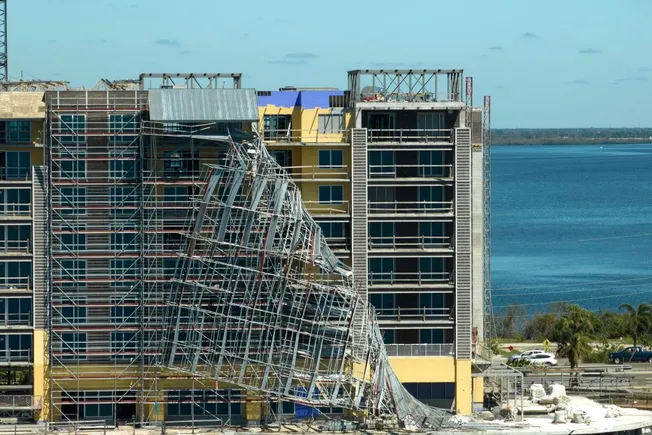
Increased hurricane impact on construction
In recent years, the frequency and intensity of hurricanes in North America has increased dramatically, causing devastating effects on the construction industry. Major storms such as Hurricane Ida (2021), Hurricane Ian (2022), Hurricane Lee (2023), and Hurricane Helene (2024) have collectively caused billions of dollars in damage and are projected to the results of Hurricane Milton are just as devastating, if not worse. These storms have severely disrupted project timelines, strained budgets and exacerbated supply chain issues. With sustained winds reaching up to 165 mph, along with catastrophic flooding, these events exemplify the increasing unpredictability of weather patterns, especially in high-risk regions like the Gulf Coast.
The construction industry, already struggling with tight margins and complex risk management, faces an even greater challenge as climate change accelerates. According to the National Oceanic and Atmospheric Administration (NOAA), the average economic loss from hurricanes in the United States has increased significantly, with losses reaching $145 billion in 2021 alone. This climate volatility increases the need for advanced management strategies of risks that go beyond traditional methods.
As a result, insurance brokers are now beginning to play a critical role in guiding general contractors on how to effectively mitigate climate-related risks. Leveraging cutting-edge technology and predictive data forecasts, brokers can help contractors anticipate disruptions, adjust timelines, improve project resilience and stabilize long-term profitability. This white paper, prepared by American Global in partnership with EHAB, explores how the integration of these technology-based solutions enables them to help customers in the construction industry take a proactive approach to mitigating and managing risks related to the weather
Weather impact on construction projects and importance of predictive data
Historically, extreme weather has been an unavoidable and uncontrollable factor in construction. However, as climate change intensifies, the impact of weather events is becoming more pronounced, especially in high-risk regions such as the Gulf Coast. According to our research and data from EHAB’s technology solution, projects along the Gulf Coast, including cities like Miami, New Orleans and Houston, have seen a average increase of 51.19% in weather delays since 2015. In Miami, that number rises to a staggering number 96.39% for asphalt work, one of the most climate-sensitive activities.
These delays can seriously affect project timelines and budgets. Integrating technology to predict weather patterns helps general contractors anticipate and mitigate these delays. Through predictive weather analysis, using 45 years of historical data to run climate trend analysis, we were able to identify five key insights in places like Corpus Christi, New Orleans, Pensacola, and Houston, giving contractors insight into future weather based on in data impacts
Click here to review related Gulf Coast Project Case Study and Predictive Insights.
Innovative technological solutions for risk mitigation
In response to the growing risks posed by extreme weather, we wanted to outline some of the leading technology solutions that help mitigate weather impacts and safeguard project timelines. These tools provide a structured, data-driven approach to decision-making that replaces traditional, often speculative, methods.
- ClimateCast: Allows contractors to model how weather patterns will affect their projects through 2050, using historical data to predict trends in temperature, rainfall and other weather variables. With this forward-looking capability, contractors can better plan for adverse weather and adjust project timelines accordingly.
- WeatherWise: A detailed calendar analysis tool that identifies the best opportunities for adjustments to avoid weather-related downtime. For example, it might suggest altering the order of work activities based on weather forecasts to optimize productivity during the construction window.
- ClimaCover: A parametric insurance product that pays out automatically when planned activities are delayed due to weather. This can protect contractors from incurring losses due to weather-related disruptions, and the automated payment process minimizes delays in receiving compensation.
These solutions provide contractors with a clear view of how changing weather patterns will affect their operations, allowing them to make informed decisions and mitigate risk. In turn, this allows them to plan more accurately, avoid costly delays and stabilize profitability.
The role of parametric insurance in long-term planning
Parametric insurance is an innovative solution that complements predictive. It is based on measurable metrics such as rainfall levels or wind speed, rather than the actual loss experienced. This allows for faster payment and a more transparent claims process. In construction, parametric insurance can provide quick financial relief to contractors affected by adverse weather conditions, allowing projects to stay on track.
By incorporating parametric insurance into their risk management strategies, brokers can help clients not only plan for weather-related delays, but also ensure they have the financial protection needed to withstand such disruptions without impact significant in its results.
Click here to read more about Integrating Technology and Insurance for Comprehensive Risk Management and our recommendations for general contractors in the complete white sheet.
