

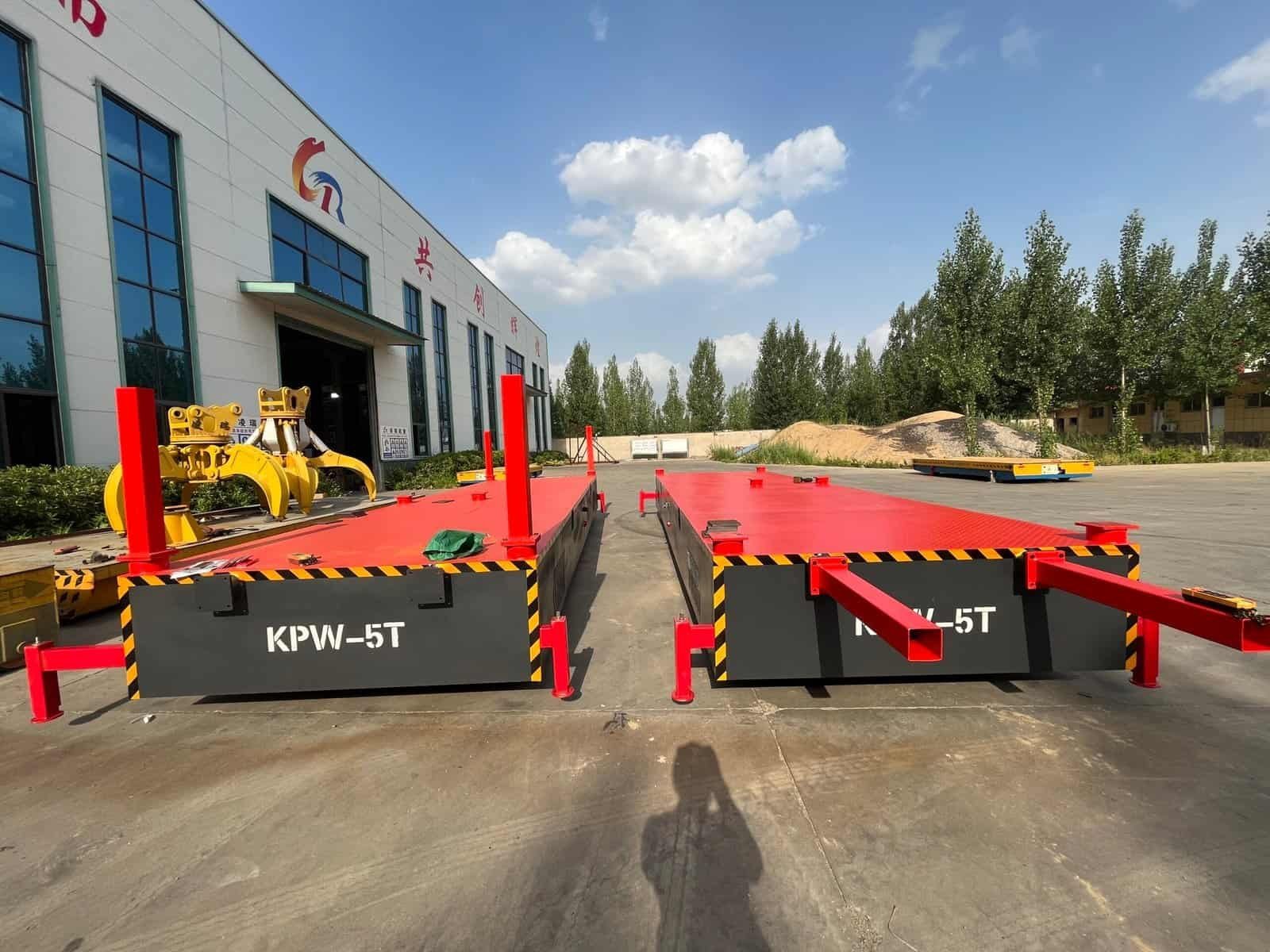
Transfer carts Overcoming these challenges by providing a simple, safe and automated method for moving heavy loads. With the transfer carts, the additional labor does not need to push or pull the load; Simply load the cart and press a button.
A transfer cart is a vehicle for manipulating industrial materials designed to move heavy loads through factory soils. Fed by electricity, it provides a safe, flexible and profitable solution for industries such as warehouses, ports and production workshops.
We explore how the transfer carts work, their types and why industries are increasingly preferred.
What is a transfer cart?
Companies around the world are constantly seeking more secure and efficient ways to transport heavy equipment and raw materials. This is where transfer carts come into play.
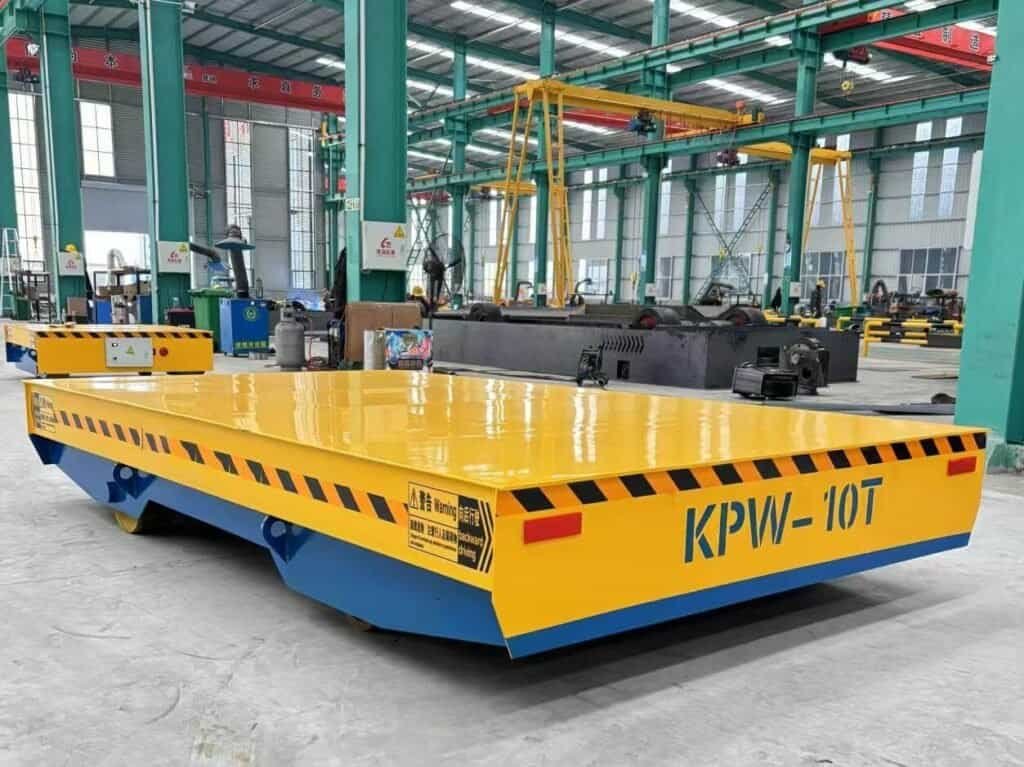
Transfer carts are used to move large and heavy materials through workshops, warehouses and production lines, reducing manual work and improving efficiency.
Industrial transfer carts are common in steel plants, car factories and warehouses. They help change items such as steel coils, molds or bulky pieces that are difficult to move with lifting carts. Minimizing manual manipulation, they improve the safety and productivity of the workplace, which makes them a popular choice for the manipulation of modern materials.

How does a transfer cart work?
Understanding how a transfer cart helps buyers select the right model for their business.
Transfer carts operate by electric batteries or wire rollers on the wheels. They work in fixed lanes or freely in smooth lands.
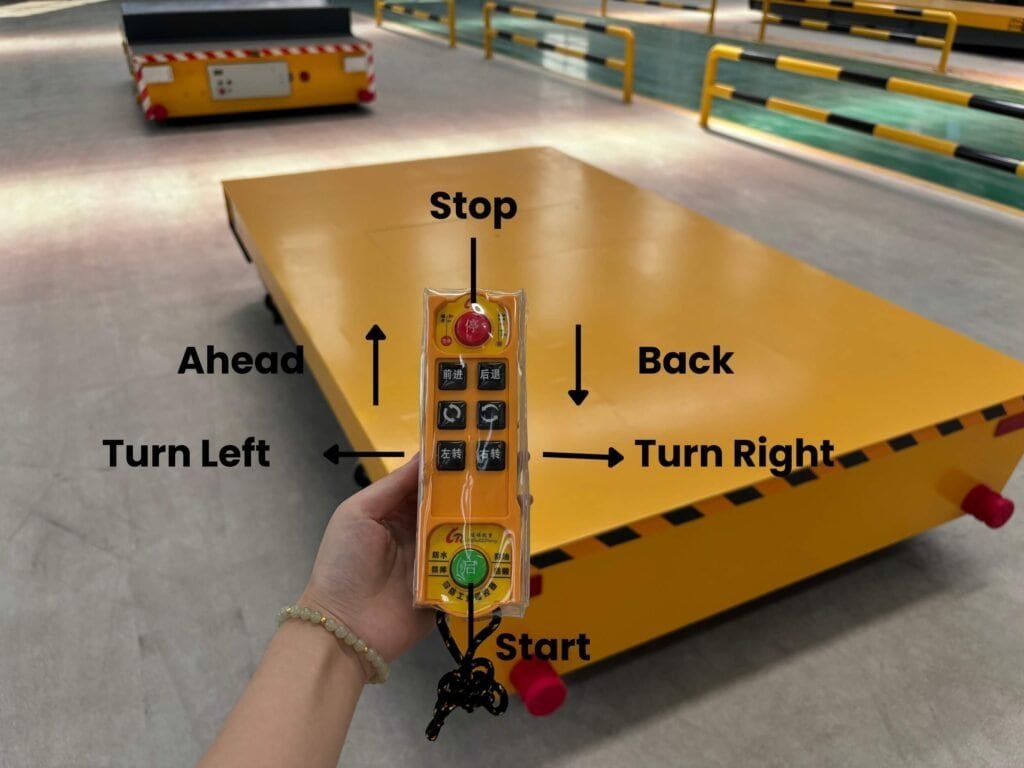
Railway transfer carts are designed to move on a fixed track, which makes them stable for repetitive tasks. In contrast, without track transfer chariots work directly on factory lands without rails, offering flexibility in the movement. Both models use remote controls for forward, inverse and even lateral driving, guaranteeing precise control with a minimum labor.
What are the types of transfer carts?
Not all transfer carts are the same. Different industries need different solutions for heavy load transportation.
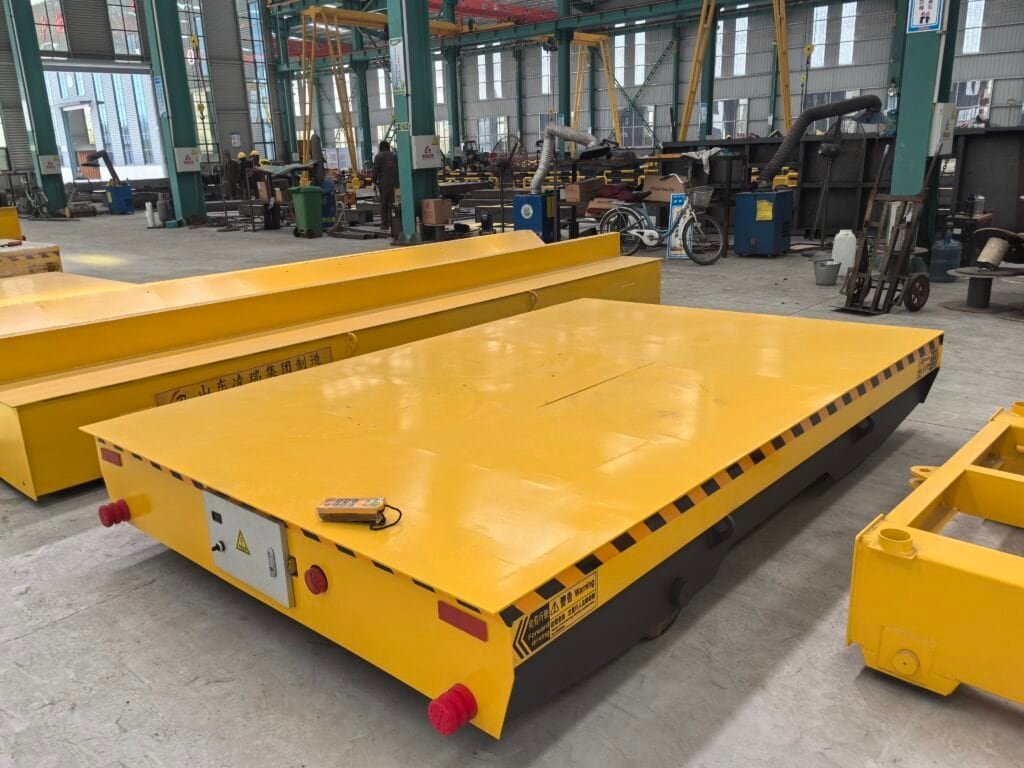
The main types include railway transfer carts, track transfer carts, coil transfer carts, and fully customized solutions for special material handling needs.
- Railway Transfer Poster: The best for continuous and straight tasks with heavy loads.
- Transfer Cart without track: It offers maximum flexibility, especially in plants with changing designs.
- Transfer posts of coils: Designed with special cradles to move cylindrical objects safely such as steel coils.
- Personalized carts: Built for unique requirements, guaranteeing efficiency in specialized industries.
What are the benefits of using a transfer cart?
Many companies go from rise carts to transfer carts due to the clear benefits they provide.
Transfer carts improve safety, reduce work costs, and manage heavier loads more efficiently than lift trolleys, making them a smarter investment.
Unlike lifting carts that require qualified operators, transfer carts are controlled remotely, eliminating the need for constant supervision of the driver. Reduce the risk of accidents in massive workshops and can move much larger weights. Automated transfer carts also save time during maximum production, avoiding expensive delays. In the long term, this results in higher productivity and smaller operating costs.
Where are the transfer carts used?
Transfer carts have become essential teams in a wide range of industries
They are used in steel plants, car making, warehouses, ports and logistics centers to move heavy materials.
Steel producers use coil transfer carts to move hot or cold coil coils safely. Automobile plants use non -track transfer carts to change car pieces between production stations. Warehouses and ports are based on heavy load transfer carts in transport containers, pallets and large products. This adaptability explains why transfer carts are a preferred material manipulation solution worldwide.
How to choose the right transfer cart?
With many options available, buyers often ask how to select the best transfer cart for their operations.
The proper transfer cart depends on load capacity, work environment, soil conditions, automation level and budget considerations.
For heavy and repetitive tasks on straight roads, a railway transfer cart is ideal. If you need flexibility, a transfer cart without track is better. Coil transfer carts are necessary for industries that manipulate cylindrical goods. Buyer must also check certifications, after -sales support and customization options. The choice of a reliable transfer cart maker guarantees both quality and logistics.

Summary
Transfer chariots facilitate heavy, safer and efficient loading. They are a flexible solution for modern industries that seek productivity and cost savings.
Please contact us to buy a transfer cart
If you want to buy a transfer cart, Hosen is definitely your best option. Contact us to obtain the latest product budgets and information.
