

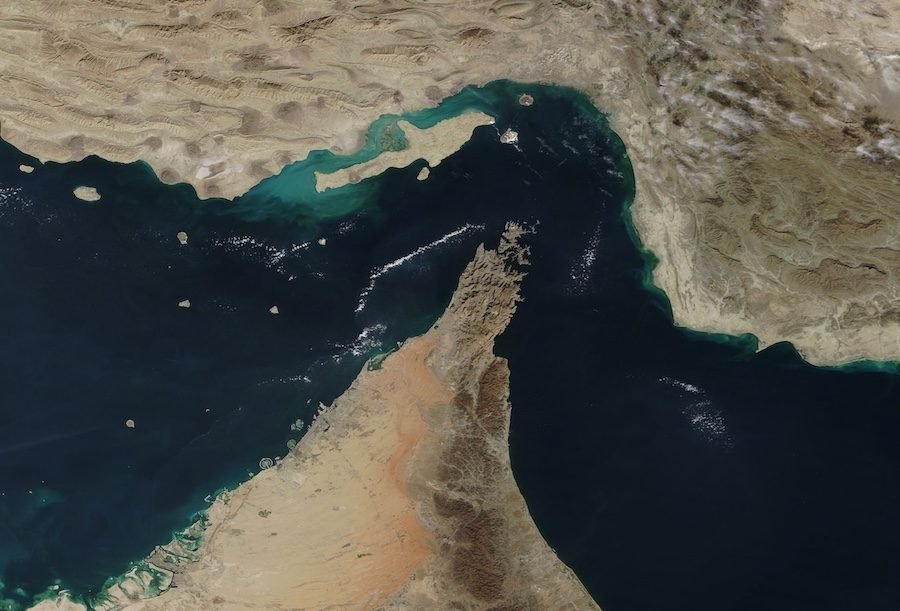

The long-term closure of the Strait of Hormuz due to the Iran-Israel-US war is now “the single biggest risk” to both energy markets and the global economy, according to a new report by UK-based global energy consultant Wood Mackenzie. More than 11 million barrels per day of oil and condensate production from the Persian Gulf is now curtailed, and more than 80 million metric tons per year of liquefied natural gas, about 20 percent of the world’s supply, are “inaccessible” to global markets, he said.
The waterway “is the most critical choke point in global energy markets, and a prolonged shutdown would become much more than an energy crisis,” said Peter Martin, chief economist at Wood Mackenzie and author of the report. “The longer the disruption persists, the greater the impact on energy prices, industrial activity, trade flows and global economic growth.”
In the report released on May 20, Wood Mackenzie developed three “scenarios” for how the conflict could end and the key waterway reopen, with an analysis of how each would affect oil and gas supply, demand and prices, as well as the rebuilding of facilities, energy markets and countries’ economies.
Under the most optimistic “quick peace” scenario in the Wood Mackenzie study, a workable deal is reached to end hostilities in the short term, the strait reopens in June and the world economy broadly returns to its pre-war state in the fourth quarter.
Meanwhile, the consultant’s “summer deal” scenario assumes the cease-fire holds, but the negotiations drag on until the end of the summer, with Hormuz largely closed until September. Oil and LNG supply shortages persist in the third quarter, “causing a shallow global recession” in the second half of 2026.
“Economic scars” if the war continues
But the report’s “extended disruption” outlook predicts “persistent tensions spilling over into near-term conflict,” with the strait closed until the end of this year, causing a global recession and “economic scarring as shortages of key commodities and high prices erode demand,” Wood Mackenzie said. “Further damage to existing production facilities and infrastructure lengthens the time for exports to recover to pre-war levels.”
The survey’s authors said energy-importing countries could reduce reliance on oil and gas through more aggressive electrification, as oil prices could reach $200 a barrel by the end of the year as supplies run out and demand falls 6%. “Full restoration of production requires repairs and intensive intervention, and disruptions last beyond the end of the year.” said Wood Mackenzie. “Closed Gulf production reaches more than 70% of pre-conflict levels by summer 2027”.
Looking for quick answers on construction and engineering topics?
Try Ask ENR, our new intelligent AI search tool.
Ask ENR →
As for LNG, the report said that even if peace is reached quickly, markets would remain tight through the summer of 2027 as Gulf export facilities gradually recover and construction delays slow regional supply growth, which was expected to rise to 200 million tonnes a year by 2031, about 50% above current levels. before the war But, “the longer the conflict drags on, the greater the risk to future LNG supplies from the Gulf,” Wood Mackenzie noted. “Unlike liquids, where producers like Saudi Arabia have alternative export routes and will likely build more, gas will be much harder to redirect.”
The analysis predicts that the 60 million metric tons of annual capacity under construction will experience delays of several years, while Qatar’s North Field West gas expansion project, approved earlier this year, was possibly postponed indefinitely.
Lingering supply uncertainty “would accelerate efforts to diversify away from imported LNG, supporting coal resilience and faster growth in renewable energy and electrification in Asia and Europe.” said Massimo Di Odoardo, vice president of gas and LNG research at Wood Mackenzie. “LNG prices would remain high until 2030 supporting investments in new LNG outside the Gulf, but lower long-term demand could undermine the industry’s future prospects.”
He said some countries in Europe and Asia that rely on imports for power generation “could invest in a faster transition”, but rapid electrification requires massive investment in grid development, “with significant cost implications”.
Efforts to significantly reduce dependence on gas for energy supply would begin after 2030 as coal plant retirements are postponed and renewables, battery storage and grid modernization are expanded, Di Odoardo said, adding that the energy mix becomes more diversified after 2040 as nuclear power increases rapidly.
According to Wood Mackenzie, an extended disruption scenario “delivers the global economy its biggest energy supply shock in 100 years,” although a possible recession later this year would be “less destructive” than the 2008 financial crisis or the COVID-19 pandemic. While the Middle East “suffers the biggest shock in terms of GDP,” the consultant said, domestic energy resources provide a buffer for the US and China.
Regions seeking to build supply chain hubs for clean technologies, such as the Middle East and North Africa, still face challenges related to war. The conflict has already delayed or canceled more than 30 GW of solar module factories planned for these regions, while battery storage shipments planned for 2026 have been reduced by 25%.
While many alternative strategies could accelerate if the Strait of Hormuz remains closed, the war provides “probably the toughest test yet of the resilience of oil and gas demand and the motivation of governments to pursue energy independence,” Wood Mackenzie said. “How the world responds to this test will determine the future of energy.”
Work in the region boosts McDermott’s finances
Meanwhile, energy contractor McDermott International Ltd. expects work to grow in the Middle East despite the impacts of the war as it continues a shift to high-margin offshore engineering-procurement-build-installation tasks, primarily in oil and gas for clients such as Saudi Aramco, QatarEnergy and Abu Dhabi. would double its oil exports through the Red Sea, bypassing the Strait of Hormuz.
McDermott’s financial performance for its first quarter ended March 31 beat expectations, it said May 20, with overall revenue of $2.4 billion compared with analysts’ estimate of $1.9 billion. The company said it earned $1.4 billion in new awards, contributing to a total backlog of $17.6 billion, as well as adjusted net earnings of $117 million that beat estimates of $99 million, “due to higher asset utilization and progress improvements,” the company said, with CEO and chairman Michael McKelvy announcing that “the levels of McDehirmo’s clients announced that ” [financial investment decisions] last year
McDermott plans $130 billion worth of commercial pipeline over the next two years, with about a third of that in the Middle East, the firm said. “Our first quarter performance exceeded our expectations, driven by strong project execution, improved portfolio quality and continued operational discipline across the portfolio,” said McKelvy, “While we are closely monitoring developments in the Middle East and conditions remain fluid, our operations in the region continue. We remain focused on maintaining this momentum.”
According to McKelvy, the strait “has been an issue for us related to materials needed for manufacturing in Dubai” and related to projects in Africa, but he noted “alternative solutions,” he told analysts. “We are fully utilized in our manufacturing plants and ships. For the last few weeks, it has been business as usual there,” he added. “Offshore Middle East delivered a good quarter.” But McKelvy noted that the company is still monitoring the impacts of the Hormuz closures. “The world we live in remains dynamic,” he said. “We focus on the leverage we can control.”
McDermott is optimistic that the disruptions and delays due to the war will be temporary this year and still hopes for a successful 2026. This is despite millions of dollars in added project costs due to disrupted operations and manufacturing delays due to logistical and transportation impacts of the strait closure, despite mitigation measures in place. Talks with key customers such as Saudi Aramco and Abu Dhabi Oil and Gas “are focused on accelerating current workloads,” McKelvy said. “We have the capacity to expand additional projects, using yards in the Middle East and globally.”
McDermott expects adjusted EBITDA to rise 21% this year to about $520 million and to $702 million in 2028 as it continues to restructure its balance sheet and refinance long-term debt next year.
