

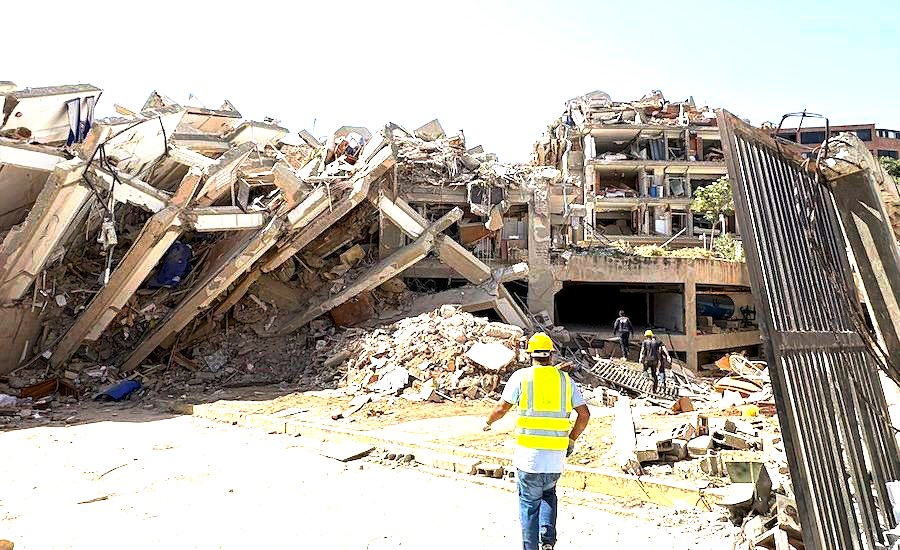
More than two weeks after a pair of devastating earthquakes struck Venezuela, engineers have been working on the difficult task of assessing damage to buildings and structures so that reconstruction and restoration efforts can begin. The magnitude 7.4 and 7.2 earthquakes damaged buildings, closed the country’s main international airport and killed at least 3,889 people on July 10, with more than 18,000 injured.
With search and rescue operations over, the focus has shifted to providing adequate housing for the thousands of people left homeless by the earthquakes. Miyamoto Relief, the nonprofit arm of Los Angeles-based disaster response specialist engineer Miyamoto International, sent its Mexico City-based team to Venezuela in the days after the earthquakes.
Led by Jesús Valdez, chief engineer and general manager of the firm’s Mexico office, the team spent more than a week visiting the most affected areas of Venezuela, from the capital Caracas to the cities and towns of the northern coast. Valdez spoke to ENR after his return to Mexico earlier this week. His comments have been slightly edited for clarity.
ENR: What is the extent of the damage you are seeing in Venezuela from the earthquake? Is it consistent with what you and your team expected to find?
Valdez: Damage is significant throughout the affected region, especially a [the northern state of] La Guaira, where strong ground shaking was combined with vulnerable building material and soft ground conditions. We observed a wide range of damage, from non-structural failures to partial and complete building collapses. Critical infrastructure, residential buildings, schools and commercial facilities have been affected to varying degrees.
Overall, the damage is broadly consistent with what we would expect after an earthquake of this magnitude. However, the scale of damage in certain urban areas appears to have been amplified by pre-existing vulnerabilities, including adverse soil conditions, aging buildings, inadequate maintenance, and structures that were not originally designed or detailed to withstand significant seismic forces.
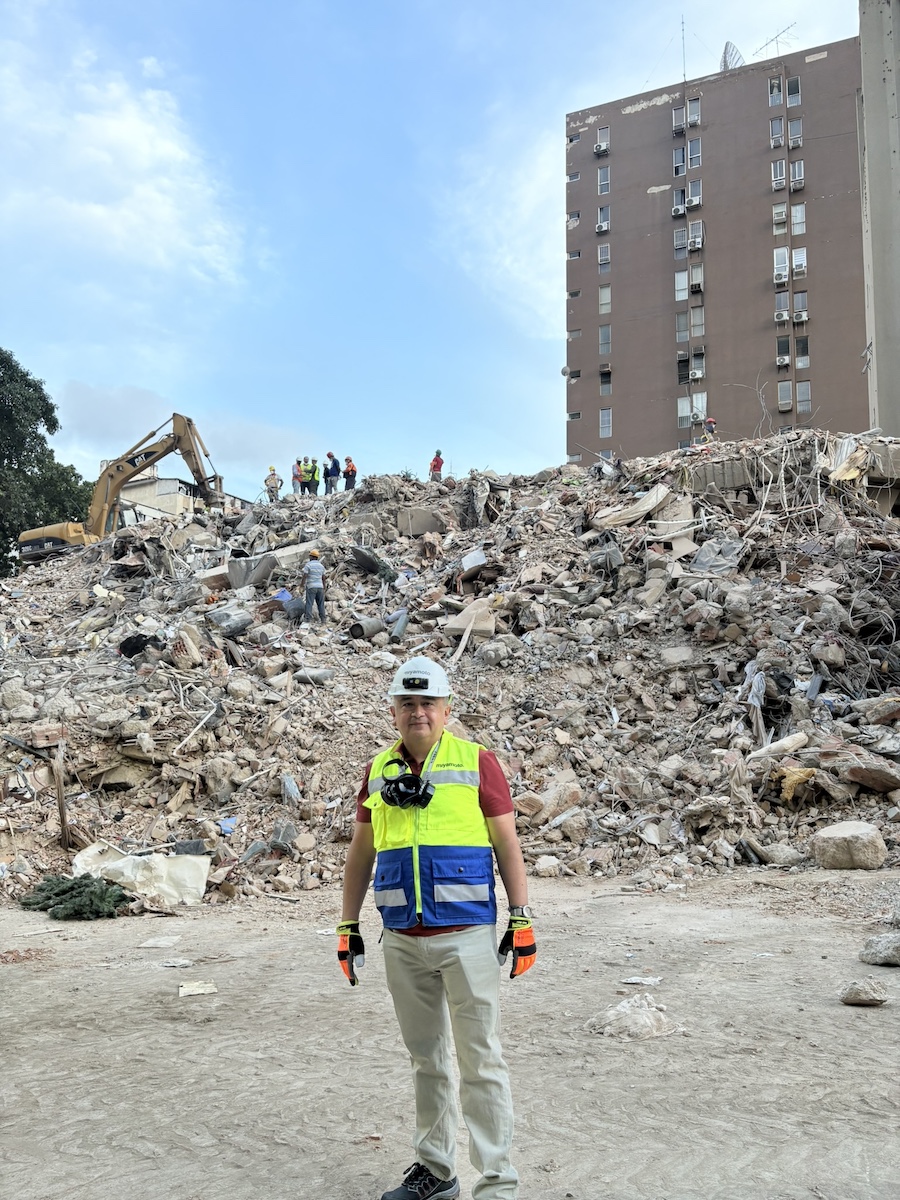 Miyamoto international engineer Jesús Valdez at the site of a collapsed building in Venezuela.
 Photo courtesy of Miyamoto International
What towns and cities have you visited? Are there areas particularly affected?
Our work has focused mainly on Caracas, Chacao and mainly on different localities in La Guaira. These areas have experienced different levels of impact depending on local site conditions, building characteristics and proximity to the strongest shaking.
Some municipalities have experienced concentrated damage where vulnerable buildings were located on soft soils or where older construction predominates. In this phase, our priority has been to support local authorities by identifying the most critical structures that require a detailed assessment.
Looking for quick answers on construction and engineering topics?
Try Ask ENR, our new intelligent AI search tool.
Ask ENR →
What is Miyamoto International’s role on the ground? What government agencies or NGOs are you working with and who is coordinating the response effort you are involved in?
Supported by the US Department of State, Miyamoto International provides technical engineering support focused on post-earthquake structural assessments, technical advice and coordination with emergency response partners. Our role is to help determine whether damaged buildings are safe to occupy, require restricted access, or need to be evacuated until further assessment can be completed.
We are working alongside Venezuelan authorities, emergency management organizations, engineers and humanitarian partners. The answer involves close coordination between national institutions, local governments and international organizations.
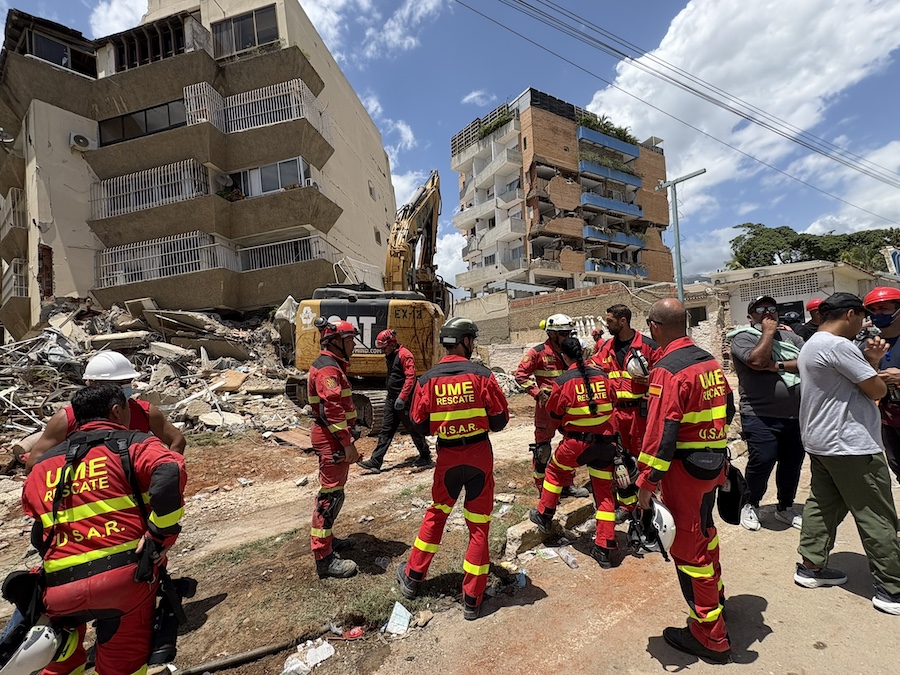 Search and rescue teams scour the damaged buildings for signs of life.
Photo courtesy of Miyamoto International
With search and rescue efforts largely over, has the work yet shifted to engineering assessments of buildings?
yes As search and rescue activities transition toward completion, engineering assessments become a top priority. Engineers are assessing the buildings to determine their structural condition and whether they can continue to be safely occupied.
These assessments are essential because many buildings that remain standing may still have significant structural damage that is not immediately visible. Accurate assessments help authorities prioritize repairs, manage public safety and support the recovery process.
Are there any common qualities in the buildings and structures that show the greatest earthquake damage? Any particular type of construction, or eras of more damaged buildings?
Many of the most severely damaged buildings share common characteristics. Older reinforced concrete buildings designed with outdated seismic provisions, poorly detailed structures, soft floor configurations, irregular structural layouts, or inadequate maintenance have generally performed less favorably.
Buildings that experienced changes in occupation or modifications over time without proper structural assessment also appear to be more vulnerable. Each building must be assessed individually, but these recurring features are common among heavily damaged structures.
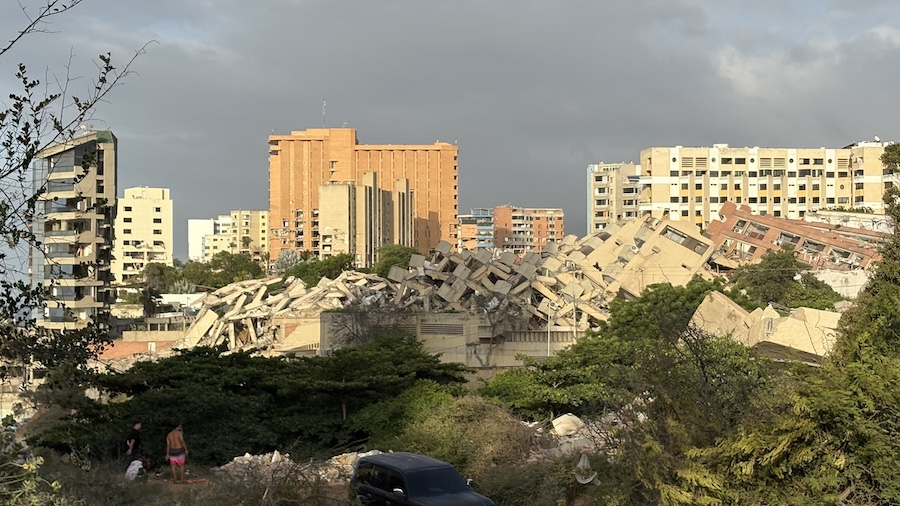 According to Valdez, newer buildings that were built according to modern seismic design principles fared better than older structures.
 Photo courtesy of Miyamoto International
Have you seen how recent buildings built to modern seismic codes have performed? Is there a considerable difference from the older structures?
In general, buildings designed and constructed to the latest seismic design standards have performed significantly better. Although some non-structural damage or localized structural repairs may be required, many modern buildings maintained their overall structural integrity, particularly in Caracas.
This highlights the value of modern seismic codes, quality construction practices, and proper inspection during construction. Good engineering cannot eliminate damage in a major earthquake, but it can significantly reduce the likelihood of catastrophic collapse and loss of life.
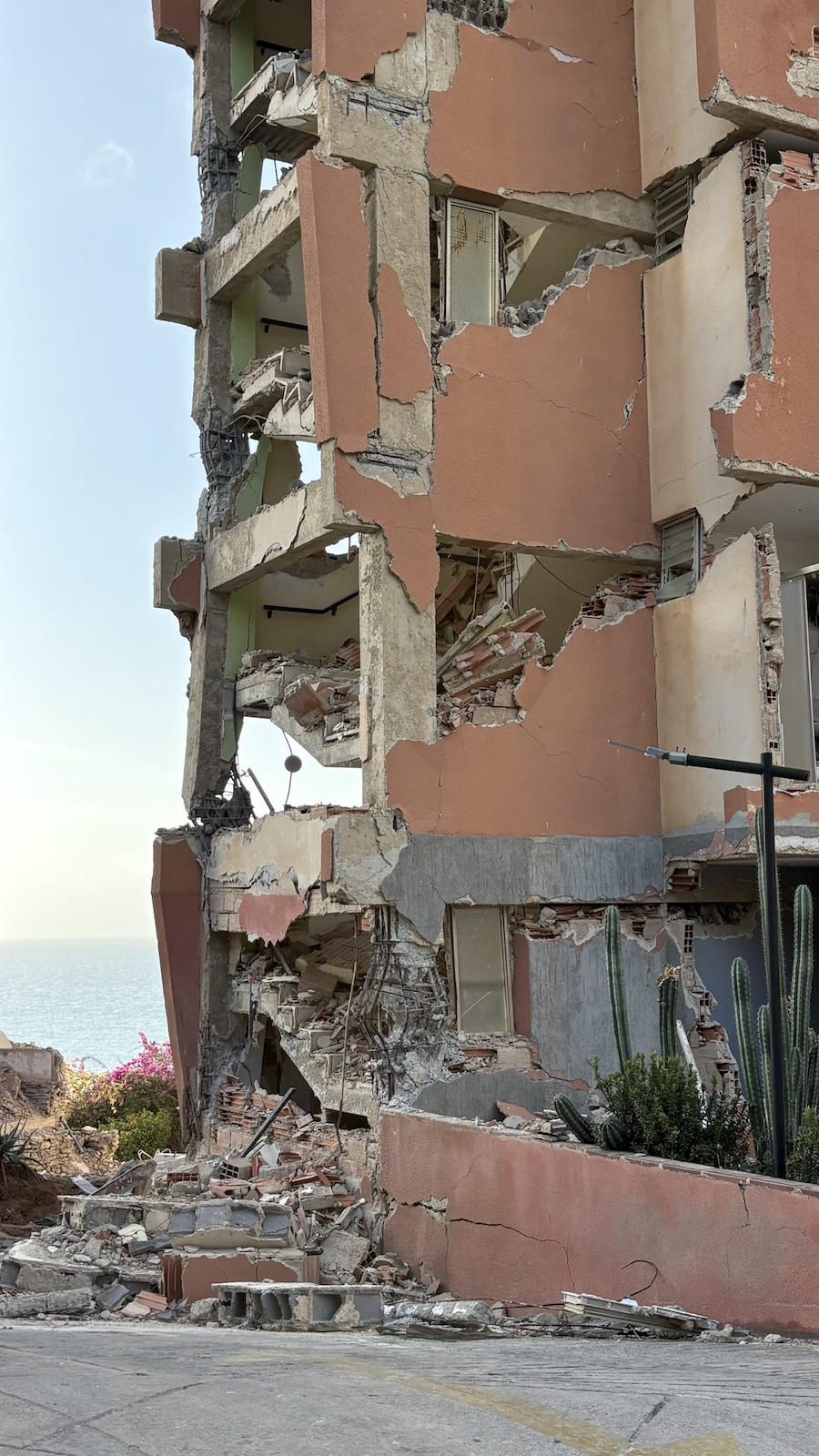 An 11-story oceanfront apartment tower on Venezuela’s northern coast was still standing but suffered significant structural damage, as seen in this close-up of the lower levels of its crumbling staircases.
Photo courtesy of Miyamoto International
One concern is that many buildings in Venezuela that have been expanded or modified without proper engineering were at risk. Have you seen any signs of this problem?
yes We have noted some cases where buildings appear to have undergone alterations, additions or changes of use that may not have included a comprehensive structural assessment. These modifications can inadvertently alter the way a building responds during an earthquake by increasing weight, removing structural elements, or changing load paths.
Although each case requires detailed investigation, undesigned modifications are recognized worldwide as a major contributor to increased seismic risk.
What have you seen of people displaced and homeless by the earthquake? Is there an effort to get them temporary housing? Have you encountered people trying to stay in damaged buildings that are structurally unsafe?
What I have seen is that many people live in tents and on the streets and are reluctant to return home. They are deeply concerned about the safety of their homes, especially if the buildings have been damaged, and many are also concerned about the risk of theft. I don’t know about temporary housing efforts yet.
