

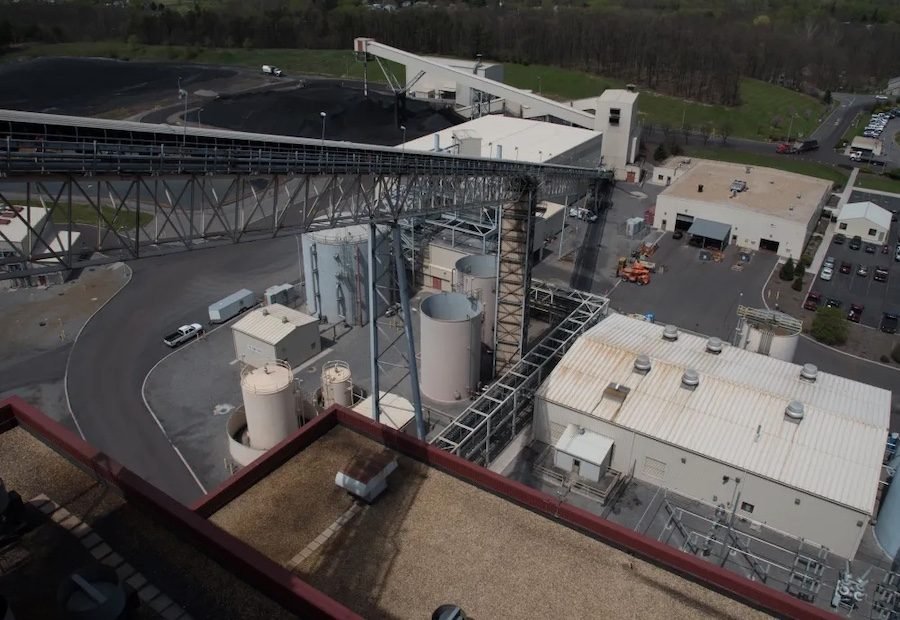
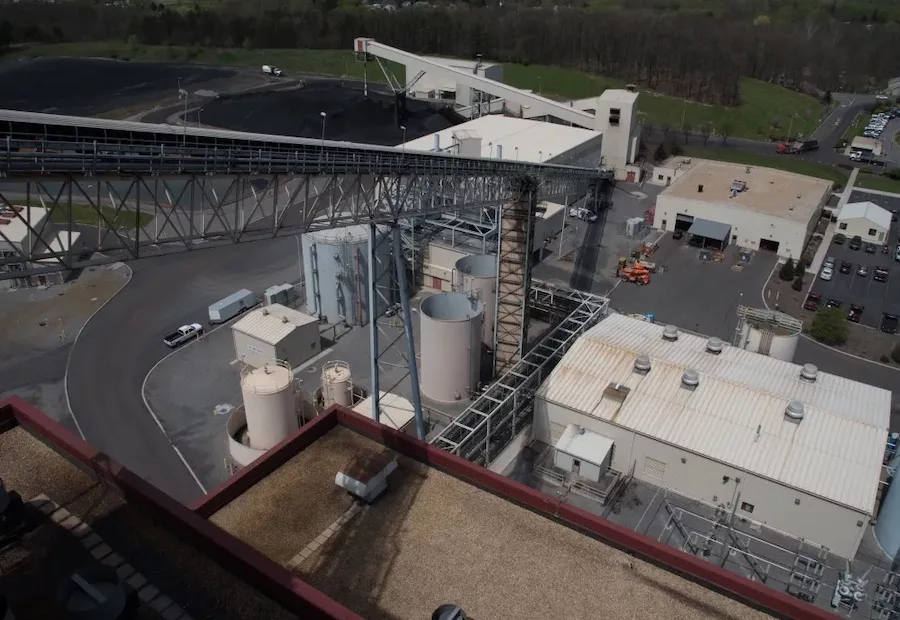
Once again seeking to revive America’s coal sector, despite documented environmental impacts, community opposition and energy market ambivalence, President Donald Trump said he will allocate more than $700 million to upgrade or restart 13 coal plants across the country, build new ones in two states and support the construction of a controversial coal export terminal in California.
The increased funding comes as a federal court hears arguments in a challenge to the administration’s orders last year to restart several other decommissioned coal-fired power plants across the country to deal with what officials say is a power emergency.
Trump said in a June 4 White House announcement that he would use the Cold War-era Defense Production Act to accelerate and justify the funding, citing critical national security concerns to ensure there is enough power capacity for US artificial intelligence data centers.
As announced, about $425 million will be used to modernize 13 operating coal-fired power plants in Indiana, Kentucky, North Carolina, North Dakota, Oklahoma, Tennessee, West Virginia and Wisconsin.
Planning for new plants in Alaska, West Virginia
There is another $185 million from the US Department of Energy to match corporate funding for new coal plants. A proposal near Anchorage, Alaska, would have a capacity of 1.25 GW and a total project value of $190.4 million and department funding of $89 million, the agency said. It would make up for the decline in natural gas, but has growing opposition and still lacks a final design and cost breakdown, permits and power agreements signed, according to reports. The developer was identified as Terra Energy Center, a subsidiary of Canada-based Flatlands Energy, the other would be built in Mount Storm, W.Va., by developer TerraSpark near an existing plant that produces 1.6 GW of power and uses carbon capture technology. The cost of the project was not disclosed, but it will receive up to $18.5 million in federal funding.
The money for the new coal plants would come from funds that Congress originally designated to reduce carbon dioxide emissions from polluting industries, according to the New York Times.
The funds would also boost the restart of the AES Warrior Run coal plant, a 229 MW facility in Cumberland, Maryland, which closed in June 2024 as Maryland’s last operating coal plant. However, the company filed with the Federal Energy Regulatory Commission last year for a restart because of the need for electrical capacity to support demand driven by data centers and other factors. The funding would also support the restart of a coal plant in Puerto Rico.
Looking for quick answers on construction and engineering topics?
Try Ask ENR, our new intelligent AI search tool.
Ask ENR →
The administration also said last fall that it would open 13 million acres of federal land to coal mining and provide $625 million to restore or modernize coal-fired power plants. Analysts noted, however, that no new coal-fired power plants have been built since 2013 and also speculated on the project’s impacts on a potential political change of administration.
In addition, $75 million has been designated to help build the Oakland Bulk and Oversized Terminal in Oakland Calif on the site of a decommissioned U.S. Army base to increase the export of up to 12 million tons of coal a year to Asia and other markets. Trump predicted that with work starting this year, the facility could be operational by 2028. The facility, pushed by the coal industry since 2010, already faces legal challenges in the San Francisco Bay Area. “Developers should expect a relentless battle,” said Ben Eichenberg, a senior staff attorney at the San Francisco Baykeeper.
Together, the announcements will support or create more than 14,000 jobs in the coal, construction, rail and maritime industries, the White House said, as well as save $50 billion in energy costs. The US Environmental Protection Agency in February weakened limits on mercury and other toxic air emissions from coal-fired power plants, saying the move would lower energy costs and improve grid reliability.
“I’m optimistic. The United States has a 400-year supply of coal, which makes it one of the most important resources for national energy security,” said Michelle Bloodworth, president of America’s Power, a coal industry trade group.
Conflicting opinions on the need for coal
A recent report by the nonpartisan think tank Energy Innovation noted that 99 percent of all U.S. coal plants are now more expensive to run than comparable replacements with new solar, wind or energy storage infrastructure.
In a survey last month of 36 leading energy infrastructure investors by the American Renewable Energy Council, none indicated any future investment in coal infrastructure.
“The market has already rejected coal because cheaper and cleaner alternatives continue to compete with the most expensive crude fuel source,” said Lena Moffitt, executive director of climate advocacy organization Evergreen Energy.
Under Trump’s orders, the Energy Department has also required coal-fired power plants in Michigan, Indiana, Colorado and Washington state to operate beyond their planned retirement dates to meet demand, despite the operators’ claims of sufficient power capacity.
Lawsuits against the Department of Energy in Michigan, Illinois and Minnesota and by public interest groups that allege the agency overstepped its authority in the orders have now reached a federal appeals court in Washington, DC.
A DOE lawyer told the court last month that the order ordering the 1.5 GW Campbell plant in Indiana to stay online after the May 31, 2025, planned shutdown was based on “substantial evidence” of a grid emergency, but plant officials say the operation has cost $180 million over the past year.
However, Assistant Attorney General of Michigan Lucas Wollenzien says the DOE has not demonstrated how a grid emergency exists and that “if it’s not flagged, [the order] would transform the power structure for regulating resource planning as it has been commonly understood for decades.”
Other DOE emergency orders delaying power plant retirements affect: TransAlta’s Centralia plant in Washington; CenterPoint Energy’s FB Culley Unit 2 in Indiana; the RM Schahfer plant of Northern Indiana Public Service Co. in Indiana; Craig Unit 1 in Colorado run by Tri-State Generation and Transmission Association; and Constellation Energy’s Eddystone gas plant in Pennsylvania.
The Schahfer plant, built in the mid-1980s, is unable to operate due to serious mechanical failures, facility officials have told DOE and grid officials. The two active coal generators are completely out of service, not expected to be operational until October at the earliest, as “major boiler and turbine work” is being carried out.
Public Service of Northern Indiana has estimated that keeping the plant operating beyond its 2025 retirement date will cost more than $1 billion through the end of 2027, but it says it can meet summer power demands with new wind, solar and battery power resources.
A court decision expected later this year could set a precedent for the other pending challenges, although analysts expect the case will likely be appealed to the US Supreme Court.
