

It’s a late Friday afternoon when a major dispute over subsequent charges lands on your desk. The indisputable test will protect profit margins, but it’s hidden behind the plasterboard that was put up weeks ago. Now your team is combing through hundreds of files, emails, and text strings along with thousands of disconnected photos from the workplace, hoping that the evidence exists… and that they can actually find her.
what happened when did it happen And who was responsible? Contractors face these questions during every build.
Breakdown occurs when field documentation takes a backseat to maintaining project momentum and pushing schedules. When records are incomplete, hard to find, or never captured in the first place, teams absorb the cost through rework, disputes, delays, and settlement headaches.
While the construction industry has been digitizing plans, requests for information (RFIs), schedules and financial workflows for years, the physical job site remains one of the least connected sources of project intelligence. But as margins shrink, labor constraints tighten, and projects become more complex, contractors can no longer afford gaps in project documentation.
Smarter documentation, simpler workflows
Photos and videos provide a definitive record of the physical progress of the job site, which is why many contractors are turning to 360-degree reality capture. However, not all capture programs are the same. Using standalone third-party apps comes with its own set of headaches; juggling multiple passwords, learning new application interfaces, and dealing with siled data fuel inefficiencies and frustration. When crews are racing to meet deadlines, struggling with disconnected rigs turns a high-tech tool into a momentum killer.
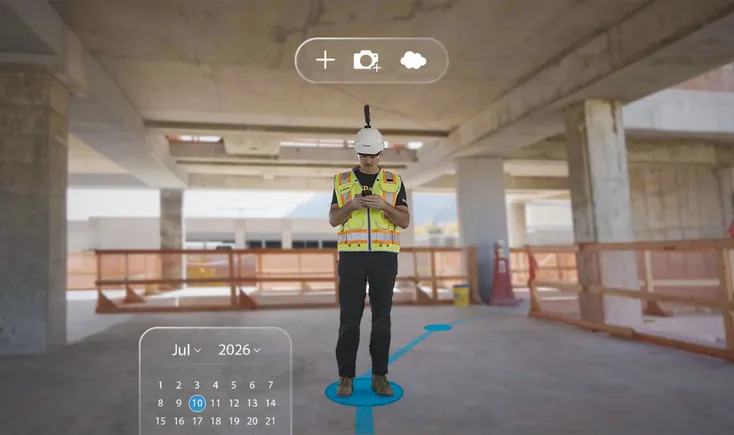
Contractors can avoid these hassles with 360-degree reality capture that is directly integrated into their project management platform. This is a new development, available only with Trimble ProjectSight 360 Capture. Trimble has proven that integrating AI-powered site visualization into a single hub solves many annoying construction management problems by making documentation a natural byproduct of what they’re already doing. Project site walks become a visual timeline.
A worker simply mounts a camera to a helmet, presses record, and walks around the site. AI computer vision automatically tracks the path and fixes each time-stamped photo or video directly to the exact location of the architectural drawings. This push-button simplicity allows contractors to delegate the task to field workers or even interns.
As a result, teams get a searchable record system that can be accessed by location, date, or project phase built into the project management software they use every day. This total visibility allows contractors and project managers to:
- Check site progress from the office.
- Resolve disputes with real video or photo evidence that is easy to retrieve.
- Avoid costly rework and catch errors early.
- Achieve flawless deliveries with comprehensive visual records.
- Validate a subcontractor’s full percentage payment claims.
From defensive documentation to operational advantage
Shifting documentation from a reactive exercise to a strategic asset streamlines the workflow for all stakeholders. Incorporating 360-degree reality capture into a single, unified database is the missing link to build a complete bridge from field to office.
With a single source of truth, data is actionable. BIM models, 3D renderings and records live on the same platform as physical site photos and videos. Link RFI, issues, or a 3D model to a time-stamped image with side-by-side comparisons.
Specialist contractors can verify facilities before other trades enter an area, review hidden conditions behind finished walls, and support as-built documentation and project closeout with much less effort.
General contractors can review any point in the project timeline, remotely review site conditions at multiple jobsites, and provide owners and stakeholders with full visibility into project progress without the need for additional site visits.
Project executives can eliminate late-stage bottlenecks, streamline project closure, and quickly redeploy their resources to the next project.
A reality check for project leaders
When evaluating your current field documentation strategy, ask three questions:
- How long does it take to resolve documentation disputes?
- How much time is spent managing workplace photos and videos?
- What profit margin is at risk due to construction disputes?
If these questions reveal operational friction, it may be time to rethink how your organization captures data from the field, not by collecting more photos and managing another application, but with a single, unified database for seamless communication between the field and the office.
Ultimately, contractors who can quickly answer “What happened?” spend less time defending your work and more time building.
About ProjectSight 360 Capture
ProjectSight 360 Capture helps contractors create a time-stamped visual history of the job site, making it easy to verify progress, resolve disputes, and streamline closeout.
Find out how ProjectSight 360 Capture helps teams answer one of the most important questions in construction: What happened?
