

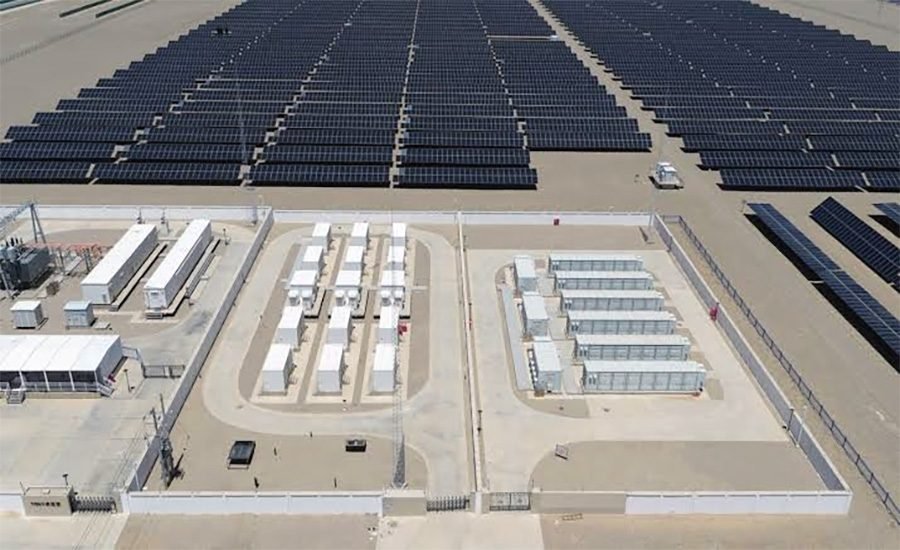
Construction has begun on the roughly $4.5 billion Steel River Energy Center in northeast Arkansas, advancing what developer Cypress Creek Energy says will become the nation’s largest solar storage project.
The three-phase development, which began on July 14, will eventually deliver 2.5 GWdc (gigawatts direct current) of solar generation combined with 2.9 GWh of battery storage by 2029. The development comes as utilities and technology companies race to add generation capacity to meet growing electricity demand from industrial expansion and data centers.
Spanning 15,000 to 17,000 acres in Mississippi County, about 50 miles north of Memphis, Tennessee, the project is among the largest energy infrastructure developments under construction in the United States.
The first two phases, now underway, will provide 1.6 GWdc of solar generation and 1.9 GWh of battery storage, while each phase is designed to include approximately 815 MWdc of solar generation combined with 240 MW/960 MWh of battery storage.
Florida-based Moss is serving as the project’s engineering, procurement and construction contractor. Cypress Creek estimates the project will support approximately 700 construction jobs over its three phases.
The groundbreaking ends years of development on the project that was accelerated after Cypress Creek acquired Steel River earlier this year.
Originally owned by Swift Current Energy, Cypress Creek acquired the project in March after Swift Current secured discretionary permits for the project and closed last month on $3.5 billion to support construction and long-term operation of the first two phases.
Looking for quick answers on construction and engineering topics?
Try Ask ENR, our new intelligent AI search tool.
Ask ENR →
Funding for the third phase is expected in early 2027, according to a LinkedIn post by Cypress Creek CEO Kevin Smith.
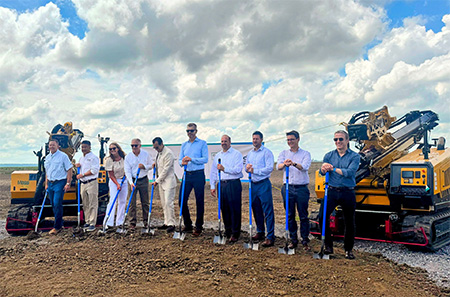
Officials from Cypress Creek Energy, Google and project partners participate in a groundbreaking ceremony July 14 marking the start of construction on the first two phases of the Steel River Energy Center in Mississippi County, Ark. The three-phase solar and storage project is scheduled for completion in 2029.
Image courtesy of Cypress Creek Energy
Arkansas environmental records show Moss has an active construction stormwater permit covering a 2,280-acre construction parcel in Mississippi County, which authorizes approximately 1,444 acres of land disturbance.
The development is being constructed using more than 400,000 structural steel foundation piles manufactured by PACO Steel in Blytheville, Ark., from more than 142,000 tons of steel coils produced at US Steel’s Big River Steel Mill in Osceola, Ark.
The cells will support NextPower solar trackers equipped with First Solar PV modules, while LG Energy Solution Vertech supplies US-assembled battery energy storage systems using battery cells manufactured primarily in US facilities.
Alphabet’s Google has signed a virtual power purchase agreement covering the first two phases of the project, making Steel River the largest solar and storage project in Google’s global portfolio. The company said the deal benefits the regional power system rather than exclusively powering its own operations.
“The investment supplies the overall grid and passes the benefits of the local power plant to all customers in Arkansas,” Will Conkling, Google’s head of data center energy, told the Financial Times.
RELATED
Famine for power: The AI-powered data center boom sets the new course for power delivery
Once operational, Steel River is expected to strengthen the regional power grid by adding new generation and battery storage capacity to support Arkansas’ growing demand for industrial electricity, including steel manufacturing, data centers and other large energy users.
Google says the battery systems will store peak solar generation during the day and send electricity when demand is highest, improving grid reliability while helping keep electricity affordable.
Writing on LinkedIn, Smith said the project’s scale underscores the growing demand for new generation capacity: “The fact that a project of this scale is being built in Arkansas speaks volumes about America’s growing demand for electricity.”
Cypress Creek Energy and Moss did not respond to a request for comment.
