

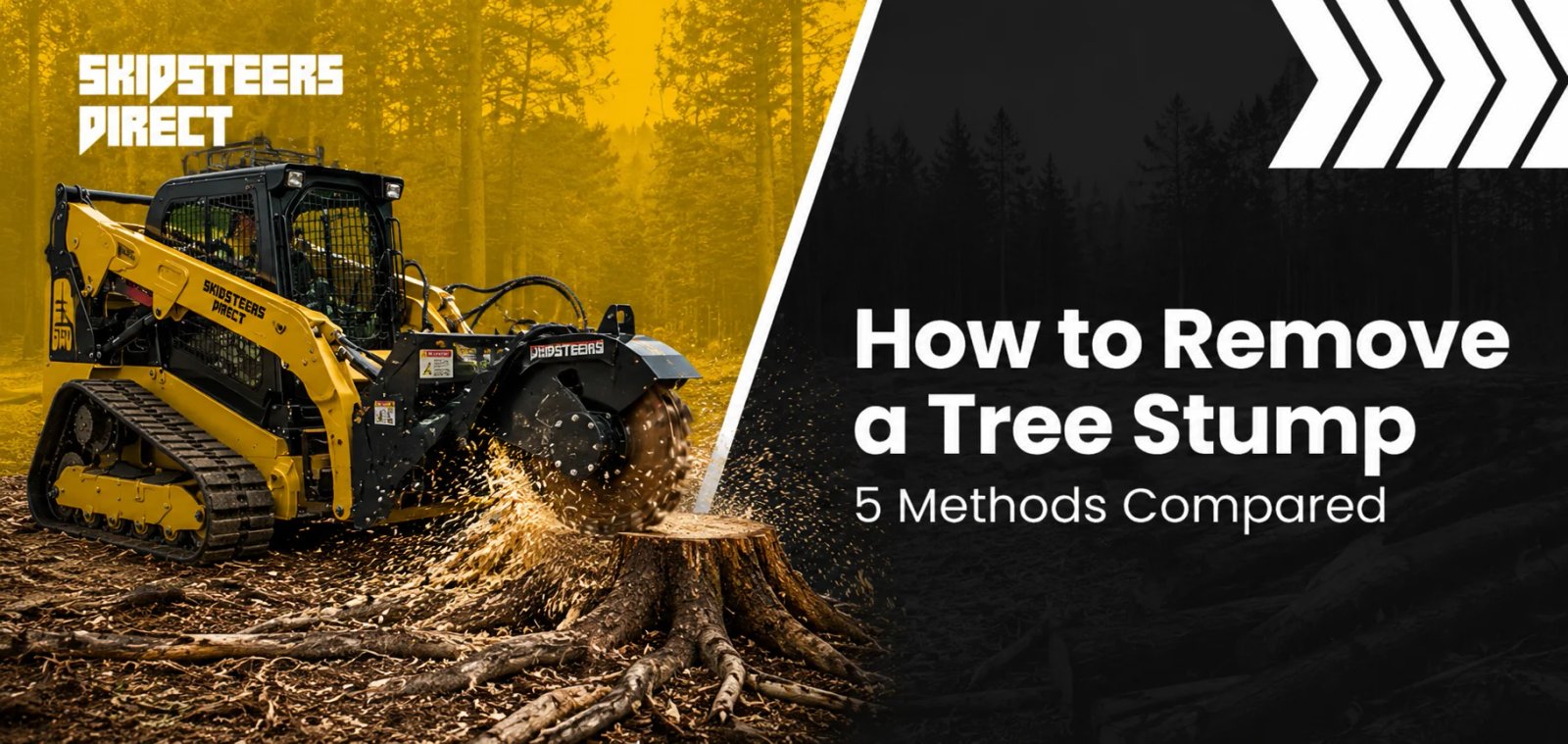
To remove a tree stump, you can crush it with a stump grinder, dig it up with an excavator or skid steer, pull it with a grapple or tree puller, chemically rot it with potassium nitrate, or burn it. Grinding and mechanical removal are faster, while chemical and burning are cheaper, but take weeks or months.
A leftover stump is more than just an eyesore. It sprouts suckers, attracts termites and fungi, gets in the way of mowing and can make replanting or building impossible. The good news is that you have five real choices, and they trade on the same three lines every time: speed, cost, and effort. Here’s how each method works and how to choose the right one.
The 5 methods of stump removal at a glance
| method | speed | cost | effort | The best for |
|---|---|---|---|---|
| Grinding of stump | Fast (less than an hour for most) | moderate | Low to moderate | Most residential strains |
| digging | quick | Moderate to high | moderate | The stumps you want, roots and all |
| stretching | quick | moderate | moderate | Clusters and land clearing |
| Chemical rot | Very slow (weeks to months) | come down | come down | No rush, no equipment |
| Burning | Slow (after weeks of drying) | come down | moderate | Rural places where burning is legal |
Method 1: Grinding of stump
A stump grinder uses a rotating toothed wheel to chop the stump down to several inches below grade, turning it into a pile of wood chips that you can remove or use as mulch. It’s the go-to method for most homeowners and professionals because it’s fast, self-contained, and leaves the surrounding soil largely undisturbed.
Grinding does not remove the deeper root system, but for lawns, landscaping and replanting it is rarely a problem. You can rent a walk-behind grinder or, for larger jobs and multiple stumps, run a miniature stump grinder attachment that brings much more power and speed to the job. Expect most strains to take less than an hour.
Method 2: Dig it out
If you want the stump and its roots completely gone, for a foundation, driveway or new structure, digging it up is the complete option. A mini digger or mini car with a bucket or backhoe attachment can pry, lift and extract the entire root ball, leaving a clean hole ready to fill.
This method moves a lot of soil and leaves a crater that you’ll need to fill and compact, so it’s more disruptive than grinding. But nothing beats it when the root system really needs to come out. A miniature backhoe attachment turns a loader you already own into a digging tool capable of exactly this type of work.
Method 3: Remove it
Stretching is the fast favorite for clearing floors and clumps of stumps. Instead of grinding or digging, grab the stump and pry or lift it out of the ground, roots and all. A tree removal attachment holds the log and uses the hydraulics and breaking force of the machine to loosen the stump, while a grapple is great for fighting loose stumps and piling up debris for removal.
Pulling works best on smaller and medium stumps and on softer ground. Very large, deeply anchored stumps in hard soil may still need grinding or digging, but to clear the surface, pulling is often the fastest route from standing brush to bare ground.
Method 4: Chemical putrefaction
If you’re not in a hurry and want to avoid the team entirely, you can speed up nature. Drill deep holes in the stump, fill them with a nitrogen-rich stump remover (potassium nitrate is the common active ingredient), and keep the stump moist. The chemicals accelerate decomposition, so the wood softens over weeks or months, after which it can be broken up with an ax or shovel.
It’s cheap and low-effort, but it’s slow, and not suitable if you need the space soon. Keep children and pets away from treated strains and always follow the product label.
Method 5: Burn
Burning is another low-cost, low-equipment route where it is legal. After the stump has dried, often aided by the chemical method above, it can be burned in place until the wood is reduced to ash and charcoal that you can extract.
Combustion is slow, weather dependent and highly regulated. Check local fire codes and burn bans first, never use accelerants like gasoline, and have water handy. In many suburban areas burning is simply not allowed, making grinding or rolling the practical option.
When to sharpen, dig or pull
- choose ground when you want a quick and tidy result for a lawn or garden and don’t need the roots to disappear.
- choose digging when the roots must be completely removed for construction or paving.
- choose pulling when you are clearing a lot of stumps or working a larger property and speed matters more than a clean hole.
For anything time sensitive, all three mechanical methods win. Chemistry and combustion are for patient budgets, not tight schedules.
Security considerations
Removing the stump involves turning tines, heavy hydraulics and buried shocks. Call 811 or your utility locator before digging or pulling, as roots often grow next to water, gas and electric lines. Wear eye and ear protection when grinding, keep bystanders well away from thrown debris, and never exceed a machine’s rated capacity when grinding. If a stump is near a structure, power line, or slope, or if it’s simply bigger than your equipment, hiring a professional is the safest call.
Frequently asked questions
How to remove a stump without a stump grinder?
You have several options: dig it out with an excavator or skid steer, pull it with a tree puller or grapple, rot it with a nitrogen-rich stump remover, or burn it where legal. Mechanical removal is faster, while chemical and burning are cheaper, but take weeks or months.
How to get rid of a stump without grinding?
The same methods apply without grinding. For a quick result, dig or pull the stump with a tool. For a hands-off approach, drill it and treat it with potassium nitrate and let it decompose, then break it up. Burning is an option in rural areas where fire codes allow.
How much does stump grinding cost?
Professional stump grinding typically costs between $100 and $400 per stump, often with a price per diameter of approximately $2 to $5 per inch, with a minimal charge. Crushing several logs at once lowers the price per log. Renting a grinder or running a miniature attachment can be more economical if you have a lot to remove.
How deep should a stump be removed?
It depends on what comes next. For a lawn or garden bed, grinding 4 to 6 inches below grade is usually enough to cover with soil and plant grass. For a new patio, driveway, or shed, you want the stump and main roots removed deeper so that settlement and growth won’t disturb the surface later. For a site where you plan to plant a new tree, remove as much of the old root ball as you can so the new roots have room to establish.
What to do with the hole and wood chips
Grinding leaves a pile of wood chips mixed with soil. You can rake the chips into garden beds as mulch, compost or remove them, then fill the depression with topsoil and tamp it down as the fresh fill settles. Digging and pulling leaves a larger hole that needs the same treatment on a larger scale: fill in layers, compact each layer, and wait to finish after the first rains. Wait a season before planting grass over a soil stump, because decaying wood chips can temporarily tie up nitrogen in the soil.
DIY vs hiring a professional
Renting a single stump is quick and affordable, usually in the $100 to $400 range described above, and saves you the hassle of equipment. The math changes with volume. If you have a garden or property full of stumps, renting a grinder or running a miniature attachment can cost less than paying per stump, and having the attachment makes sense for anyone who clears the land regularly. Weigh the number of strains, your timeline, and whether you already have a machine to feed the tool.
Will the stump grow back?
Grinding removes the visible stump but leaves the roots, and some species may send up suckers afterward. If you see new shoots, cut them back as they appear or treat them and they will eventually exhaust the root system and die. Complete removal by digging or pulling removes the root ball and completely removes the growth, which is another reason to choose mechanical removal when you want the tree gone for good.
The bottom line
Five methods, one decision. If you want it done today, grind, dig or pull. If you have time and want to spend as little as possible, you can or burn it. For a single backyard strain, the grind is usually the sweet spot. To clear a property full of them, mechanical removal with the right attachment is much faster and cheaper than renting it stump by stump. When you’re ready to outfit your machine, buy stump grinders and tree pullers built to make quick work of them.
