

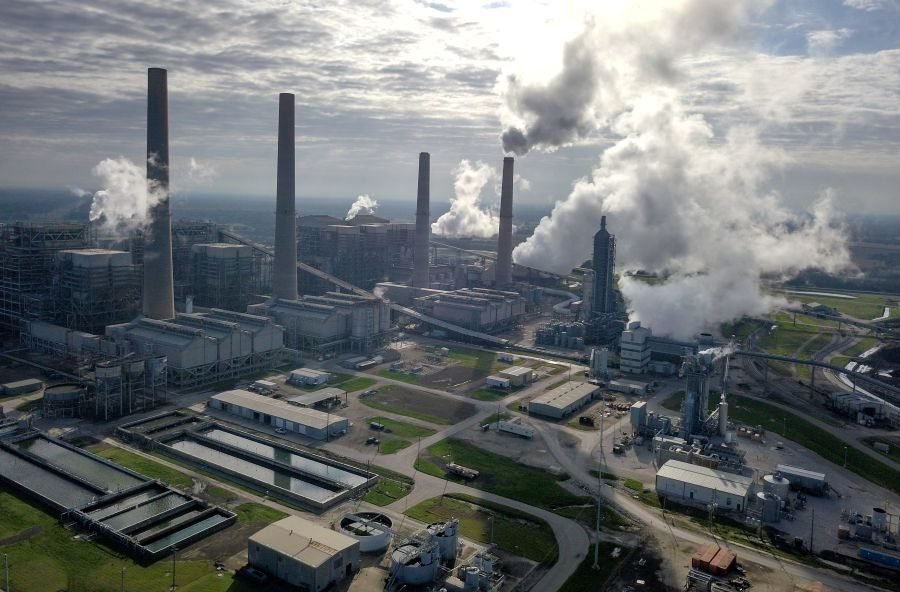

Trump administration officials have finalized a rule that removes nearly all current carbon emissions requirements for coal and gas-fired power plants, and are proposing to remove the remaining greenhouse gas pollution control requirements in a separate rule.
US Environmental Protection Agency Administrator Lee Zeldin, along with US Department of the Interior Secretary Douglas Burgum, announced the latest actions during the G20 Energy Abundance Ministerial Meeting in Houston on September 14.
The final rule revokes the 2024 carbon pollution rules for power plants established during the Biden administration. The EPA says that eliminating the 2024 standards will save $310 billion in utility compliance costs, and that rescinding all carbon reduction requirements in the electric sector could save an additional $370 billion.
The proposed rule will be open for public comment for 45 days after its publication in the Federal Register.
The EPA claims the Biden and Obama administrations exceeded their authority under the federal Clean Air Act by requiring control technologies that are “not adequately demonstrated … effectively forcing plants to retire rather than setting standards.” [utilities] could really be found.”
Climate emissions reduction standards for coal and gas plants during the Obama and Biden years relied heavily on carbon capture and sequestration technology to curb emissions at fossil fuel plants.
Technology advocates have a different view of the administration.
Looking for quick answers on construction and engineering topics?
Try Ask ENR, our new intelligent AI search tool.
Ask ENR →
“Deploying carbon capture and storage at power generation facilities is an available and effective way to address emissions from America’s growing electricity sector, as evidenced by the 30 carbon capture and storage projects under development at U.S. power facilities,” said Jessie Stolark, executive director of the Carbon Capture Coalition.
The EPA’s latest action is part of the Trump administration’s strategy to boost fossil fuel production, particularly coal, by removing any obstacles to the continued operation and development of new coal and gas plants. In February, the EPA rescinded the endangerment finding, the legal basis for regulating climate emissions. The agency said it based its decision on a US Department of Energy study that claimed concerns about climate change have been overblown.
The study was later refuted by more than 80 climate experts from around the world.
In a Sept. 16 call, Sierra Club Program Director Holly Bender said the EPA’s latest actions reflect a “blatant and unsupported denial of decades of science and research that have protected us from the harmful impacts of carbon pollution, and is ultimately climate denial at its worst.”
Nathenial Keohane, CEO of the nonpartisan Center for Climate and Energy Solutions, said in a statement: “At a time when demand for electricity is growing faster than in half a century, and businesses, utilities and consumers need more certainty, the Environmental Protection Agency has taken a giant step back.”
By repealing the pollution standards, he said, “the EPA has ignored sound science and economics and abdicated its responsibility to protect public health and welfare.”
Industry-aligned groups praised the EPA’s actions. National Rural Electric Cooperative Association CEO Jim Matheson said as demand for electricity continues to rise, “every available electron” will be needed, regardless of the source. The carbon pollution rule “exacerbates the pressures facing the U.S. power grid by forcing critical existing power plants into early retirement and severely restricting the operation of new natural gas plants.”
Sen. Shelley Moore Capito (RW.Va.), chairwoman of the Senate Environment and Public Works Committee, said in a statement that the pollution rules, if left intact, would have “decimated baseload power production and eliminated jobs across West Virginia.”
Federal orders since last year have forced the operation of some long-retired U.S. coal plants that have not recently generated power or been fed on life support, with a number of utilities fighting the orders in court. A September 11 decision by a federal appeals court in Washington, DC has now limited the Energy Department’s authority to keep coal plants open beyond their planned retirement dates. A federal decision to appeal to the U.S. Supreme Court has not been announced.
On the Sept. 16 press call, environmental justice advocate Thelisa Lavergne of Air Alliance Houston said many residents of Fort Bend, Texas, live in the shadow of one of the nation’s largest emitters of sulfur dioxide and nitrogen oxide: the NRG-owned WA Parish coal plant.
“These emissions have consequences beyond the immediate area surrounding the plant,” he said. “Air pollution doesn’t respect city limits, neighborhood boundaries or political districts. That’s why what happens in WA Parish matters to all of Fort Bend County and the Greater Houston region and beyond.”
