

Construction software provider Autodesk revealed on April 1 that it is conducting an internal investigation into its own accounting practices and postponing the release of its annual financial report.
In a filing with the U.S. Securities and Exchange Commission, Autodesk, Inc. said it was unable to file its annual report for the year ending January 31, 2024 (Form 10-K) and following the release of results on February 29, information was brought to the attention of management, which informed its audit committee and board of directors, resulting in the audit committee initiating an internal research with the help of outside counsel and advisors, on Autodesk’s free cash flow and non-GAAP operating margin practices.
Autodesk said it would not comment on the investigation outside of its filing and said in the filing that it believes none of the matters investigated affect previously issued financial statements or information in the company’s Feb. 29 earnings release. and that it expects to file the Form 10-K within a 15-day extension period.
Autodesk has been in the process of transitioning its business model of selling software license seats to customers to a model based on ongoing subscriptions to the cloud services that host its design and construction products. The company is also shifting to setting prices directly for customers rather than using authorized third-party distributors. It is not known at this time whether Autodesk’s major changes to its pricing structure are related to the internal investigation into its accounting practices.
Autodesk voluntarily contacted the SEC about the investigation and said it plans to update the agency on any findings.
Autodesk launches tools for carbon calculation, AI-assisted design
On April 2, Autodesk also announced several new features and capabilities for its portfolio of architecture, engineering, construction and operations cloud services, including a carbon analysis tool, a search and conversion option for organize geometry into blocks in AutoCAD and more AI capabilities.
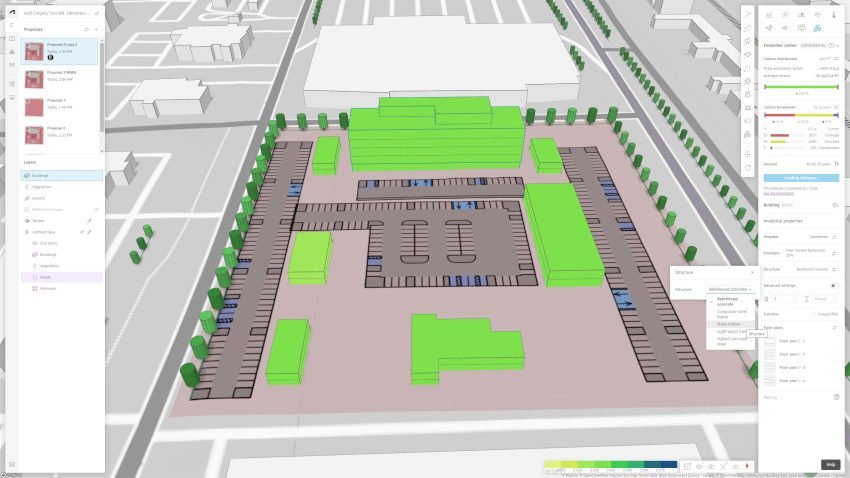
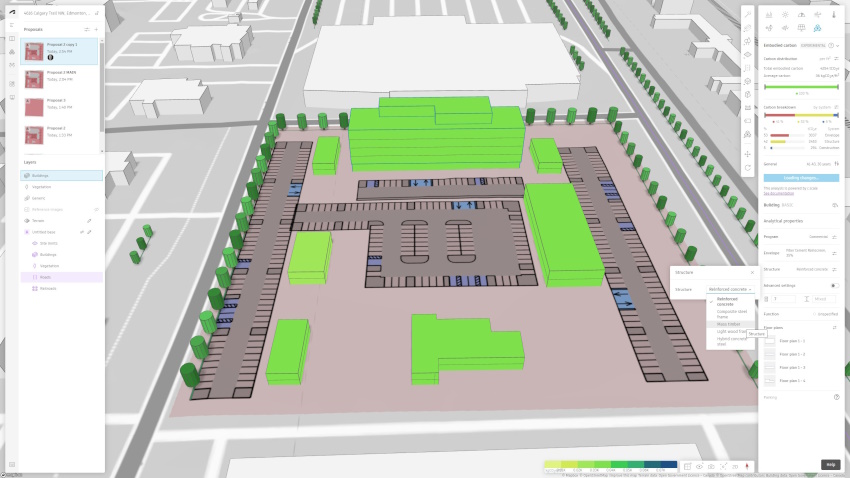
Carbon analysis built into Autodesk Forma in the form of a technology preview. Forma Bodied Carbon Analysis is based on a data model developed by EHDD, an architecture firm that worked on early versions of net zero energy building concepts.
“Forma’s built-in carbon analysis enables designers to better understand the carbon impacts of primary material choices and building form during site massing and feasibility studies early in the project planning process ” said Dan, Autodesk’s vice president of product development for building and infrastructure design. Lohmeyer wrote in a blog post.
A new AI tool, Total Carbon Analysis, gives architects access to carbon impacts through dashboards obtained from similar projects to assess trade-offs between embodied carbon and operational carbon. The AI-driven analysis tool in Total Carbon Analysis is based on EHDD’s C.Scale application program interface.
“The biggest opportunity technology has to manage our carbon footprint is to have tools like Forma, which will allow us to analyze our designs, in real time, as we’re designing them. Being able to have that information, that feedback, as “Doing the design work is really what will allow us to achieve the goals we need to reduce the carbon impact of the built environment,” said Mike DeOrsey, principal and director of Stantec’s digital practice, one of first users of Forma, to a declaration.
Autodesk is also expanding its alliance with Esri with new integrations of ArcGIS Basemaps with Civil 3D and AutoCAD to provide civil engineers with geospatial data and mapping capabilities.
Lohmeyer’s blog said the goal of these integrations is to improve visibility into existing conditions so that civil engineers can minimize environmental impacts and ecological disruption. In addition to design workflows, a new integration update with Esri’s ArcGIS Online and Info360 Asset was released to allow water and wastewater network operations and maintenance teams to access data from asset status, risk analysis and rehabilitation plans.
In AutoCAD 2025, Autodesk uses AI to help designers reuse content and standardize drawings with new Smart Blocks tools. New features include Search and Convert, which allows users to search drawings by objects and turn them into new, existing or suggested blocks and an Object Detection tool, which automates drawing cleanup by recognizing objects and turning them into blocks . Object detection is available as a technology preview and is expected to change with user feedback.
