

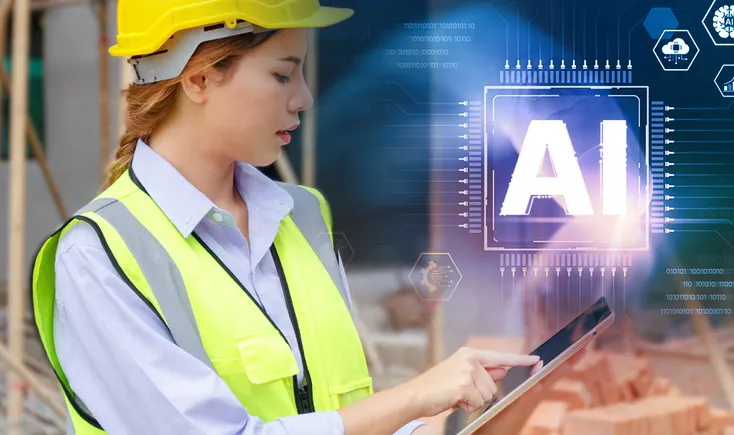
AI is already being used in construction to search documents, summarize information, write routine content, and find patterns in large project datasets.
But buying AI is not the same as being ready to use AI.
If project data is inconsistent or decisions still occur outside of the system of record, such as email approvals, AI can create distractions instead of answers.
Before you buy an AI tool for your teams, check out these five questions to see if your company is ready to get the most out of AI on real-world projects.
1. Is your project data structured?
AI is only as good as the information it can access. If your project data is in PDFs, spreadsheets, email threads, and offline software, AI can it will still help you find information faster, but it may not reference the latest version or connect the data to the right project or asset.
For both homeowners and general contractors, this is a huge risk.
An AI-generated response can be incorrect if it refers to outdated drawings, incomplete changelogs, documents that have not been approved or finalized, or inconsistent naming conventions.
Start with the basics: Do a quick audit to make sure records are organized by project, location, asset, cost code, and vendor. If there are multiple versions, can teams tell which is the current version?
If not, AI preparation starts with the data structure.
2. What decisions should AI support?
AI doesn’t have to be part of every project lifecycle decision. So consider where you want AI support.
Some tasks lend themselves well to AI: displaying contract language, flagging missing documentation, summarizing meeting notes, or comparing current activity to patterns from previous projects.
Other decisions require more context and professional judgment. For example, do you trust the AI tool to have enough context to prioritize other teams’ tasks? In the event of a human review before approving a change the order?
Gain clarity on which tasks and workflows your organization enables to make AI-influenced decisions.
3. Where does human review fit in?
AI can reduce routine work, but it does not remove responsibility for high-impact decisions.
Owners, general contractors, subs and consultants still need clear review points for cost, schedule, safety, compliance, contract and operations decisions. AI should provide better information to people before making these calls.
Here’s a helpful prep test: If AI produces a recommendation, who reviews it? Who approves the next step? Where is this approval collected? And who is ultimately responsible for this decision?
If your organization can’t answer these questions, AI governance needs more work.
4. Do you have a secure environment for sensitive project data?
Large capital programs have sensitive information: contracts, budgets, critical infrastructure details and other proprietary data. This data may be exposed when using a public model AI agent such as ChatGPT.
Before jumping in, determine where the data is stored, who has access, what the permissions are, and whether AI tools respect existing security controls.
This is especially important for public sector, healthcare, education, infrastructure and energy programs with strict privacy or compliance requirements.
5. Can your project management software integrate with AI and other workflows?
AI becomes more useful when it lives near work.
If an AI tool identifies a risk but the team still must copy this information into a separate spreadsheet, email, or project meeting agenda, the recommendation can never become action.
A project management system should connect AI-supported information to the workflows that teams already use: RFIs, submissions, change orders, cost reviews, document control, approvals, reporting, and delivery.
This connection is what makes a search tool’s AI a key part of project execution.
It’s not a matter of yes but when. AI is already here.
To remain competitive, your organization needs data governance, a security mindset, and the ability to integrate to take full advantage of AI.
The Kahua® platform has built-in artificial intelligence, helping capital program owners and contractors collaborate in a single, controlled environment. It’s a strong AI foundation with new design and natural language application deployment.
More information about Noa™, powered by Kahua AI™the safe and ready-to-build intelligence within Kahua.
