

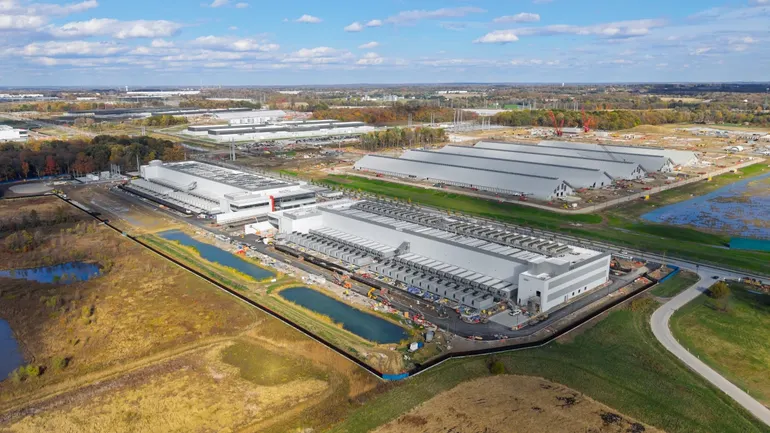
Few sectors of construction move as quickly as data centers. Driven by the adoption of artificial intelligence, cloud computing and growing demand for digital infrastructure, developers are scrambling to bring new capacity online. However, speed alone is not the challenge. As the industry expands, data center projects are becoming increasingly difficult to plan, enable and deliver.
The obstacles start long before construction begins. Access to energy has become a critical factor in project planning, while concerns about water consumption and grid capacity are drawing more attention from regulators, utilities and local communities. Municipalities that once welcomed development with few questions are taking a closer look at the long-term impacts of large-scale data center projects.
Allowing terms reflect this change. In many locations, approvals that once took less than a year can now take several years as developers navigate additional regulatory requirements, community concerns and infrastructure planning. At the same time, project owners remain under pressure to bring facilities online as quickly as possible to meet growing demand.
Once construction begins, a different set of challenges arise. Delivery times for materials and equipment can disrupt schedules, price volatility creates uncertainty, and labor shortages continue to plague large projects. These pressures are particularly acute because data centers are often built in locations where local labor pools may not be able to support the scale and pace of construction required.
Solve one problem, create another
To overcome labor constraints and speed delivery, the industry is increasingly turning to modularization, prefabrication and advanced digital construction workflows. Components that were once built entirely on-site are now manufactured elsewhere, transported to the project and assembled in the field.
These approaches can help teams compress schedules and make better use of available labor resources. However, they also introduce a new challenge: as construction becomes more industrialized, the margin for error shrinks.
A prefabricated component that arrives out of tolerance, an assembly installed in the wrong sequence, or a coordination problem that goes unnoticed can create significant downstream impacts. The same strategies that help teams build faster can also increase the importance of identifying problems before they affect the schedule.
As a result, the conversation is changing beyond speed. The question is no longer just how to build data centers faster, but how to maintain certainty and visibility during an accelerated construction process.
Visibility becomes a competitive advantage
For project teams, objective visibility into field conditions can help reduce the uncertainty that accompanies tight schedules and complex delivery methods. When teams can identify deviations, coordination issues, or schedule risks earlier, they often have more options available to address them before they become costly disruptions.
This is where construction technology (and deviation analysis in particular) plays an increasingly important role. Reality capture, digital documentation, BIM and VDC workflows, and construction analytics help teams compare progress against plans, validate installation quality, and gain more confidence in project decisions. Instead of relying solely on manual updates or regular site visits, stakeholders can access more up-to-date information about what’s happening in the field.
Solutions like Hexagon Multivista Capture, Create, Analyze services support this approach by connecting documentation, digital construction workflows and analytics into a more integrated experience. The value is not just in collecting more project data, but in helping teams use that information to identify risks earlier, improve coordination, and make informed decisions in a fast-moving environment.
As data center demand continues to grow, the industry will likely continue to adopt new delivery methods to accelerate construction. But every step taken to increase speed introduces new complexity. The organizations best positioned to succeed may not be those that simply move faster, but those that can combine speed with the visibility needed to make decisions with confidence as conditions change.
Learn how Hexagon Multivista helps project teams gain objective visibility, reduce risk, and make more informed decisions during data center construction.
