

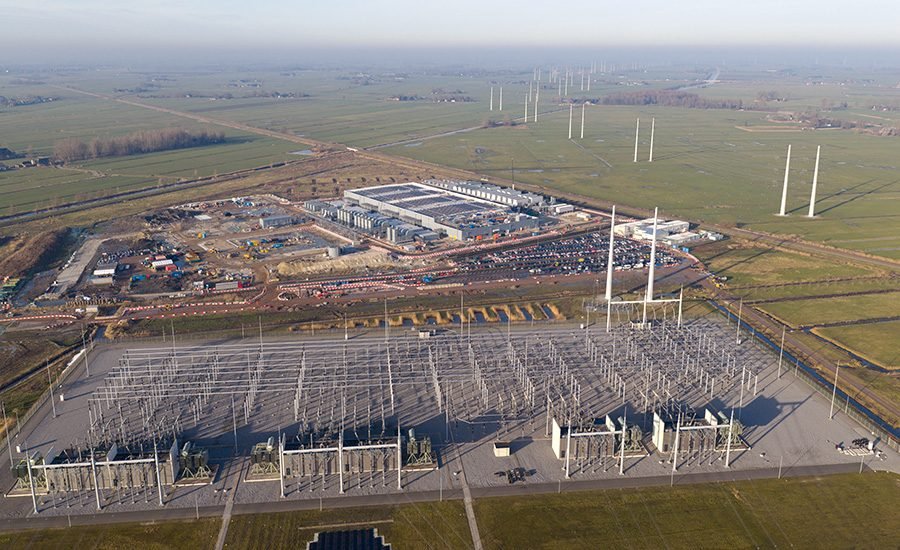
The Federal Energy Regulatory Commission will rule in June on a proposed rule that could, for the first time, extend federal oversight to hyperscale data center and high-load power interconnections.
The action stems from an October 2025 directive by U.S. Energy Secretary Chris Wright for the federal energy regulator to expand oversight of heavy-load connections, defined in the proposal as those larger than 20 MW, to the interstate transmission system through the proposed rulemaking.
The directive comes as companies face increasing pressure to accelerate transmission upgrades and network interconnections to support the growth of hyperscale data centers amid expanding power demands from artificial intelligence infrastructure.
Don Levin, the group’s senior vice president and chief economist, said it now forecasts US electricity demand growth of more than 55% by 2050, driven largely by AI computing needs and accelerated industrial activity.
Levin noted that some regions already face grid interconnection timelines that stretch five to six years or more, while hyperscale data centers are often built in about 2 to 2.5 years.
“There are two constraints on our economy today,” Levin said at the briefing. “There is a lot of renewable energy [are] sitting on the sidelines, waiting [to be] connected to the network. So there are queues for that, but there’s also a queue on the demand side.”
The rulemaking could influence how utilities study and approve high-load interconnections, allocate transmission upgrade costs and coordinate generation additions needed to support AI-driven electricity growth. It also raises broader questions about federal authority over transmission planning and infrastructure delivery, which has largely been a state activity.
Looking for quick answers on construction and engineering topics?
Try Ask ENR, our new intelligent AI search tool.
Ask ENR →
Fight for the supervision of large loads
Historically, FERC has not directly regulated end-use customer interconnections. But the US Department of Energy has argued that heavy-load transmission interconnections should fall under expanded federal oversight as AI-related demand for electricity accelerates domestically.

An analysis by the National Electrical Manufacturers Association projects regional electricity demand growth to accelerate through 2050, driven initially by data center expansion and later by the adoption of electric vehicles. Click to enlarge.
Chart courtesy of NEMA
x

DOE said the rapid growth in AI-related energy demand and large industrial loads made it necessary to standardize interconnection arrangements and procedures for those loads, including projects that seek to share interconnection points with generation facilities.
The notice of proposed rulemaking sets out 14 principles to govern how these interconnections will be studied, financed and approved, including standardized study deposits, preparation requirements and withdrawal penalties based on existing generator interconnection procedures. It also seeks comment on whether interconnection studies for large reducible or flexible loads could be completed within 60 days, a window that would represent a significant reduction in current timelines at most regional transmission organizations.
These provisions expose the tension between hyperscale developers seeking faster power and utility connections, manufacturers and regulators concerned about reliability risks, transmission congestion, and who ultimately pays for the new infrastructure needed to support the growth of large loads.
At the Energy Bar Association’s annual meeting in Washington on April 15, FERC Chair Laura Swett called large load integration “the most important and pressing issue in contemporary American public policy,” according to RTO Insider.
He also signaled an aggressive regulatory stance while emphasizing the need for legally durable orders that can withstand anticipated court challenges.
“I know very well from litigation where the absolute advantage of precedent lies in many matters in our jurisdiction, and I look forward to pushing that edge, if it can achieve effective results,” Swett added.
The commission said staff has reviewed more than 3,500 pages of comments and related documents while evaluating recent actions tied to bulk load growth, including co-location rules issued by large grid operator PJM Interconnection and the high-impact bulk load initiative of another regional grid operator, Southwest Power Pool, that it approved earlier this year.
RELATED
Network access, not land, emerges as bottleneck for data center construction
Contractors are being trained to expand network capacity
The North American Electric Reliability Corp. issued its highest-level network warning in May, citing “significant risks” from large data centers and calling for immediate industry action as network upgrade and rewire technologies gained traction as faster alternatives to building new transmissions.
Utilities and developers are increasingly relying on these approaches and behind-the-meter generation to ease congestion as larger transmission expansion projects go through permitting and construction, Levin said.
“While we’re waiting, the peak in demand will be over the next five years,” he said during the briefing, then asked, “So what can we do to meet that demand?”
Levin said retracement projects using advanced transmission cables can often be deployed in about 16 to 36 months, much faster than the multiyear timelines typically associated with new long-distance transmission construction. Because work continues within existing rights-of-way, much of the siting and permitting burden associated with new construction projects is avoided.
The electricity manufacturers’ group also said grid improvement technologies, including advanced monitoring systems, sensors and power flow controls, could unlock about 200 GW of additional transmission capacity using parts of the existing grid footprint.
Data centers alone will account for 38% of net US electricity consumption by 2037, according to the group’s updated study, driven by large-scale capital investment and accelerating energy intensity of AI workloads.
To make up for the interconnection delays, Levin said that on-site gas generation capacity has increased by about 1,800% since 2025, while small-scale solar deployment has grown by 500% and energy storage facilities have increased by nearly 70%.
The infrastructure push is straining an already tight labor market. with Electric Manufacturers Association President and CEO Debra Phillips warning that the transformer manufacturing sector alone faces a shortage of roughly 15,000 workers, a supply chain constraint that threatens to slow grid construction even as federal regulators move to speed it up.
