

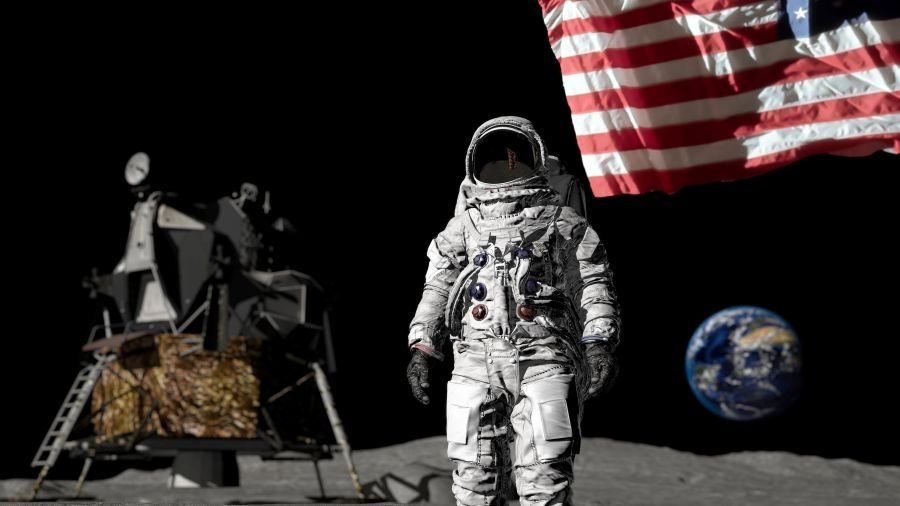

More than half a century after the Apollo 11 landing fulfilled President Kennedy’s bold vision, the global race back to the Moon is no longer theoretical. With renewed attention to NASA’s Artemis program and increased commercial investment in space infrastructure, lunar exploration is once again shaping technology priorities here on Earth.
But while launch timelines, mission sequencing, and technical milestones continue to evolve, one deadline does not: the “first to file” rule of the US patent system. Since 2013, patents have been granted to the first inventor to file a patent application on a particular invention, regardless of who conceived the invention first.
For innovators developing space technologies, this creates a tension. Patent protection should be secured soon, although commercial use in space may be years away. The solution lies in a bifurcated or dual-environment claim strategy. Rather than limiting patent claims to space-based applications, sophisticated patent drafting expands protection to include terrestrial uses whenever possible. This supports immediate commercialization on Earth while preserving rights for opportunities that may arise as the space industry matures.
US patent no. 10,052,797B2, currently owned by Redwire Space Inc., illustrates this approach. The patent describes a recycling device capable of processing waste, such as broken equipment, plastic packaging and on-site resources, into raw material for additive manufacturing. Although designed for microgravity environments, the claims are worded broadly enough to also include use on naval vessels, remote research stations, and industrial facilities on Earth.
This broad scope of patent coverage is achieved through careful drafting. Patent applications include claims and a specification. The claims define the legal rights obtained by the patentee and the specification, which usually includes summary and background sections, a brief description of the drawings, the drawings themselves and a detailed description, allows a person skilled in the relevant technical area to make and use the invention. Although the information in the specification may be used to interpret the language used in the claims, the specification itself does not define legal rights. Consequently, a skilled patent draftsman can describe the potential uses of an invention (eg, in space) without limiting the scope of legal protection to that particular use.
To that end, Redwire’s ‘797 patent specification provides solid information on the potential uses of the recycling device. The background section emphasizes the cost and time required to deliver materials into space, even to frequently visited sites like the International Space Station, thus establishing why the recycling device is useful. The background section also briefly describes how waste management can be challenging in other isolated environments, such as on naval ships at sea for extended periods and on research stations in Antarctica. The summary section states that the invention described therein can be “used aboard spacecraft, space habitats, during long-duration exploration, at remote outposts, [and] aboard warships.” Even the title emphasizes the recycling device’s intended use, specifically noting “low-gravity environments.”
However, the statements themselves are completely silent about where the recycling device should be used. The claims are apparatus claims that recite specific structures, not method claims with steps that specifically require use in a zero-gravity environment or that contain other clauses that may restrict application to a particular environment. Components mentioned in the claims, such as an extrusion mechanism, coil assembly, or housing, are described in language that could cover uses on a military ship or polar laboratory, as well as on the International Space Station (ISS). As a result, these patent rights are versatile and can be asserted against a competitor who manufactures the recycling device for use on Earth and in outer space.
Looking for quick answers on construction and engineering topics?
Try Ask ENR, our new intelligent AI search tool.
Ask ENR →
This versatility supports immediate monetization and long-term strategic value. Redwire Space is not only a space-focused company, but also serves military clients, including NATO and the Armed Forces of Ukraine. Because the claims are not limited to use in space, the ‘797 patent may be relevant to defense contractors and government customers. Redwire’s continued payment of its patent maintenance fees through 2022 suggests that this dual-environment patent (originally filed in 2014) remains valuable regardless of where the claimed technology is used.
The dual environment strategy is not limited to additive manufacturing efforts. US patent no. 11,660,557B2 (“Low Gravity Water Capture Device with Water Stabilization”) by Sierra Space provides another compelling example. The claims are directed at an apparatus for separating liquid droplets from an air stream, and the detailed description of the specification describes the importance of preserving and reusing water on extraterrestrial missions while minimizing energy consumption. Like Redwire’s ‘797 patent, Sierra Space’s ‘557 patent has claims that are worded to cover uses in multiple environments because the structural components could just as easily be used in submarine water recycling systems, industrial ventilation, or remote medical units facing water shortages as in outer space.
Sierra Space’s approach is particularly timely. The company’s recent expansion into defense and its ongoing collaboration with NASA for the Dream Chaser resupply missions reflect its commitment to technologies that bridge both civilian space and military/industrial needs. Water capture and recycling, whether on board a spacecraft or deep underwater, are fundamental infrastructure challenges. Patents that protect these innovations in a way that aligns with both mission domains represent a forward-thinking business strategy.
These examples highlight a larger lesson under the first-in regime. Innovators in space technology must file patent applications early, regardless of changes in mission timelines. By combining expansive specifications with expertly written claims, innovators can protect technologies that serve both space exploration and Earth-based infrastructure, navigating the stars without losing sight of business realities on the ground.
Kate Nuehring Su is a partner and patent attorney at the intellectual property law firm of Marshall, Gerstein & Borun LLP in Chicago. Vanessa Wang is an associate at the firm.
