

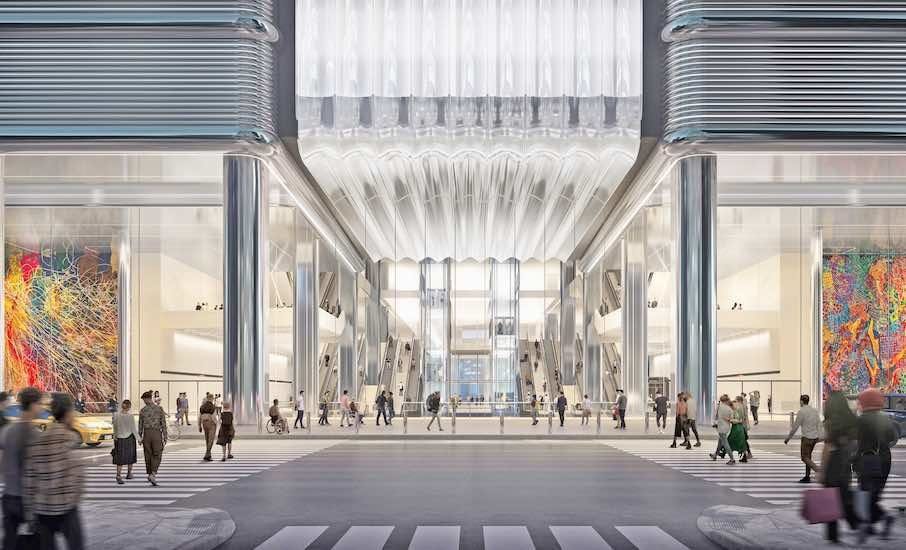
An agreement to help finance the $10 billion replacement of New York City’s Midtown Manhattan Bus Terminal moves the bus terminal project closer to construction. Gov. Kathy Hochul’s office announced the deal a little more than a month after the Port Authority of New York and New Jersey released a draft environmental impact statement and revised project plan for the 73-year-old facility.
The city committed to 40 years of tax revenue for the project, an estimated $2 billion, from three potential commercial developments at three sites, including two at the bus terminal and one at a nearby site owned by the Port Authority and private owners.
New York City Mayor Eric Adams said in the statement: “Our investment over the next few years, and our partnership with the Port Authority, will help develop a new crown jewel for Midtown: a state-of-the-art bus terminal that will add acres of new public spaces and storefronts . reduce congestion in Hell’s Kitchen and improve the passenger and community experience in and around the terminal for both New Yorkers and visitors to the world’s greatest city.”
Based on feedback from commuters, residents and local officials, the revised plan to rebuild the world’s largest and busiest bus terminal has been updated from a version first released in 2021. The new plan includes a main terminal of 2.1 million square meters. , a bus storage facility and ramps directly connected to the Lincoln Tunnel connecting New York and New Jersey. Two additional support structures on the Port Authority property will also reduce bus congestion on the street and create 3.5 acres of community green space.
“Anyone entering New York City should be greeted by a world-class travel hub, and now we’re one step closer to a revitalized Port Authority Bus Terminal,” Hochul said in a statement. “We are modernizing New York’s infrastructure to prioritize public space, thriving businesses, and the safety and well-being of all New Yorkers. Replacing and expanding the bus terminal will spur economic development for decades to come and rebuild an important gateway of entry into New York City.”
Built in phases, the project’s temporary terminal and new ramps are expected to be completed by 2028, with the new main terminal scheduled for 2032.
Officials also said the project is expected to create 6,000 union construction jobs. Gary LaBarbera, president of the Building and Construction Trades Council of Greater New York, called the project “necessary,” in a statement, “which will improve our critical infrastructure and boost our economy, all while creating thousands of union careers that support families”.
