

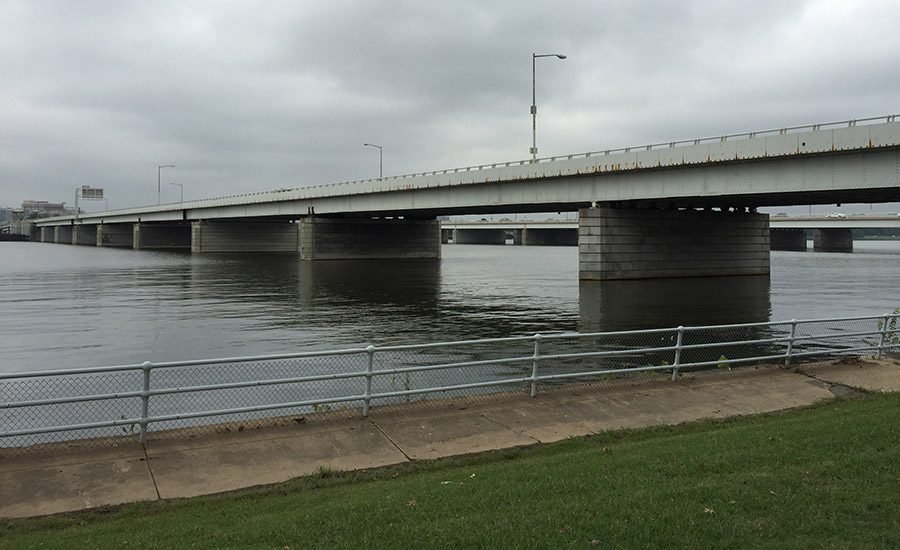

Construction will begin next year for the rehabilitation of the northbound I-395 bridge over the Potomac River in the District of Columbia. The $114 million design-build project for the district’s transportation department is being led by Skanska USA Civil, with AECOM and Genesis Structures also on the team.
Built in 1950, the nearly half-mile-long, four-lane bridge is part of a complex of three highways and two railroad structures that connect Arlington, Virginia, and Washington, DC. Scheduled for completion in the fall of 2029, the project aims to extend the life of the bridge by another 75 years, though improvements that include replacing the modern bascule protection system and boat barriers with bascules. standards; rehabilitation of the superstructure of the approach bays and maintenance of the substructure; and replacement of secondary bridge components removed due to construction, including overhead signal structures, lighting and bridge drainage.
As part of the project, Skanska will convert the current 175-foot-long double-leaf bascule bridge to a fixed span using accelerated bridge construction (ABC) techniques. Because the bridge carries approximately 90,000 motorists daily, the new span will be built next to the existing structure and put in place during a 56-hour weekend closure. The project is jointly funded by DDOT and the Federal Highway Administration.
On January 13, 1982, Air Florida Flight 90 struck the bridge as it crashed into the river, the result of snow and ice accumulating on the plane’s wings before takeoff from nearby Washington National Airport. After repairs to the bridge deck and concrete parapet, the structure was renamed in memory of Arland D. Williams, Jr., an Air Florida passenger who repeatedly passed a rescue helicopter to other passengers in the icy water. Williams drowned before he too could be rescued. A total of 78 people died in the incident, including four people in cars on the bridge.
Skanska is also part of a design-build joint venture with FlatironDragados for the adjacent $1 billion Long Bridge North project, which will replace the existing one-mile two-track corridor with a new four-track alignment to significantly increase the crossing’s freight and passenger capacity.
